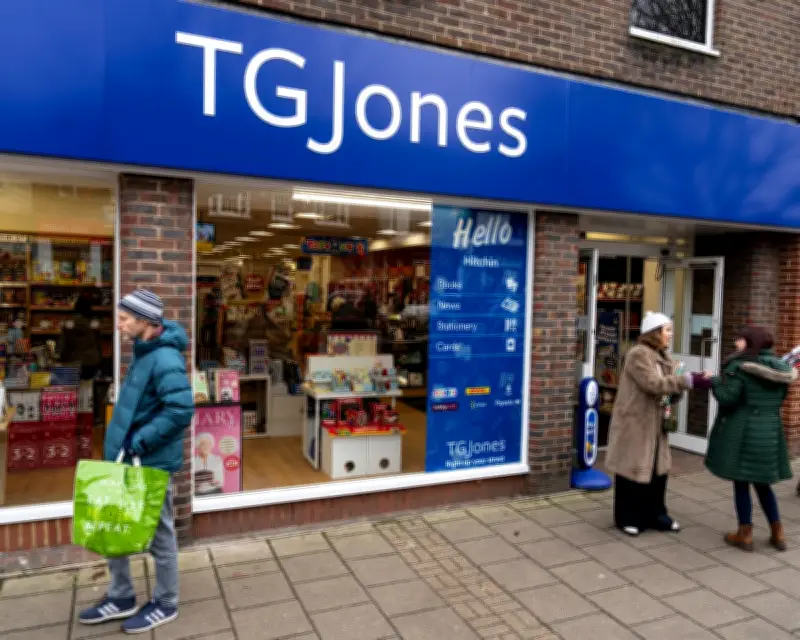
Small suppliers, including the charity Help for Heroes, are set to lose at least half the money owed to them by the former WH Smith high street chain, now rebranded as TG Jones, if a planned restructuring is approved in a vote on Wednesday. The retailer, which operates 450 stores, was acquired by private equity firm Modella Capital last year and has warned that it may need to call in administrators if creditors, including landlords, do not support the amended plan, which is designed to cut costs.
Impact on exit contract suppliers
Dozens of "exit contract" suppliers—such as toy makers and greetings card companies that TG Jones does not intend to work with in future—are expected to have their debts completely written off if the proposal is approved. They would only retain the right to a share of any future profits above a certain threshold, which the retailer, currently loss-making, may generate in three years.
Under the plan, "non-core" suppliers, including the veterans charity Help for Heroes, will receive less than half of what they are owed, with the remaining balance not paid in full for three and a half years. One card maker, a long-established supplier, told the Guardian: "For our business it is a significant write-off." She noted that losses include not only unpaid invoices for cards sold but also stock provided on a "sale or return" basis that remains in stores slated for closure. She intends to stop supplying TG Jones.
Another supplier described the potential write-off of several thousand pounds as "absolutely broken" and said it "was going to hit my family hard [from] which I won't be able to recover." They added: "This was my main account, being small-scale."
Help for Heroes and broader creditor impact
Help for Heroes declined to comment, but its website states that since partnering with WH Smith in 2014, the retailer raised over £71,000 through sales of Christmas cards featuring veteran-inspired designs. The pain extends beyond small suppliers: TG Jones is asking all suppliers, including large-scale businesses it wishes to retain as "core suppliers," to accept delayed payments. Household names such as Condé Nast, Ferrero, and Lonely Planet will not be repaid in full for a year, with monthly instalments starting only six months after the restructuring is approved.
Modella bought the chain for £76 million last year and launched an aggressive restructuring plan last month, under which up to 150 stores could close and rents reduced on dozens more. At the time, TG Jones reported owing suppliers £4 million. Modella has described the plan as an "essential part of the company's turnaround," backed by a £35 million investment, and designed to "protect the substantial core of the store estate and create a stronger, more sustainable business."
Landlord concessions and British Land's shift
This week, Modella sent landlords an amendment offering improved terms, including a larger share of future profit upside and a promise to repay rent cuts on key sites after three years. The change won over leading landlord British Land, which had previously sought to delay the vote through legal action. British Land's lawyers had argued in the high court that the plan was a "wholly unfair allocation of the burdens and benefits of the restructuring" amounting to a "naked transfer of value" to Modella, according to Global Restructuring Review. Other landlords, including M&G, LandSec, and NewRiver REIT, had supported British Land's position, but their current stance is unclear.
On Tuesday, British Land announced it would withdraw its opposition and abstain from voting. A spokesperson said: "Following some detailed discussions with TG Jones over the last few days, and a number of material concessions made by the company to mitigate unfairness caused to landlords, British Land has agreed to withdraw its objection to the plan, and will abstain from voting. This establishes an important point of principle for restructuring plans, which should not be used to penalise landlords who are providing profitable stores at a fair market rent, all for the benefit of shareholders who won't invest in the business themselves."
One landlord told the Guardian: "We would hope to see the plan amended in a more balanced way." Meanwhile, WH Smith's travel stores in railway stations and airports were not part of the Modella deal and remain under the original parent company.
A TG Jones spokesperson said: "We are aware of suggestions made by a small number of landlords in connection with the restructuring plan. We have engaged constructively with these landlords, as we have with other creditors across the estate. As a result of that engagement, we have improved the terms of the plan to reflect feedback received. We believe these improvements demonstrate our commitment to achieving a satisfactory outcome for all stakeholders."