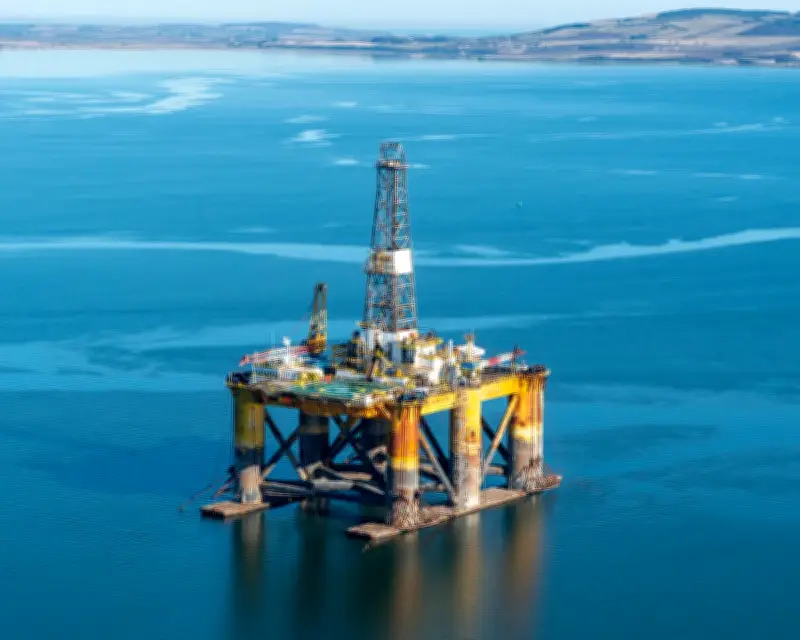
The UK's North Sea oil industry has made a last-ditch attempt to curry favour with the Labour government by appealing to Andy Burnham's reindustrialisation agenda just days before he is expected to become Britain's next prime minister.
Industry Lobby Targets Over 400 Labour MPs
Industry lobbyists have written to more than 400 Labour MPs to call on the government's new leaders to allow more oil and gas drilling in UK waters to support homegrown energy and show 'a commitment to UK manufacturing, industrial capability and the skilled workforce that has powered the nation for generations'.
The letter from industry group Offshore Energies UK (OEUK) was co-signed by more than 10 business groups linked to the oil and gas industry as well as the GMB trade union. It said that while they support the government's ambition to build a secure, 'lower-carbon' energy system, the transition would be 'stronger and fairer' if it were 'built on an all-energy approach: one that builds on our industrial strengths rather than overlooks them'.
Burnham's Reindustrialisation Agenda
Burnham has vowed to tackle the deindustrialisation of Britain's economy over recent decades as part of his plan to encourage greater devolution of political power and create 'good growth in every postcode'. This includes a promise to 'safeguard sovereign manufacturing and production capability across the country in critical sectors such as steel, defence, energy, food and farming'.
However, it is not clear what a Burnham premiership would mean for the government's approach to the North Sea. Under Ed Miliband, the energy secretary, the fate of two major North Sea projects – Rosebank and Jackdaw – has remained in limbo since Labour came to power with the promise to ban new exploration licences.
Rosebank and Jackdaw Projects in Limbo
Rosebank and Jackdaw were granted licences under the previous government, meaning there would be no breach of the Labour government's manifesto pledge if the government gave final consent for the two projects to proceed. Miliband was widely expected to overrule the Jackdaw gas development and the Rosebank oil project, which he has previously described as 'climate vandalism'. But the energy secretary is now reportedly willing to consent to Jackdaw, according to the Observer, to prove he could be a credible successor to Rachel Reeves as Burnham's chancellor.
The Jackdaw project has promised to begin producing gas for British homes as soon as this coming winter if given the go-ahead by the government. However, Rosebank would take longer to begin production and would produce mostly oil for export to refineries in Europe.
OEUK's Case for More Drilling
The OEUK's letter made a case for more drilling, saying that Britain 'will continue to need oil and gas for decades to come'. 'The question is not whether we use these resources, but whether we produce as much of them as possible ourselves or become increasingly dependent on imports from overseas,' it said.
Steve Elliott, the chief executive of the Chemical Industries Association, said: 'Backing North Sea oil and gas alongside renewables is not about slowing progress. On the contrary, it is about strengthening industrial competitiveness, protecting jobs and reducing reliance on imports in an increasingly volatile world.'
Criticism from Campaign Groups
Robert Palmer, the deputy director of Uplift, which campaigns against North Sea drilling, said: 'New drilling will do little for energy security. Without a rapid shift to the abundant renewable energy we have, and help to households to shift away from their reliance on fossil fuels, the UK will become ever more reliant on imported gas.'
'The government should ignore the special pleading of companies that have got very rich while households faced soaring energy bills and workers saw declining conditions and security. Instead, it should invest in industries with a future, like wind manufacturing, that can provide good jobs for generations of workers,' Palmer added.
Pressure to Reduce Electricity Costs
Burnham also faces pressure to drive down the cost of electricity generation, which relies heavily on expensive imported gas, to help British industry and businesses remain competitive globally. A report by business group the CBI and Energy UK warned that Great Britain's electricity prices are about 45% above the G7 median and represent 'an anchor weighing down productivity and competitiveness across the whole economy'.
Louise Hellem, the chief economist at the CBI, said reducing business energy costs should be 'a day-one priority' for the new prime minister. 'Years of loading policy costs on to electricity bills have left UK businesses facing some of the highest electricity costs among the world's biggest economies. At a time when we really need firms to invest, electrify and compete on the world stage, these costs make all three goals more difficult, representing a massive drag on economic growth,' she said.