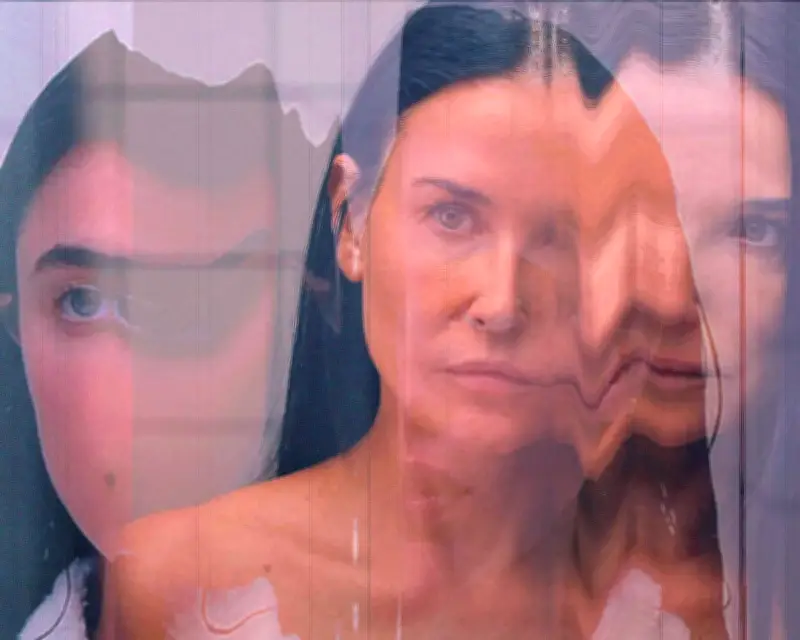
Andrea, a PhD holder in her late 40s working for a non-profit in Dallas, feels intense pressure to remain youthful. 'Everyone has a facelift if they can afford one,' she said. 'I’m a feminist to the core, but if I had the money, I would get a deep-plane facelift in a heartbeat. I’m saving up to get my neck done.' Despite her awareness of anti-ageing culture driving these feelings, she feels powerless to resist the urge to slow down ageing, a sentiment shared by many in boomer, Gen X, and elder millennial generations.
Pressure to stay young is pervasive
Dr Sarah Lamb, an anthropologist at Brandeis University, has studied this pressure for over a decade. Her research in Boston reveals that participants adhere to quasi-scientific anti-ageing, embodying 'permanent personhood'—freezing their self-concept around age 35-40. They strive to stay young but grow frustrated with 'successful ageing,' a binary framing that implies one can fail at ageing well.
As a medical anthropologist in her fifties, the author sympathizes with Andrea and Lamb's subjects. Rapid scientific progress offers more tools than ever to stop time, from AHA/BHA acids to ceramides. 'I want to believe in these ingredients’ ability to rejuvenate my ageing skin,' she writes, but notes that behind hypermodern anti-ageing claims lies the same old ageism.
Historical shift from reverence to ageism
In the 1600s-1700s, older people were revered, as detailed in Dr Deborah Carr's 2023 book Aging in America. After the American Revolution, industrialization and a growing older population led to a 'youth culture.' By the mid-1800s, derogatory terms like 'old coot' emerged. A linguistic study found age stereotypes became increasingly negative over 200 years, correlating with the rise of microbiology and biological ageing research.
Russian scientist Elie Metchnikoff, father of immunology, coined gerontology and boosted anti-ageing science in the early 1900s. In a 1904 interview, he said, 'I believe it will be possible in the future to prolong life beyond the limits which it reaches in the present day.' Anti-ageing culture accelerated after mid-20th century medical advances. In 1961, Dr Robert Havighurst coined 'successful ageing,' making ageing well a personal choice and stigmatizing visible ageing.
Longevity culture: the latest iteration
Today, longevity culture is mainstream. Harvard's Sinclair Lab aims to reprogram cells to reverse ageing. The USC-Buck Nathan Shock Center seeks to extend healthspan. But advocates often imply death is optional. Vladimir Putin and Xi Jinping were caught on a hot mic discussing immortality. Google's Ray Kurzweil predicts overcoming disease and ageing. Cultural critic Jessica DeFino says, 'Longevity is just the latest word for anti-ageing ideology.'
After Allure banned 'anti-ageing' in 2017, the $78bn industry pivoted to terms like 'pro-ageing' and 'preventative ageing.' DeFino explains, 'These terms sound more positive and scientific, but at the formulation level, it’s all anti-ageing.' The goal is to stop normal biological processes; any sign of ageing means failure, which fuels endless product consumption.
Off-label drug use and Silicon Valley money
Hundreds of biotech companies focus on longevity. The diabetes drug Metformin is used off-label to extend healthspan, despite lack of clinical evidence in humans. Experts like Dr Peter Attia and Bryan Johnson admit using rapamycin off-label. Dr Abou Farman, an anthropologist at the New School, notes that researchers now focus on 'small bits of the science' rather than living forever, calling it 'part of the anti-ageing utopia.'
Farman links the rise of longevity rhetoric to widespread fear about the end of the world. 'The desire and the anxiety are coiled together,' he said. Research psychologist Dr Ashley Lytle of Stevens Institute of Technology adds, 'When the world feels overwhelming, people double down on anti-ageing.'
Ageism affects younger generations
Internalized ageism appears at younger ages. Young women and pre-teens buy anti-wrinkle products; twentysomethings joke about 'old age' aches. 'We have this rampant idea that showing signs of ageing is something to stave off forever,' Lytle said. Ads target younger cohorts with language like 'battle against ageing.'
Dr Patricia Kahlbaugh of Southern Connecticut State University found that viewing ageist memes increased ageing anxiety, particularly fears about appearance and social status. Baby boomers and Gen X focus on healthspan and longevity, possibly leading to denial about ageing. 'They would rather be dead than old,' Lamb said, noting they don't want to be a burden or in pain.
Rejecting anti-ageing rhetoric
DeFino argues, 'We have to fight ageism. We have to address why looking younger boosts status and opens opportunities.' Lamb advocates embracing normal ageing losses as meaningful—wrinkles as signs of lived experience, slowing down as a chance to relax. Lytle concludes, 'Anti-ageing is anti-life. Ageing happens from the second we’re born; we just call it development. Ageing is part of life itself. You can’t get rid of it, and I don’t think we should try to.'