Albert Bridge Reopens to Pedestrians and Cyclists Following Safety Closure
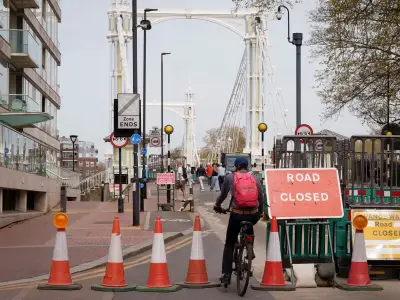
The iconic Grade-II listed Albert Bridge, affectionately known as 'The Trembling Lady,' has reopened to pedestrians and cyclists after a brief closure on Wednesday afternoon. The shutdown was prompted by sensors detecting slight movement in the structure, raising immediate safety concerns.
Council Addresses Safety Concerns and Temporary Measures
Andrew Burton, director of highways at Kensington and Chelsea Council, which oversees the 153-year-old bridge, expressed regret for the inconvenience caused. 'We're sorry for the inconvenience the temporary closure caused to pedestrians and cyclists,' Burton stated. 'It was a necessary decision so we could monitor the bridge and ensure the extra movement we were seeing didn't put people at risk.'
Burton emphasized that safety remains the top priority, with a temporary stabilization solution expected soon to address the damaged component and reduce future closures for non-motorized users. The bridge had already been closed to cars earlier this year due to cracking, highlighting ongoing structural challenges.
Local Reactions and Disruption Concerns
Residents near Albert Bridge expressed mixed feelings about the closures. While many welcomed the car ban for improved air quality and tranquility, the complete shutdown caused significant headaches. A long-time Chelsea resident remarked, 'The full closure is a pain in the arse. When you walk across it, the bridge vibrates anyway. It vibrates, there is no question.'
Michael Stephen, vice chair of The Chelsea Society, highlighted the disruption, noting that alternative bridges like Chelsea and Battersea are often gridlocked, turning a five-minute crossing into an hour-long ordeal. Marsha de Cordova, MP for Battersea, echoed these concerns, urging the council to expedite solutions and keep residents informed about reopening schedules.
Broader Implications for London's Thames Crossings
The closure has reignited debates about the future of London's aging Victorian bridges. Simon Munk, head of campaigns at London Cycling Campaign, called for a comprehensive approach. 'Whatever happens next, London is massively overdue a grown-up conversation about all bridges and tunnels across the River Thames,' he said, pointing to a lack of cycling and walking crossings and overburdened infrastructure.
Some advocate for limiting these historic bridges to light traffic or pedestrian use, while others suggest replacement with modern structures. Martin Sloman proposed, 'Why not allow these bridges to enjoy their retirement with people walking, cycling and on the occasional horse? Surely closer to their original purpose.' Conversely, Martin Reynolds argued for rebuilding to better serve contemporary needs.
Historical Context and Repair Plans
Albert Bridge has faced structural issues since its opening in 1873 as a toll bridge designed by Sir Joseph Bazalgette for horse-drawn traffic. Corrosion was detected as early as 1884, leading to weight limits and various modifications over the decades. The council plans full repairs costing an estimated £8.5 million over 12 months, aiming to eventually reopen the bridge to all traffic.
Despite fears that closures like those at Albert and Hammersmith bridges would increase congestion on other crossings, data shows reduced car volumes on several Thames bridges between 2018 and 2024. This suggests that traffic patterns may be evolving independently of individual bridge closures.