
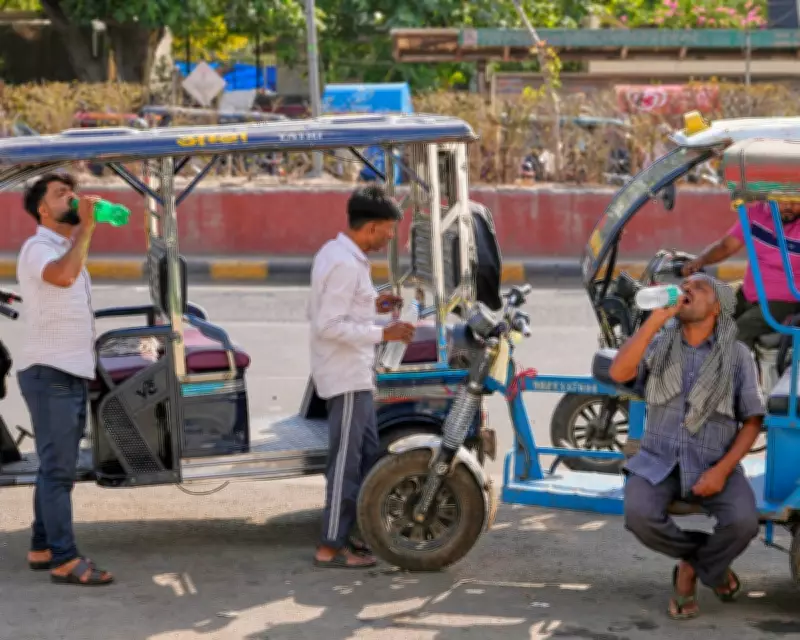
Workers across Asia are increasingly struggling to recover from heat as temperatures rise, with informal workers in cities like Delhi bearing the brunt. Jalaj Jha, a 24-year-old gig worker, wakes up exhausted in a cramped, unventilated room in Delhi before a 12-hour shift delivering groceries. 'I barely sleep three or four hours in this heat,' he said. 'It feels like my body is pulling me down.'
Rising Night-Time Temperatures
Temperatures in Delhi already hit 30C (86F) by 7am, soaring to over 45C (113F) during the day. This week, Delhi recorded its hottest May day in two years and the warmest May night in 14 years. A new report by US-based People’s Courage International (PCI), based on research in Delhi, Dhaka, Kathmandu, Jakarta, and Quezon City, reveals that hotter nights combined with the urban heat island effect are leaving millions of informal workers exhausted before the workday begins.
Impact on Sleep and Health
For delivery riders, construction workers, and street vendors living in cramped settlements with little ventilation or unreliable electricity, sleep is becoming difficult. The inability to rest and cool down worsens heat-related illnesses, reduces productivity, and pushes vulnerable workers into deeper economic stress. The crisis is worsening as climate change triples the chance of pre-monsoon heatwaves. Night-time temperatures are rising faster than daytime temperatures across much of the region, reducing recovery hours.
Vulnerability of Informal Workers
The International Labour Organization estimates that over 70% of Asia’s workforce is exposed to excessive heat at some point, with informal workers most vulnerable. In India, nearly 90% of workers are in the informal economy. The PCI report, based on interviews with over 2,200 internal migrant workers, found nearly 80% said extreme heat disrupted their livelihoods. Workers reported lost wages, increased spending on water and medicines, and headaches, dizziness, and fatigue during long outdoor shifts.
Recovery Deficit
Ajay Kumar, a 32-year-old vegetable vendor in Gurugram, spends hours pulling a rickshaw through traffic. 'Every day my head spins with the heat. But I have no option but to work for my family,' he said. Researchers describe a 'recovery deficit' where workers begin each day physically depleted. Sleep deprivation contributes to lower productivity, worsening health, anxiety, and emotional exhaustion. Kumar, who lives with his family in a cramped room, cannot afford a cooler. At night, they sleep on the terrace because the room is unbearably hot. 'Even then, it takes me hours to fall asleep,' he said.
Inadequate Government Response
Experts warn cities remain poorly prepared for worsening heatwaves. Some governments have introduced heat action plans, water kiosks, and early warnings, but most responses are reactive and fail to address workers' needs. The report highlights that heat impacts are silent and cumulative, affecting all aspects of life.



