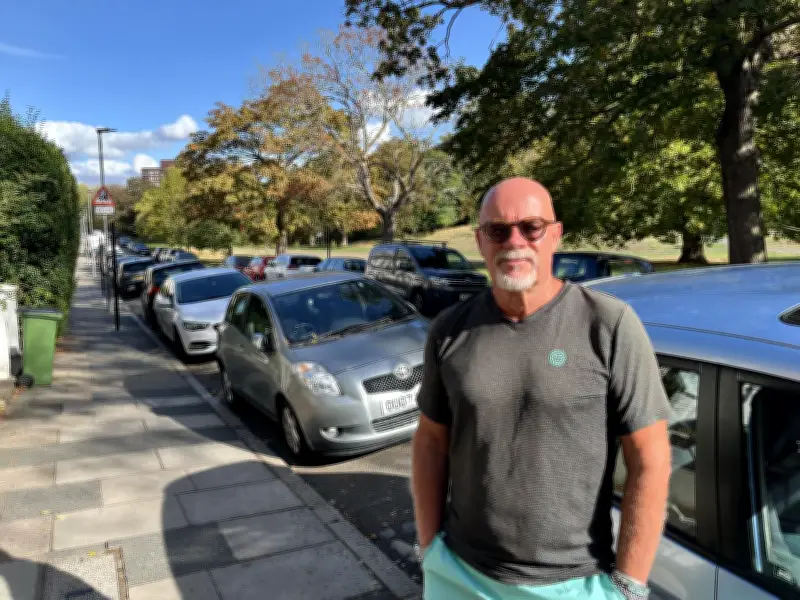
Worshippers at the Shree Kutch Satsang Swaminarayan Temple in Woolwich say plans to introduce parking permits on a nearby residential street could make it harder for people to attend services, potentially reducing the temple's community services. Members of the temple in St Margarets Grove claim their concerns have not been adequately addressed by Greenwich Council, which is proposing a new controlled parking zone in the area.
The plans, however, have been welcomed by some residents of St Margarets Grove, who say the street is frequently used by commuters leaving their cars for long periods. Neighbours have also raised concerns that larger temple events can cause severe congestion and leave the road gridlocked.
Proposed parking restrictions and temple concerns
St Margarets Grove is currently free to park in, but it will soon have parking permits for residents that will operate from 8.30am to 6.30pm, seven days a week. The road will also have pay by phone areas and disabled bays.
The Shree Kutch Satsang Swaminarayan Temple presented the council with a petition with over 800 signatures objecting to the changes after they were announced, and hundreds of members of the temple community objected as part of a public consultation. The temple runs on members of its community giving their time freely to conduct classes, work in the kitchen and carry out temple maintenance and upkeep, all of which is unpaid. This Hindu concept of individuals performing selfless acts for others is called seva.
Temple leaders fear parking restrictions will add an extra barrier for those wanting to help out and perform seva, and so it could see a reduction in the temple’s community services. They also fear that the lack of free parking will stop elderly people from coming to the centre, and it will make it harder for families with children to attend as well, all of which will result in the crumbling of the temple community.
Voices from the temple community
Temple representative Dinesh Hirani said: “We’ve relied on that sort of selfless service which has allowed the temple to keep running for 40 years. It will continue to run, but the only way to make it sustainable is to not add blockers for people that are giving up their time. It’s just very unnecessary and we are most worried about the future of the seva that we’ll get in this temple which is probably going to diminish, if I’m being honest.”
Priya Bhanderi is a parent with young children, one of whom attends the temple’s nursery. She was “not happy at all” about the plans and said the restrictions would cause problems for her and her family. Priya, who lives in Welling, said: “My eldest son, he’s neurodivergent. Coming to the temple, it’s like his second home. When he comes here, he feels at peace. He’s grounded and it helps regulate him. To keep that schedule and routine up, it’s going to be quite difficult.” She said parking further away and travelling on public transport was “not a feasible option” for her family. “We feel like we don’t have a voice, like we’ve not been heard,” she said.
As it is the biggest Hindu temple in South East London, it attracts worshippers not just from Greenwich but from further afield, including from Dartford, Gravesend and even as far as Ashford. The temple fears these new restrictions will prevent those who live further afield from making the trip.
Nilesh Pindoria said: “This will create overwhelming issues for our community because for them, when they come here, they feel happier, they feel involved and the prayers help them. We do lots of activities for young kids, older kids and the older generation as well. It keeps them intact with the community. Now all of them will slowly disappear which will affect them and the temple together. It will have a very big impact for us.”
Nilesh said suggestions were made back in March to reduce permitting hours to 11am to 3pm and have it only active on weekdays in order to combat the problem of commuters. The temple kept contacting Greenwich Council to ask if their suggestions had been taken onboard. They got responses that said no final decisions had been made and they would be consulted with. However with August’s announcement that the changes are going ahead, the temple feels as if its suggestions had fallen on deaf ears.
Residents welcome restrictions, but some face issues
Temple treasurer Parbat Rudha said the removal of free parking felt like a “slap in the face” from Greenwich Council after it had worked with the South London authority for 40 years. The temple hosts different community events, such as education classes for various medical conditions which are open to all. It also provides food bank packages to local charities in need, and it does all of this without any funding from Greenwich. Parbat said: “We said from the start we’re willing to work with the council. We’re not opposing the parking scheme. We’re for it, actually, but what we’re saying is make it far like it is everywhere else near stations. Make it Monday to Friday and in those core hours so commuters don’t park. Everything is done here as a wholesome community, and it looks like we’re getting no support from the local government. We don’t want to be against the council, but it does feel that way.”
Radha Rabadia, a former Labour councillor from 2010 to 2016, was critical of Greenwich and its current leadership. She said: “In the past, we built a bridge with the council. That bridge is broken now. I feel really bitter about it, the way they have arrived at this decision. The council did look at communities, whatever religion they are. They looked at things carefully for the elderly and for schools. But recently, nothing’s been considered, it sounds like. I’m really, really disappointed in the way the council has been working at the moment.”
Despite the concerns of the temple itself, many of those living on St Margarets Grove are welcoming the introduction of parking restrictions. Martin Roberts has lived on the road for 26 years. He said parking wasn’t really a problem until the temple increased in size around 10 years ago. He also acknowledged that commuters parking on the road and using the nearby Elizabeth Line was a major problem. Martin said: “We want the parking permits to be here because we can no longer park on our road. There’s days when we literally can’t park a car on this road. There needs to be enough parking for the people that actually live here and then open it up in a fair way to other people.”
He is part of a St Margarets Grove residents group with around 30 members that formed after the restrictions were announced. They have had an open dialogue with the council which has amended certain parts of the scheme—such as the location of yellow lines—following their suggestions. Martin was critical of the temple for not conversing with residents over the new proposal and said their parking management was “completely ineffective”. He said: “The temple has never come to speak to us. They’d never talked to us. We’ve tried to have a dialogue with them and nothing.”
He felt it was “fair enough” that temple users who travelled from outside Greenwich would now have to pay to park. Martin said: “There are a lot of people who come that aren’t in the borough that are using [the road] and I think the borough should get something back for that.”
John Kirk is an unfortunately unique position. Although he always parks his car on St Margarets Grove as his flat is located on its corner with Plumstead Common Road, his address is listed as Plumstead Common Road meaning he is illegible for a parking permit. Other residents in his building live in flats listed as St Margarets Grove and can get a permit while he cannot. John has spoken to Greenwich Council about his problem, but the council has told him he cannot have a permit. He explained: “I said to them I’m on a desert island. I can’t go anywhere, and if they make the road residents parking, I am stuffed.” John said he might have to resort to the illegal means of having magnetic number plates on his car that he will remove when parked so he can avoid being fined by council officers.
Mark Amis had “no problem” with temple attendees parking on his road, and said at busy events they would employ stewards to dictate where people parked so the road wouldn’t become too chaotic. He had more of a problem with commuters parking on St Margarets Grove. Mark said he was “50/50” on the new proposals. He was happy that the restrictions would free up parking space, but he wasn’t looking forward to paying for a residents parking permit.
Redha Ougour concurred with Mark, and was happy with how the temple handled parking during big events. He felt the council had not communicated effectively with him and his fellow St Margarets Grove residents as they were unsure what the new restrictions would actually be and they did not know when they were coming into place. Although Valerie Thornton doesn’t drive, she said the street would get packed whenever the temple held events. “If I have a visitor in then they’ve got to go to other roads”, she said. Wendy Quinnell was glad to see the restrictions come, primarily because commuters use the road and park their cars outside her house all day. She said the road would get packed due to temple worshippers, but this only happened on weekends and at select events.
Council defends scheme and consultation process
Greenwich Council said those living in the road had “long expressed” their unhappiness with parking outside their homes, and Sustainable Streets was hoping to address their concerns. The council also said it had consulted with the temple about its plans, and had adjusted them following discussions with temple leaders. In terms of the temple’s suggestion that the restrictions come in on weekdays and only for a few hours to prevent commuters from parking all day, Greenwich said these requests were not included in any consultation responses and so could be considered.
Cllr Calum O’Byrne Mulligan, Greenwich’s Cabinet Member for Transport, Climate Change, Waste & Streets, said: “Our Sustainable Streets plans in Woolwich aim to manage parking demand and make our streets more appealing for residents and visitors alike. The plans will also help residents park closer to home or local businesses, and it’s one of the many ways we’re making it easier and cleaner to travel and improve air quality. Before the programme was agreed, we undertook an extensive consultation and listened to all feedback to make it fair on all road users in Greenwich, making several changes to the originally proposed designs in response to what the consultation respondents told us. Myself, council leader Anthony Okereke and council staff met with temple representatives before the conclusion of the consultation, and the inclusion of disabled bays and a number of non-residential paid parking bays outside the temple was an effort to balance the views of both residents and the temple. We have also provided the temple with information regarding alternative parking, public transport and travel options in the area, meeting with them to discuss this and their wider concerns in September. Residents of St Margaret’s Grove have long expressed concerns about their ability to park by their homes and supported the Sustainable Streets proposals on their road. We greatly appreciate the incredible work that the SKS Swaminarayan Temple does to bring people together, and their work to try and manage attendees parking in a considerate manner. We have considered all the petitions and responses to the consultation we received as part of this programme. You can find a detailed review of responses from residents, businesses and stakeholders in the decision report. The recent requests from the temple for amended timings were not included in any of their responses to the consultation, and so, in line with legal requirements, could not be considered as a decision was made.”
Greenwich Council has not yet confirmed when the Sustainable Streets project in Woolwich will come into effect, although new road markings have already been painted on St Margarets Grove.