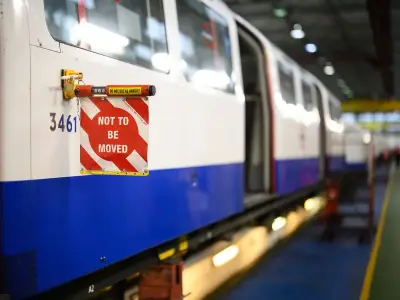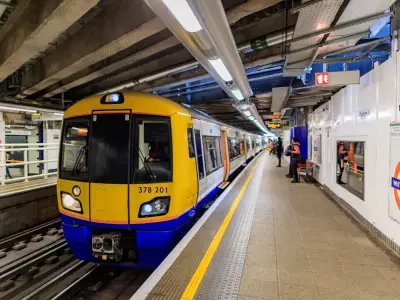
Transport for London (TfL) has laid bare the stark reasons behind increasing delays and lengthy engineering works on the London Underground, highlighting a fundamental disadvantage compared to the Paris Metro.
The Victorian Constraint vs. Modern Design
TfL Commissioner Andy Lord explained that the core of the problem lies in the network's historic infrastructure. London's Victorian-era tunnels are significantly smaller than those in Paris, severely limiting how engineers can work and transport equipment.
"Their tunnels are almost twice the size of ours," Lord stated, describing the Parisian advantage. This allows Paris to efficiently execute major modernisation, including installing platform edge doors directly from engineering trains. In contrast, almost everything in London must be brought in through station entrances and down escalators, a slow and disruptive process.
Compounding this physical constraint is the limited time for overnight work. Current schedules give engineers just two-and-a-half to three hours to carry out repairs, often allowing only "single-digit metres" of track to be replaced at a time.
Funding Shortfalls and Rising Disruptions
The financial landscape deepens the challenge. While TfL has earmarked £1.46bn until March 2027 for Tube and Elizabeth line renewals, bosses warn this is insufficient. A committee heard that £210m per year is needed for track upkeep, but only £107m is expected this financial year.
This underinvestment has direct consequences for passengers. Speed restrictions across the TfL network have tripled since 2019, and train availability on the Jubilee line regularly drops to 80%. Furthermore, the Piccadilly line experienced severe delays on 45 days across September, October, and November last year.
As a result, TfL expects longer-term planned closures to become more common for projects like the Bakerloo line upgrade, as shorter overnight windows are proving ineffective for major renewals.
Future Fleets and Finding Solutions
Despite the hurdles, TfL is pushing forward with renewal programmes. A total of £441m is forecast to be spent between April 2025 and March 2026, with £174m allocated for new train fleets.
Key rollouts include:
- New Piccadilly line trains in the second half of 2026.
- A fresh batch of 10 Elizabeth line trains.
- 54 new DLR trains, though these were temporarily withdrawn in November 2025 due to braking system concerns.
TfL is exploring innovative solutions, including working with National Rail to procure a new heavy haulage fleet. Early trials on the Bakerloo line upgrade have shown promise for improved track replacement methods. An update on the repair strategy and a proposed timescale will be presented to the committee in July 2026.
The uncomfortable truth remains: London's pioneering but ageing Underground system requires increasingly complex and costly solutions to match the efficiency of modern networks like the Paris Metro.