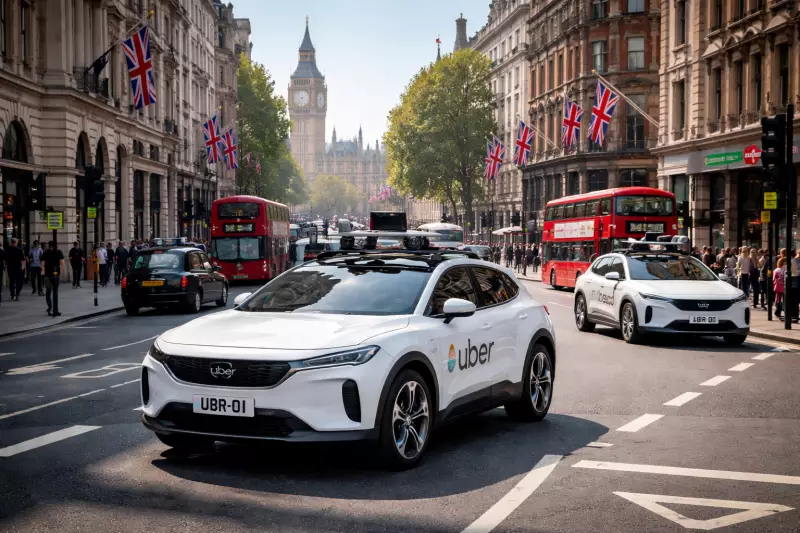
The familiar streets of London are on the cusp of a profound transformation, one that extends far beyond simple transport upgrades. The trigger is now set in stone: Uber has confirmed plans to launch autonomous ride services in the capital during the first half of 2026. This move signals the beginning of a fundamental economic rewire, where control over pricing, liability, access, and valuable data begins to shift away from traditional models.
From Trial to Commercial Intent: The 2026 Shift
While London is not entering this new era blindly—with trials already conducted in Canary Wharf and regulatory groundwork laid by Transport for London (TfL)—2026 marks a pivotal change in commercial intent. Pilot schemes are evolving into actual, billable services. This commercial rollout can embed itself into corporate procurement cycles long before public opinion or political debate has fully caught up with the implications.
The initial scale will be modest, with Uber framing its launch as incremental experimentation. However, this restrained approach belies a strategic aim: to stealthily establish itself as the default autonomous mobility platform. The stakes are high. TfL currently licenses over 100,000 private hire drivers, a figure that includes Uber's workforce. While robotaxis won't replace this human workforce overnight, the direction of travel is clear. The goal is control, not merely convenience.
Navigating London's Unique Challenges
Success is far from guaranteed. Lessons from San Francisco's troubled robotaxi rollout serve as a cautionary tale, highlighting failure modes rather than a blueprint. Incidents there have included vehicles stalling traffic during power outages and software recalls related to behaviour around school buses.
London presents a uniquely complex environment. Its narrower roads, complex junctions, and a culture of pedestrian improvisation—where people cross based on gap, not just signal—create a formidable challenge. Add in cyclists and delivery riders, and the task for autonomous systems becomes immensely difficult. This unforgiving geography means public tolerance for failure remains untested, and a single badly handled incident could reset the entire regulatory timetable.
The economic model is also shifting. Insurance markets are already repositioning, attracted by the dense telemetry and fault attribution data from autonomous fleets. Premiums will move from blunt averages to route-level and fleet-level pricing. For businesses, integrating robotaxi services into operations means inheriting new layers of complexity, with liability fragmented across software vendors, fleet operators, and city authorities.
Who Captures the Value in a Software-Governed City?
The competition to define London's autonomous future is intensifying. Uber is partnering with British firm Wayve, while global players like Waymo and Baidu, with its Apollo Go platform, eye the UK market. Tesla also signals ambitions, though it lacks permission. Uber's core strength lies in demand aggregation, not the autonomy technology itself. Leadership will go to whoever first aligns fleet density, regulatory compliance, and public tolerance.
The potential upsides are significant, particularly in predictability. Businesses could benefit from turning travel time into usable time, tightening logistics windows, and making low-demand routes viable. Rural and semi-rural areas might see disproportionate gains where dense, unpredictable human behaviour is less of an issue. However, urban cores will bear the initial experimentation costs.
Ultimately, London will not change overnight. The shift will materialise through contracts, service renewals, and changing habits. The value will accrue not to those who simply operate the vehicles, but to those who shape the operating rules early. By 2026, forward-thinking businesses will stop seeing this as a transport story and start treating it as a fundamental narrative about pricing, liability, and power. Those who understand this distinction are poised to capture the upside and build new economies, while others may quietly end up footing the bill.