Investing in more police officers to staff ticket gates at London Underground stations will "pay for itself" within a few years, a Mayoral candidate has claimed. Alex Challoner, one of four Conservative challengers to have publicly declared their interest for the party nomination for the 2028 Mayor of London race, has made cracking down on fare evasion on public transport one of his headline promises.
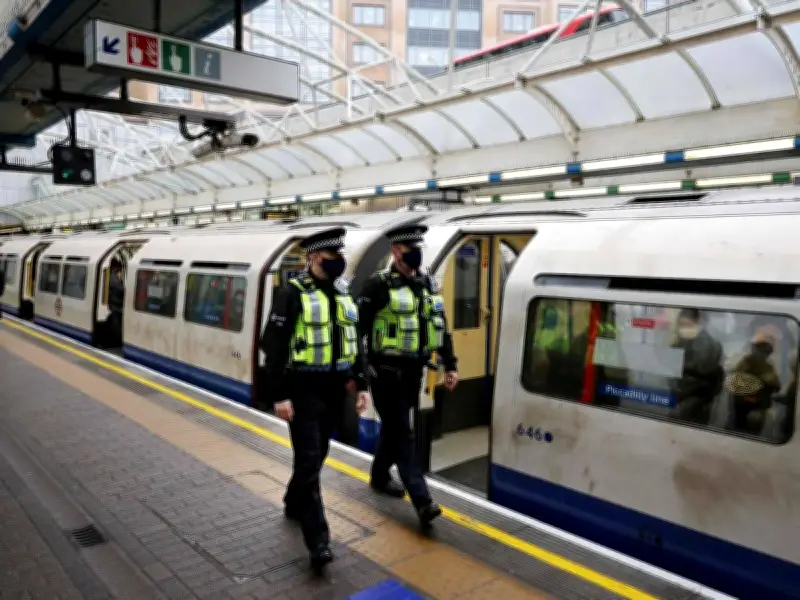
The businessman has proposed more British Transport Police (BTP) operating at chosen gatelines, with plain clothes officers operating alongside them across the network. Transport for London (TfL) currently loses between £190million and £211million to fare evasion every year, according to the organisation's estimates.
Current fare evasion rates and TfL targets
TfL has pledged to step up their efforts to bring the current 3.5 per cent rate down to the target of 1.5 per cent by 2030, including recently announcing another 50 Transport Support Enforcement (TSE) officers to support Revenue Protection Teams. However, fare evasion on the London Underground is far more frequent than other modes of public transport, figures show, at around five per cent.
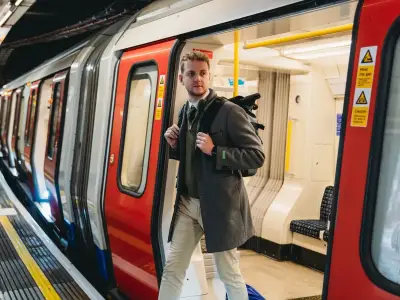
Mr Challoner told the Local Democracy Reporting Service (LDRS) that targeted policy at Tube stations would be an "easy win" for City Hall. "Once a week I see a handful of people busting through the barriers, and it really makes me cross," he told MyLondon's new podcast, The London Brief.
"I think it makes a lot of people cross, once they've paid legally to pass through the barriers, to see somebody either tailgating them or going through the wide gate where you can easily bust through because the pressure is light. Reducing fare evasion would be such an easy win, and if the current Mayor wanted to, he could put more guards on. It's just not good enough. Nothing ever happens. We can do more in this area."
Proposed changes to staff roles and training
Currently, TfL staff are not encouraged to directly tackle or confront fare evaders on sight due to safety concerns. Instead, they are told to use "sophisticated technology to report incidents of fare evasion", with TfL using the "data as intelligence to support our enforcement operations".
Mr Challoner suggested that under his plans, staff would be better trained to address the situation and wouldn't be in danger, as they will always be working with a BTP officer. "Their role would be to assist rather than trying to do that by themselves," he said.
While recruiting more staff to police barriers in-person will cost money, the Tory hopeful insisted the investment was worth it. He suggested that, based on calculations showing that every percentage decrease in evasion leads to £57million saved, reducing the rate to two per cent would mean the policy would start making money for TfL soon enough.
City Hall Conservatives' scrutiny campaign
The City Hall Conservatives have made the Mayor's perceived failure to bring down the fare evasion rate at a faster pace a major part of their scrutiny campaign in recent months. In July Assembly Member Neil Garratt released analysis revealing that since 2020, successful prosecutions for those who fail to pay the fine for fare evasion have declined from 29,113 cases to just 14,406. He also revealed that there are the same number of enforcement officers on the network now – 500 – as there were in 2010.
Last year a report from the group unveiled a ten-point plan to tackle fare evasion, which included measures like higher barriers, AI-enabled ticket barriers and a city-wide awareness campaign promoting civic responsibility. The blueprint, written by Thomas Turrell AM, recommended barriers be installed at every single entrance point across the network, and eventually replace the current models with taller ones that make it harder to jump over, crawl under, or push through them.