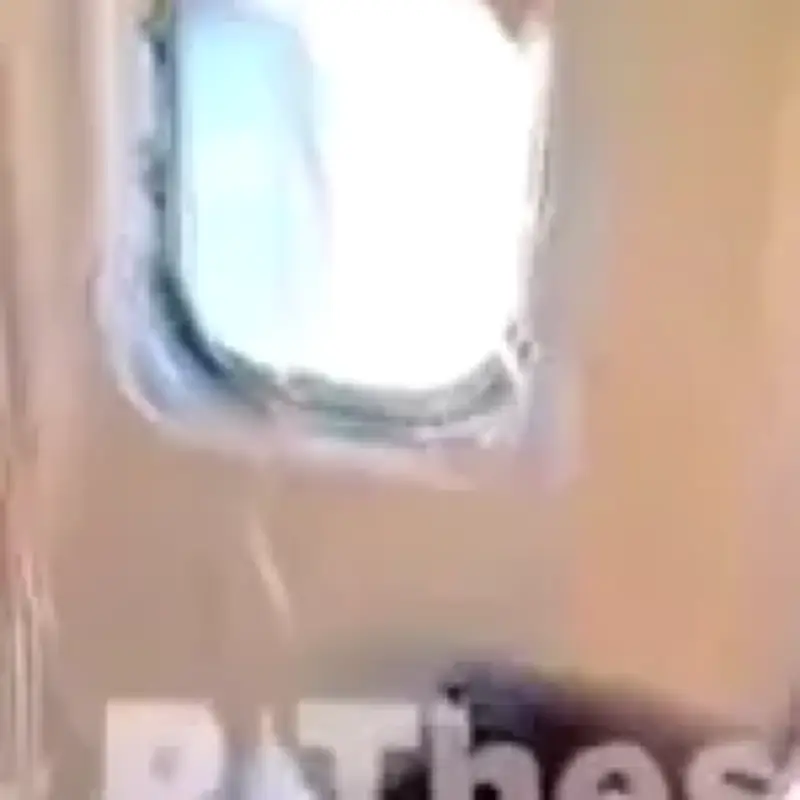
The National Transportation Safety Board (NTSB) has released its preliminary report into a Ryanair flight where a passenger was partially sucked out of a broken window after an engine failure. Fragments from the right engine shattered the window, leading to cabin depressurization.
Incident Details
Flight 1879, operated by Ryanair's subsidiary Malta Air, was traveling from Thessaloniki, Greece, to Memmingen, Germany, when a fan-blade failure triggered the incident. According to the report, cabin crew preparing the inflight service reported a loud vibration and smoke before oxygen masks deployed automatically.
A passenger in seat 11F was partially sucked out of the broken window beside him. The plane made an emergency descent and returned safely to Thessaloniki airport.
Investigation Findings
Forensic examination confirmed that three fan blades had separated inside the engine, with other blades showing deterioration. The failure was traced to several fasteners that were not fitted with enhancers recommended by an FAA directive issued in 2025 following two similar blade-out incidents.
Bird remains, including feathers, were found in the engine's IDG oil cooler and on two other parts. Investigators also found that a mandated enhancement to brackets on the engine's exhaust nozzle had not been carried out, with a due date of July 2028.
Passenger and Crew Details
Ljubiša Karović, 61, was sleeping when the incident occurred and was held inside the cabin by his wife, Svetlana Grković. The flight's captain had 8,270 flight hours, including 7,683 on the Boeing 737.
Background on Fan Blade Failures
Fan blade failures have been a recurring issue in aviation, with some proving fatal. In 1989, 47 people died when a British Midland aircraft crashed near Kegworth, Leicestershire, after a fan-blade fracture in the left engine was misdiagnosed as a failure in the right engine, which was shut down despite operating normally.
Metro has contacted Ryanair for comment. The NTSB report confirms the sequence of events but does not speculate on future actions. The investigation continues, and safety recommendations may follow.