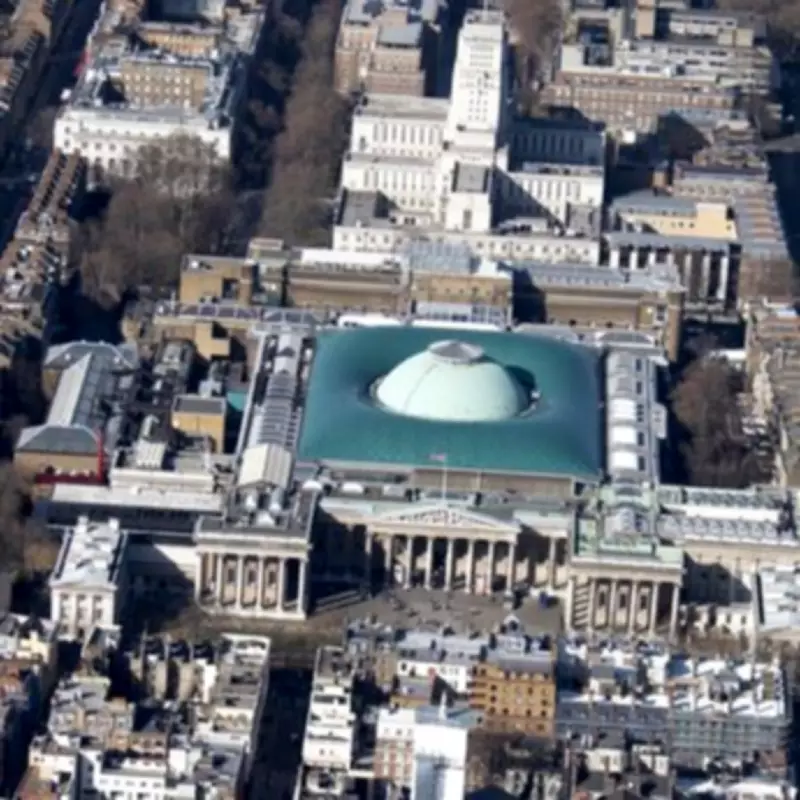
The Forgotten Underground Stop: British Museum Station's Brief History
One of London's most iconic cultural landmarks once boasted its very own dedicated Underground station, a facility that operated for just over three decades before vanishing from the transport map. British Museum station, which opened in 1900 as part of the Central London Railway, provided direct access to the world-renowned British Museum but ultimately could not survive the rapid expansion of London's Tube network.
A Station Born from Cultural Ambition
The station was strategically positioned on the Central line between Tottenham Court Road and Chancery Lane stations, with its entrance located at 133 High Holborn near the junction with New Oxford Street. This prime location was specifically chosen to serve the millions of visitors who flocked to the British Museum each year, offering convenient underground access to one of the world's greatest collections of human history and culture.
Interestingly, the building that once housed the station entrance now serves as Hogarth House, an office rental agency, with few visible reminders of its former transportation purpose remaining at street level.

The Rise of Holborn Station and Eventual Closure
Just six years after British Museum station's inauguration, Holborn station opened in 1906 as part of the Great Northern, Piccadilly and Brompton Railway (now known as the Piccadilly line). The proximity between the two stations was remarkable—they stood less than 100 yards apart, creating what transport planners initially envisioned as a convenient interchange opportunity for passengers switching between the Central and Piccadilly lines.
Despite this geographical advantage, British Museum station struggled to compete with its newer neighbor. Holborn station quickly gained popularity due to its superior tram connections and more advantageous positioning within the local transport network. The original intention to create a connecting tunnel between the two stations was ultimately abandoned when engineers determined the project would be too complex and costly to implement.
Delayed Demise and Wartime Reprieve
British Museum station actually outlived its expected operational lifespan by several years. Initial proposals to expand the tunnels beneath High Holborn to create new platforms at Holborn station while abandoning British Museum station were first submitted to Parliament in 1913. However, the outbreak of the First World War in 1914 prevented any immediate work from taking place.
The station continued operating throughout the war years and into the post-war period, with the expansion project delayed until the late 1930s. When work finally commenced, British Museum station was permanently closed in 1933, ending its 33-year service to museum visitors and local commuters alike.
Legacy of a Lost Station
Today, Holborn station serves as the primary Underground access point for visitors to the British Museum, handling the millions of annual visitors who travel via the Tube. The story of British Museum station serves as a fascinating chapter in London's transport history, illustrating how infrastructure evolves in response to changing passenger patterns and urban development.
While the physical station may be gone, its memory persists among transport historians and London enthusiasts who appreciate the complex network of decisions that shape the city's underground landscape. The station's brief existence reminds us that even the most strategically located facilities can become obsolete as cities grow and transport systems evolve to meet new demands.