Croydon Tram Network Faces Chronic Delays from Reckless Parking Incidents
Newly released data exposes a persistent pattern of delays plaguing Croydon's Tramlink system, with vehicles repeatedly blocking tracks and disrupting thousands of South London commuters. The Transport for London information, obtained through the Local Democracy Reporting Service, reveals these incidents have occurred almost monthly since November 2019, creating unacceptable service interruptions throughout the week at all times of day.
Hotspot Locations Where Blockages Occur Most Frequently
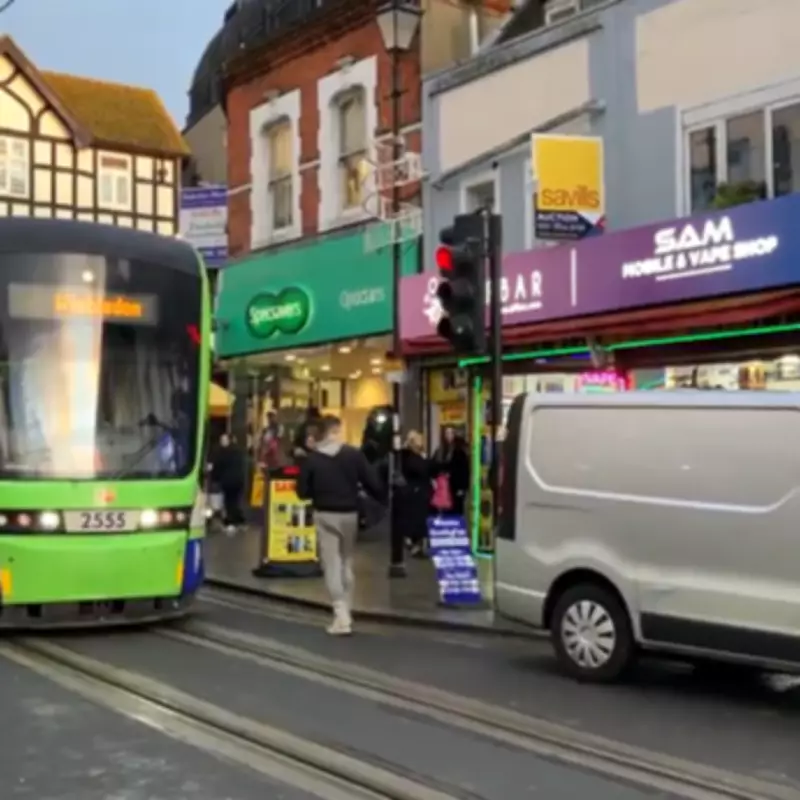
Transport for London has identified several critical bottleneck locations in central Croydon where these blockages regularly occur. George Street, designated as a pedestrian and cycle zone, emerges as the primary trouble spot with nineteen recorded incidents since 2019. Church Street follows closely as the second most affected location with twelve blockages, while Crown Hill outside the Whitgift Almshouses has experienced six incidents.
The problem extends beyond ordinary vehicles, with emergency services operations also contributing to delays. Fault logs document multiple instances where ambulances parked directly on tracks to attend emergencies, fire engines blocked the route, and police operations forced line closures. In one particularly disruptive incident, a police car was parked inside the Church Street tram stop itself.

The Ripple Effect Across the Entire Tram Network
The most significant impact comes from what transportation officials describe as the ripple effect these blockages create throughout the Tramlink system. Because trams cannot easily bypass obstacles, a single blockage can cascade into major service gaps across the network, recorded in TfL data as kilometres lost from scheduled services.
While many incidents cause delays of only a few minutes, some have had far more severe consequences. One particularly disruptive blockage resulted in a forty-six-minute delay that eliminated 132.92 scheduled kilometres from the service. In total, these blockages have caused nearly eight hours of cumulative delays across the network since late 2019.
Local Business Perspectives on the Parking Crisis
Samir, proprietor of Sam Mobile & Vape Shop overlooking the Church Street hotspot, described the recurring nature of the problem. "All the timings get disrupted because of one mistake," he explained. "It just happens again and again." He regularly witnesses vehicles illegally parked on double yellow lines or outside loading bays along the narrow stretch of road toward Wandle Park.
Jose Joseph, veteran Surrey Street Market trader and Chairman of the Croydon Business Association, believes many drivers park without considering the tram's route. "This is not a small thing, it is a massive problem," he emphasized, noting he has frequently left his business to locate drivers who have abandoned their vehicles on the tracks.
Underlying Causes and Proposed Solutions
Both local business owners and residents identify inadequate short-term parking options as a fundamental contributor to the problem. "They are all stuck because there is no proper parking at the moment," Joseph observed, referencing his campaign to introduce thirty minutes of free parking in town center bays to support struggling traders.
A Frith Road resident acknowledged the parking violations while explaining the motivation: "Yes, they are parking badly. Everyone is guilty of doing this, but the parking in Croydon is extortionate. If you're coming here for two minutes, you are not going to pay for an hour."
Official Response and Enforcement Measures
Mark Davis, TfL's General Manager for London Trams, emphasized the seriousness of the situation: "It's extremely important that road users only park in designated parking areas. Obstructing the tramway is a criminal offence and not only inconveniences customers using London Trams but can also cause delays for other road users caught behind a trapped tram."

Transport for London has committed to continuing collaboration with the British Transport Police and Croydon Council to take necessary action against inconsiderate drivers. The organization stresses that parking within the tram's swept path—the full width of road space a tram occupies—creates particular safety hazards and service disruptions that affect the entire transportation network.