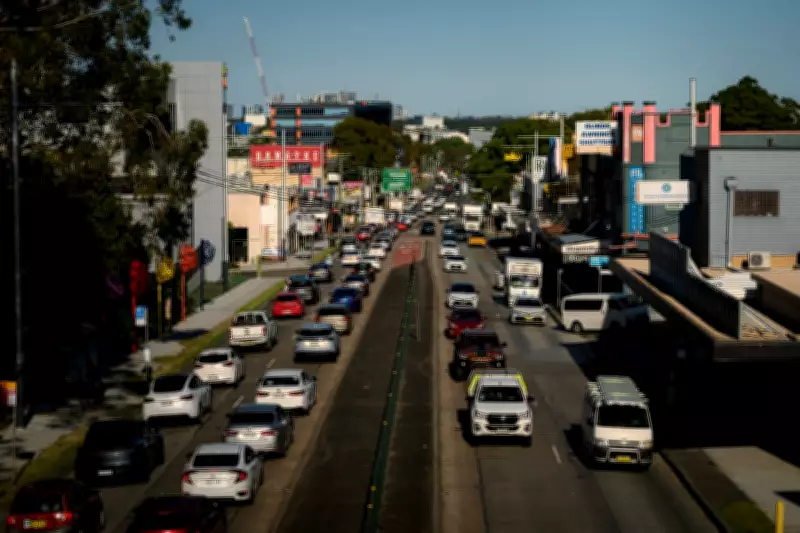
Exclusive government data reveals a dramatic reduction in road traffic across Australia's east coast as soaring fuel prices force drivers to reconsider their travel habits. The crisis, triggered by the US-Israel war on Iran, has seen petrol prices rise by 50 cents per litre and diesel by 140 cents per litre, creating financial pressure that is changing transportation patterns nationwide.
Major Sydney Arteries Experience Significant Declines
New South Wales government data shared exclusively with Capital Post shows traffic on Sydney's key thoroughfares has fallen by thousands of trips daily. Between the week ending March 1st, when prices began climbing, and the week ending April 5th, Sydney traffic decreased 7% on the cross-city tunnel and more than 6% on the M2, eastern distributor, and Sydney Harbour Bridge.
The iconic harbour bridge saw average weekday trips plummet from 144,000 in early March to less than 135,000 by March 22nd. By April 5th, traffic had only partially recovered to approximately 139,000 weekday trips, while weekend trips dropped dramatically to just 89,000 daily.
Weekend Travel Hit Particularly Hard
All 23 main roads monitored by Transport NSW lost one in ten weekend trips during this period, with 14 of these arteries experiencing even steeper declines of at least two in ten journeys. Even accounting for seasonal factors like the end of school term and Easter holidays, 17 of 23 roads recorded lower traffic than comparable weeks in 2025.
Sydney airport access roads showed similar patterns, with Airport Drive traffic falling 9% and Qantas Drive declining 7% as flight cancellations and rising airfares compounded transportation challenges.
Melbourne Experiences Even Steeper Declines
Guardian Australia analysis of Victorian government data reveals Melbourne's transportation network has been equally affected. The Tullamarine Freeway, connecting the CBD to Melbourne Airport, experienced a 20% traffic reduction from early March to March 22nd, with an almost 50% decline by April 6th.
The M1 and M80 highways saw traffic fall 15% from early March to March 22nd, then drop 30% by April 6th, representing approximately 30,000 fewer daily trips on both major routes. Melbourne's CityLink toll road recorded an average decline of 7,000 daily trips during the March quarter compared to the previous year.
Toll Road Operators Confirm Widespread Impact
Toll road operator Transurban reported concerning trends across its network. RBC analyst Owen Birrell found underlying traffic fell 3.4% in March alone, suggesting March 2026 saw about 20,000 fewer daily trips than March 2025. Six of Transurban's Sydney toll roads lost a combined 6,000 daily trips in the March quarter compared to 2025.
While WestConnex bucked the trend with 10,000 additional daily trips and the M5 increased by 2,000, Transurban's average Sydney traffic growth slowed to just 0.6% year-on-year, significantly below previous rates. Weekend and public holiday traffic remained essentially stagnant with only 0.1% growth.
Public Transport Experiences Corresponding Surge
As drivers abandon their vehicles, public transportation systems are experiencing unprecedented growth. In south-east Queensland, daily patronage increased 7% from March 1st to March 29th, with weekend usage jumping 16% on Saturdays and nearly 20% on Sundays compared to comparable days.
Rail trips recorded the most substantial gains at 12.6% weekly increase, followed by light rail (9.9%), ferry services (6.6%), and buses (5.3%). This shift represents a significant behavioral change among Australian commuters responding to economic pressures.
Analysts Express Concern About Prolonged Impact
Industry experts warn the transportation shifts may continue if the Middle East conflict persists. "We are concerned by the soft underlying Australian network results and weakness accelerating into March," said RBC analyst Owen Birrell. "This bodes poorly for April and possibly May if the conflict in the Middle East is drawn out."
The crisis has reached concerning levels according to transportation industry leaders, with reports of siphoned diesel fuel indicating desperate measures by some Australians struggling with transportation costs.
Transurban's Brisbane highways showed minimal growth at just 0.7% year-on-year when excluding Tropical Cyclone Alfred's impact from 2025 comparisons, down from 2.7% in December. Birrell's analysis suggests traffic actually declined 0.3% in March when excluding cyclone impacts.
This comprehensive data reveals a nation adapting to new economic realities, with transportation patterns shifting dramatically as fuel prices continue their upward trajectory amid ongoing international conflict.