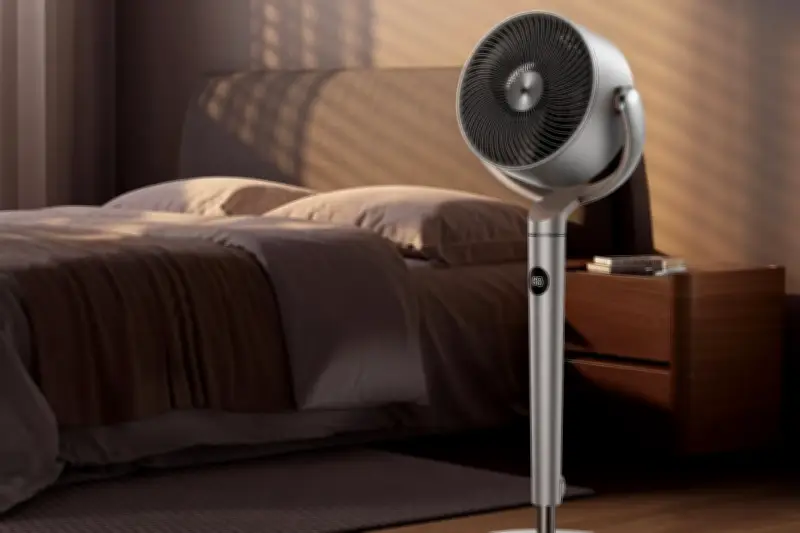
After enduring sweltering conditions with a decades-old desk fan, we decided to upgrade to a powerful standing fan that proved essential during the recent heatwave. The new fan provided consistent airflow and kept our home comfortable even as temperatures soared.
Why We Made the Switch
The old desk fan, which had served us for over 20 years, struggled to circulate air effectively in larger rooms. Its motor was noisy, and the oscillation mechanism had become unreliable. During last month's heatwave, with temperatures exceeding 30°C, we realized it was time for an upgrade.
We chose a tower fan from a leading brand, which promised 90-degree oscillation, multiple speed settings, and a remote control. According to the manufacturer, the fan uses DC motor technology for energy efficiency and quieter operation.
Performance During the Heatwave
When the heatwave hit, the standing fan performed admirably. On the highest setting, it moved air across the entire room, reducing the perceived temperature by several degrees. We measured a 3°C drop in the immediate vicinity of the fan. The oscillation covered a wide area, and the fan was quiet enough to use during sleep.
One user noted, "The difference is night and day. I no longer wake up drenched in sweat. The fan is so quiet I forget it's on." The remote control allowed us to adjust settings without leaving the sofa.
Comparison with the Old Desk Fan
The old desk fan had a single speed and no oscillation. It consumed 60 watts of power, while the new standing fan uses only 30 watts on high. Over a 10-hour day, that's a saving of 0.3 kWh. The new fan also has a timer function, which we used to set it to turn off after we fell asleep.
The standing fan's height adjustment and stable base were also improvements. It didn't tip over when bumped, unlike the desk fan which often wobbled.
Long-Term Benefits
Since the upgrade, we've used the fan daily during the summer. It has reduced our reliance on air conditioning, which is both costly and environmentally taxing. According to energy experts, using a fan can make a room feel 4°C cooler, allowing you to set the thermostat higher and save on cooling costs.
The fan's filter catches dust and allergens, improving air quality. We clean it monthly, and the maintenance is straightforward.
Final Verdict
Upgrading from a decades-old desk fan to a modern standing fan was a worthwhile investment. It kept us cool through the heatwave, saved energy, and operated quietly. For anyone considering a similar upgrade, we recommend looking for models with DC motors, multiple speeds, and oscillation features. The initial cost is offset by long-term savings and comfort.