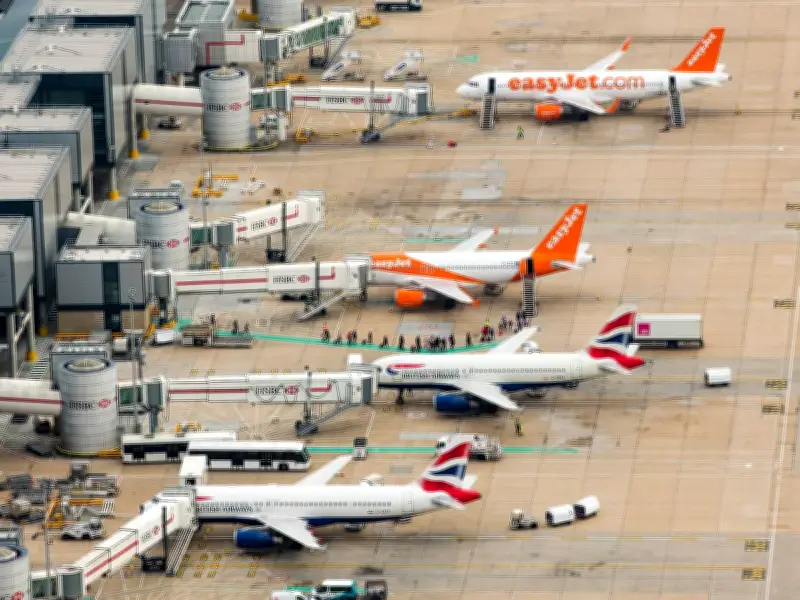
Gatwick Airport has unveiled a £2.2 billion expansion plan to convert its emergency runway into routine use, aiming to boost annual passenger numbers from about 43 million to 75 million by the late 2030s. The project, which will be privately financed, is expected to increase flights from roughly 286,000 to 386,000 per year.
Details of the expansion
The UK's second busiest airport intends to bring its standby runway, currently used mainly for aircraft taxiing and emergencies, into regular operation. To comply with aviation safety rules, the runway must be moved 12 metres north away from the main runway. The expansion also involves remodelling taxiways, extending both terminals, and installing new aircraft gates. Gatwick has pledged to pay for enhanced road connections to both terminals, including fly-overs to separate local traffic from airport vehicles.
Impact on flights and passengers
The converted runway will handle departures of narrow-bodied planes such as Airbus A320s and Boeing 737s. This will enable the airport to handle about 386,000 flights per year, around 100,000 more than current levels. Annual passenger numbers could rise from about 43 million to 75 million by the late 2030s. Gatwick says the project will be privately financed and has pledged to meet the cost without hiking charges to airlines.

Timeline and competition with Heathrow
It is hoped flights will take off from the new runway before 2029, with Gatwick determined to boost capacity ahead of Heathrow's third runway plans. The Government unveiled earlier in June its blueprint for a third runway at Heathrow, stressing that the airport's expansion is "critical" for national growth. Heathrow's owners, Heathrow Airport Limited (HAL), are seeking permission to construct a full-length, 3,500-metre runway, a project that would necessitate the relocation of the M25 motorway. Hotel tycoon Surinder Arora, meanwhile, wants his company to build a 2,800-metre runway, which would not require moving the motorway. The plans would see Heathrow's capacity rise to 756,000 flights and 150 million passengers per year.