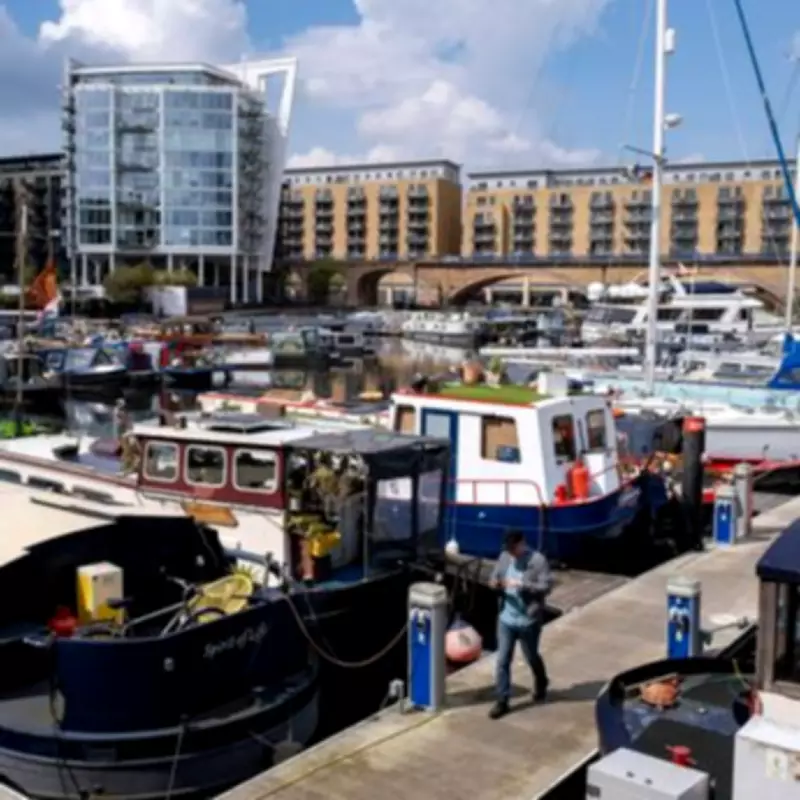
Green Party leader Zack Polanski has acknowledged he may have neglected to pay the appropriate council tax while living on a London houseboat. Mr Polanski had been facing increasing scrutiny over whether the houseboat, moored in East London, served as his main residence.
A Green Party spokesperson described the circumstances as an "unintentional mistake" and confirmed he had "immediately taken steps" to settle any outstanding tax. The spokesperson said: "Until relatively recently, Zack was living on a houseboat, which came with its own unique practical circumstances and considerations. He has immediately taken steps to pay any council tax he may be found to owe. Zack apologises sincerely for the unintentional mistake."
When it comes to living on a boat, residents may face a different set of rules compared with those living in a house or flat. Government guidance explains that an individual may be liable for council tax on a boat if it serves as their "sole or main" residence, reports the Mirror.
The Daily Mail reported that Mr Polanski was registered to vote at a property near the marina, which he allegedly also utilised as a mailing address. Tax lawyer Dan Neidle, founder of Tax Policy Associates, examined Mr Polanski's circumstances this week and wrote: "If the boat was in fact Mr Polanski's 'sole or main residence' then he and/or his partner should have registered for, and paid, council tax for those three years."
Residential Moorings: Council Tax Applies
If you maintain a permanent residential mooring and the boat serves as your primary home, you are typically liable for Council Tax. Under UK law (specifically the Local Government Finance Act), a boat and its mooring combined are classified as a "dwelling" when used as a sole or main residence. The majority of houseboats are placed in Band A, the lowest tier. You will normally receive a bill directly from your local authority, identical to a land-based property owner. If the mooring sits empty for an extended period, you may be eligible to apply for a Class R exemption, which can reduce or suspend the tax during that time.
Continuous Cruisers: No Council Tax
If you lack a home mooring and instead "continuously cruise" (relocating every 14 days in accordance with Canal and River Trust regulations), you typically do not pay Council Tax. Since you don't have a fixed "hereditament" (a specific piece of land or water that you occupy exclusively), the council has no "dwelling" to tax. However, while you save on Council Tax, you must rigorously adhere to navigation regulations, and you won't have a permanent address for services such as GP registration or voting, although you can register as having "no fixed abode".
Leisure Moorings and Composite Rates
Certain marinas offer "leisure moorings" where residents live on a semi-permanent basis. This remains a grey area. Should the marina operator maintain the right to relocate your boat at any point, they may be responsible for paying Business Rates rather than you paying Council Tax. In certain instances, a marina pays a "composite" rate to the council and subsequently passes this expense on to you via your mooring fees. Under this arrangement, you don't receive an individual Council Tax bill, but you are still technically contributing towards it.