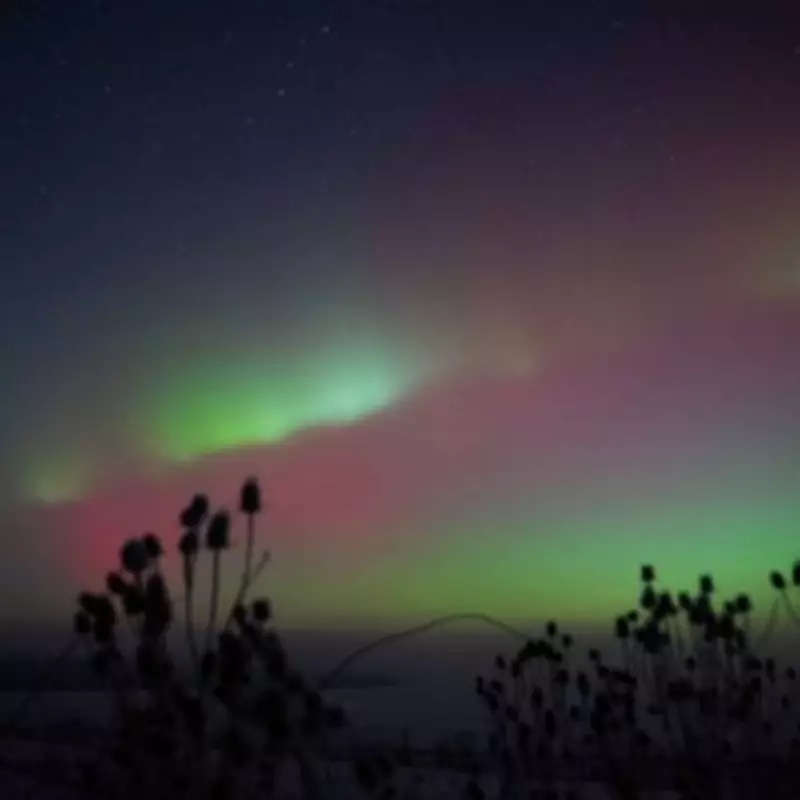
A potent solar flare could ignite stunning northern lights displays later this week, raising hopes for skywatchers across the UK. The phenomenon was triggered by a coronal mass ejection (CME) on May 10 — a massive expulsion of plasma and magnetic field from the Sun's corona. This CME can hurl billions of tonnes of coronal material into space while carrying an intense magnetic field.
What Caused the Solar Flare?
The eruption occurred at 1:13 PM on Sunday and is now rotating into Earth's "strike zone" on the Sun's north-eastern edge. As this region comes into view over the coming days, any significant solar flares or CMEs will have a considerably greater chance of being aimed directly toward Earth.
When and Where to See the Northern Lights
The Met Office has indicated that part of the expanding cloud of solar material could graze Earth tomorrow (May 13), potentially triggering minor geomagnetic storm conditions and boosting northern lights visibility across the UK and northern US, reports the Express. The aurora is most likely to be visible in northern parts of the UK, particularly Scotland and other high-latitude regions. However, powerful solar storms can occasionally render them visible across the entire UK, including the south, between September and March.
Areas with minimal light pollution offer the best viewing conditions. The most recent appearance over the UK came during spectacular displays on March 23-24, 2026, with notable sightings reported considerably further south earlier in the year.
How the Northern Lights Form
These breathtaking displays are produced when charged particles from the Sun's atmosphere journey through space as solar wind, colliding with gases high up in Earth's atmosphere. The impacts energize oxygen and nitrogen atoms, which then emit energy as vivid, luminous displays of color.
Get Alerts About the Northern Lights
Download the free mobile app AuroraWatch UK to receive alerts every time the northern lights are visible. AuroraWatch is a free service offering alerts of when the aurora might be visible from the UK. The app exists thanks to scientists in the Space and Planetary Physics group at Lancaster University’s Department of Physics. Once downloaded, you will receive a notification when auroras are likely to be visible.