Winter Olympics 2026 Curling: A Complete Guide to the Sport's Rules and Team GB's Prospects
Curling consistently ranks among the most popular Winter Olympic sports for UK audiences, and the upcoming Milano Cortina 2026 Games are expected to be no exception. With Great Britain's men's, women's, and mixed doubles teams all tipped as strong medal contenders, interest in the sport is set to soar. Team GB boasts a rich Olympic curling history, having secured six medals over the years, including three golds. This impressive tally features the women's team's gold medal victory at the Beijing 2022 Games, where skipper Eve Muirhead led the side to a thrilling final win over Japan.
For viewers eager to see if Team GB can replicate that success, understanding the intricacies of curling is essential. From the number of ends and the purpose of sweeping to the hammer rule and power plays, this guide breaks down everything you need to know about how the sport operates at the Olympic level.
How Many Ends Are Played in Olympic Curling?
In the men's and women's competitions, matches are contested over ten ends. Each team has eight stones, with two stones thrown by each of the four team members. The mixed doubles event, featuring teams of one male and one female player, consists of eight ends. Here, each team throws five stones, with one stone pre-placed on the ice by each side before an end begins.
How Does Scoring Work in Curling?
Scoring in curling is based on proximity to the centre of the target, known as the house. After all stones are thrown in an end, the team with the stone closest to the centre scores one point. If a team has multiple stones closer than the opponent's nearest stone, they score additional points accordingly. The team with the highest total points at the end of the match wins. In the event of a tie, an extra end is played to determine the victor.
What Is the Competition Format for Olympic Curling?
Ten teams participate in each of the men's, women's, and mixed doubles competitions. During the Round Robin stage, every nation plays each other once. Only the top four teams advance to the semi-finals, with the winners progressing to the gold medal match and the losers competing for bronze.
What Are the Different Player Roles in a Curling Team?
In four-person teams, players assume specific roles:
- Lead: Throws the first two stones and typically handles sweeping for teammates.
- Second: Throws the third and fourth stones and assists with sweeping.
- Third: Throws the fifth and sixth stones and acts as the skip's deputy.
- Skip: The team captain, responsible for strategy and throwing the final two stones.
Why Do Curlers Sweep the Ice?
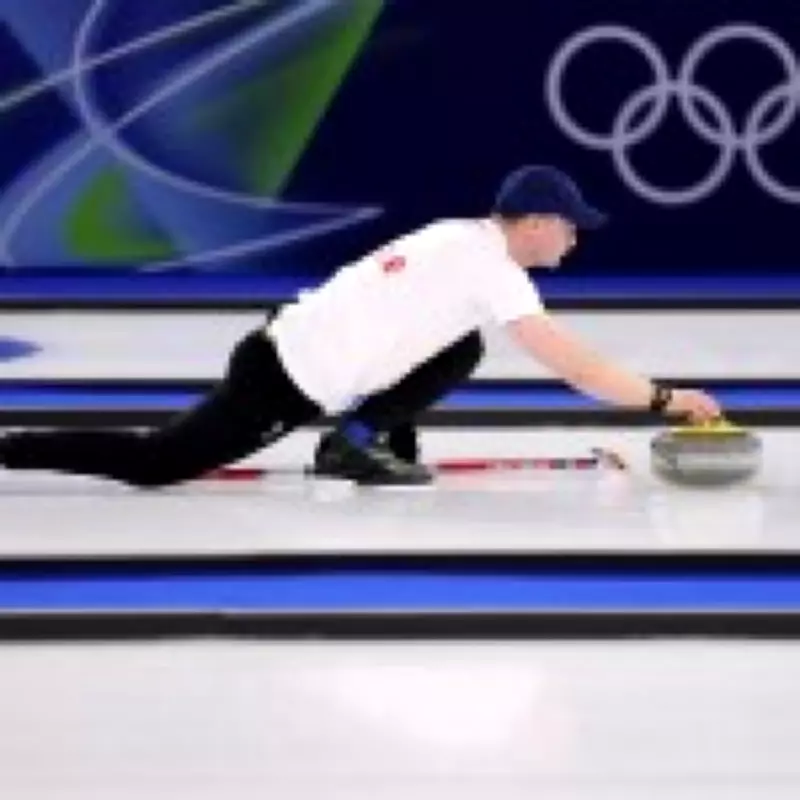
Sweeping is a crucial aspect of curling, used to control the speed and direction of the stones. The brushing action generates heat, creating a thin layer of water on the ice that reduces friction, allowing the stone to travel further and with greater precision. Frantic sweeping often indicates dissatisfaction with the stone's initial force, as players adjust its trajectory to achieve optimal positioning.
What Is the Hammer Rule in Curling?
The hammer refers to the advantage of throwing the last stone in an end. This allows a team to react to all preceding stones, making it easier to score points. If the team with the hammer scores at least one point, the hammer passes to the opponent. However, if they fail to score, they retain the hammer for the next end. This can lead to strategic decisions, such as declining a single point to keep the hammer for a potential multi-point score later. In extra ends, the team that did not score in the final round gets the hammer, with specific rules for blanked ends varying between disciplines.
What Is the Power Play Rule in Mixed Doubles?
Exclusive to mixed doubles, the power play rule allows the team with the hammer to position their 'in-house' stone on the tee line, while the opponent's guard stone is placed to the side. This opens up scoring opportunities. Each team can use one power play per match, but it cannot be deployed in extra ends.
How Do Time-Outs Work in Curling?
Each team is allocated one 60-second time-out per match, pausing the game to allow players to confer on strategy. Coaches may join these discussions. If a match goes to an extra end, each team receives an additional time-out.
As the Milano Cortina 2026 Winter Olympics approach, Team GB's curling squads are poised to build on their historic successes. With a deep understanding of the sport's rules and strategies, viewers can fully appreciate the skill and tactics on display as Britain aims for more podium finishes.