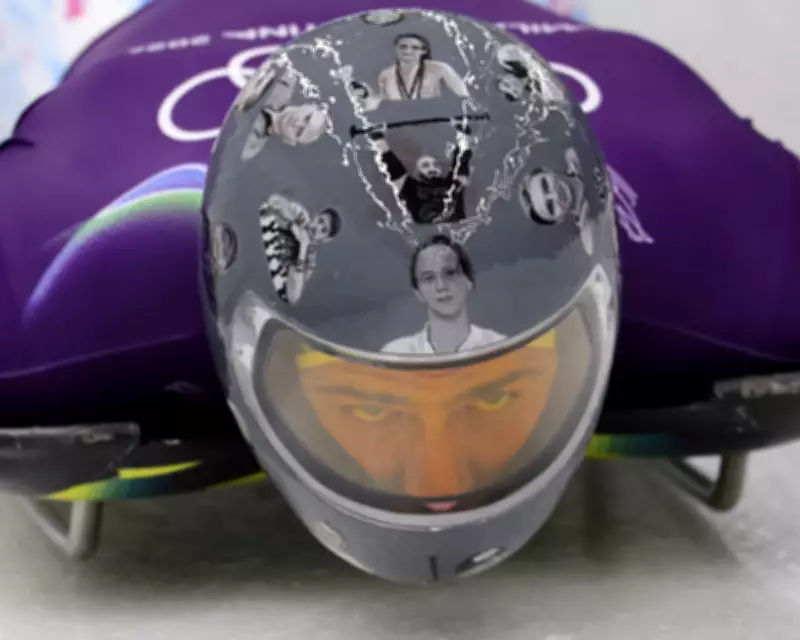
Ukrainian skeleton competitor Vladyslav Heraskevych has made a poignant statement at the Winter Olympics by training in a helmet adorned with photographs of fellow athletes who have lost their lives during the ongoing war in Ukraine. The 26-year-old, who serves as his nation's flag bearer, is fulfilling a pledge to utilise the global sporting platform to maintain focus on the devastating conflict that has ravaged his homeland.
A Personal Tribute to Fallen Friends
Following his training session at the Cortina sliding centre, Heraskevych emotionally revealed that some of the individuals memorialised on his helmet were personal friends. The helmet prominently displays images of seven Ukrainian sports figures, including teenage weightlifter Alina Perehudova, boxer Pavlo Ischenko, ice hockey player Oleksiy Loginov, actor and athlete Ivan Kononenko, diving athlete and coach Mykyta Kozubenko, shooter Oleksiy Habarov, and dancer Daria Kurdel.
Navigating Olympic Protest Protocols
Heraskevych confirmed that the International Olympic Committee has contacted Ukrainian officials regarding his helmet display, with the matter currently "still being processed." This development comes as the athlete carefully balances his desire to highlight Ukraine's plight with Olympic regulations that restrict political demonstrations.
The skeleton competitor previously gained attention during the Beijing Olympics when he held up a "No War in Ukraine" sign just days before Russia's full-scale invasion in 2022. Heraskevych has stated his intention to respect Olympic Rule 50.2, which explicitly prohibits "any kind of demonstration or political, religious or racial propaganda" within Olympic venues, while still ensuring that Ukraine's struggle remains visible throughout the Games.
Broader Context of Russian and Belarusian Participation
This protest occurs against the backdrop of evolving policies regarding Russian and Belarusian athletes in international sport. Following the 2022 invasion, competitors from these nations faced widespread exclusion from global sporting events. However, the IOC has since endorsed their gradual return under stringent conditions, creating a complex landscape for Ukrainian athletes competing alongside representatives from invading nations.
Neither the International Olympic Committee nor the Ukrainian Olympic committee has provided immediate commentary on Heraskevych's specific case. The athlete's actions represent a continuation of the delicate balance between athletic competition and political expression that has characterised recent Olympic Games, particularly for Ukrainian competitors who carry the weight of their nation's conflict onto the world stage.