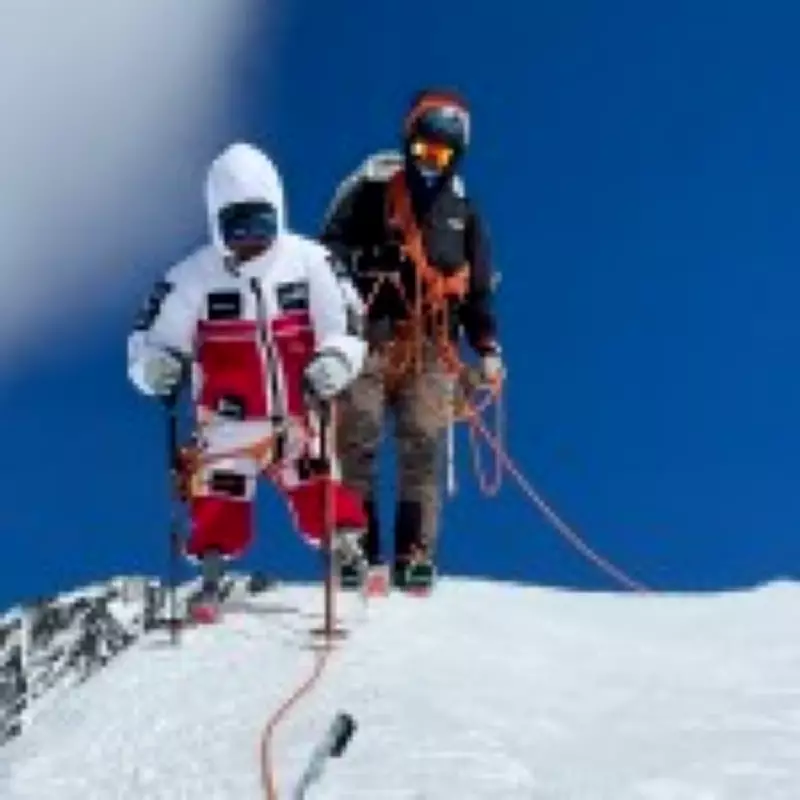
From Battlefield to Mountain Peaks: A Double Amputee's Historic Achievement
At 46 years old, Hari Budha Magar has accomplished a mountaineering milestone that eludes even the most seasoned climbers: reaching the summit of the highest mountain on every continent. Known as the Seven Summits challenge, this formidable feat is remarkable in itself, but what makes Hari's achievement truly extraordinary is that he completed it as a double above-knee amputee, relying on custom-designed prosthetic legs to scale the world's most daunting peaks.
A Life Transformed by Adversity
Born in Nepal and now residing in Kent, Hari served as a Gurkha soldier in the British Army until his life was irrevocably altered in 2010. During a deployment in Afghanistan, an improvised explosive device detonated near him, causing catastrophic injuries that led to the amputation of both legs above the knee. For many, such a traumatic event might signal the end of physical pursuits, but for Hari, it marked the beginning of a profound journey of resilience and purpose.
In the aftermath of his injuries, Hari grappled with post-traumatic stress disorder, describing feelings of being lost and lacking confidence after a career defined by physical toughness. 'I couldn't focus, my brain got foggy, I couldn't remember things and got irritated very easily,' he recalls. While support from UK-based charity Combat Stress aided his mental recovery, Hari discovered that the mountains offered the most potent therapy, inspiring him to redefine his capabilities and motivate others facing similar challenges.
The Path to the Peaks
Hari's ascent into mountaineering was neither immediate nor straightforward. It demanded years of intensive rehabilitation, mental fortitude, and adaptation to prosthetics not originally intended for extreme alpine conditions. 'Life is all about adaptation, and nothing is impossible,' he asserts. 'I have come to learn that whatever happens, happens for a reason. We can't change our past, but we can choose our future.'
His first major breakthrough came in August 2019 with the successful climb of Mont Blanc, Western Europe's highest peak. This achievement served as a pivotal moment, demonstrating that the world's great mountains were within his reach. His ambitions soon expanded, culminating in May 2023 when he made history by becoming the first double above-knee amputee to summit Mount Everest. This accomplishment was particularly significant as it involved challenging and overturning restrictive Nepalese regulations that had previously prohibited amputees from attempting Everest.
Completing the Seven Summits
Just recently, on January 6, Hari completed the final leg of his Seven Summits quest by reaching the summit of Mount Vinson in Antarctica, standing at 4,892 metres. With this ascent, he finished the prestigious challenge, which includes:
- Mount Everest (Asia)
- Aconcagua (South America)
- Denali (North America)
- Kilimanjaro (Africa)
- Elbrus (Europe)
- Vinson (Antarctica)
- Puncak Jaya or Kosciuszko (Oceania)
The Harsh Realities of High-Altitude Climbing
While photographs from his summits show Hari smiling triumphantly against breathtaking snowy backdrops, he is candid about the immense suffering behind those images. 'Climbing mountains as a double amputee is complex,' he explains. 'It affects everything I do, from my daily routine to the actual climb itself. I have almost died several times.'
He recounts a perilous moment on Mont Blanc when his guide slipped on a slope, and only the crampon attached to Hari's stump prevented both from sliding further. 'We were shaking for a while and then carried on,' he says. 'If the crampon hadn't been attached to me, we would both have died, as we were tied to the same rope.' On Everest, he faced another life-threatening situation when he ran out of oxygen in the 'death zone,' saved only by his guide sharing his own supply before descending for help.
Physical Demands and Innovative Training
The physical toll of these climbs is staggering. Hari estimates he moves at about one-third the speed of able-bodied climbers while burning three times as much energy. His specially adapted prosthetic legs, equipped with ice-gripping technology, add extra weight and cause painful friction, leading to blisters and infections around his groin and stumps. Following his Vinson ascent, he developed infections on both stumps, making walking difficult, though he remarkably avoided frostbite and altitude sickness.
Training for the Seven Summits presented its own challenges. Without the means for a personal trainer or independent outdoor training, Hari innovatively recreated mountain conditions in his local gym. 'I replicated mountain action using everyday workout apparatus,' he notes. His rigorous regimen involved two to three hours daily, focusing on cardiovascular endurance, strength, conditioning, and balance—all crucial for navigating steep, icy terrain with prosthetics.
Nutrition played a supportive role, with Hari opting for small, frequent meals including eggs, porridge, meat, vegetables, salad, avocado, rice, bread, and fruit. He abstains from alcohol and has reduced caffeine to maintain optimal physical condition.
Looking to the Future
With the Seven Summits now behind him, Hari, a father of three, is turning his attention to projects that extend his impact beyond mountaineering. 'Now I have more time to play with, I will focus on a book, a documentary, and my aim is to set up a foundation this year,' he says. 'So even after I am long gone, my legacy can still make a difference.'
His ultimate goal is to inspire future generations to embrace challenges rather than fear them. For those aspiring to follow in his footsteps, Hari offers advice rooted in humility and hard-earned wisdom: 'You must just do it and never give up, but it is important to be sensible too and evaluate risk. Many people tell me that I am mad and crazy. It's okay to be a little bit nuts—but not stupid.'
Reflecting on his experiences, Hari emphasises respect for nature: 'Mother Nature is beautiful, but unforgiving when you don't respect her.' His journey stands as a powerful testament to human resilience, proving that with determination and adaptation, even the loftiest goals are attainable.