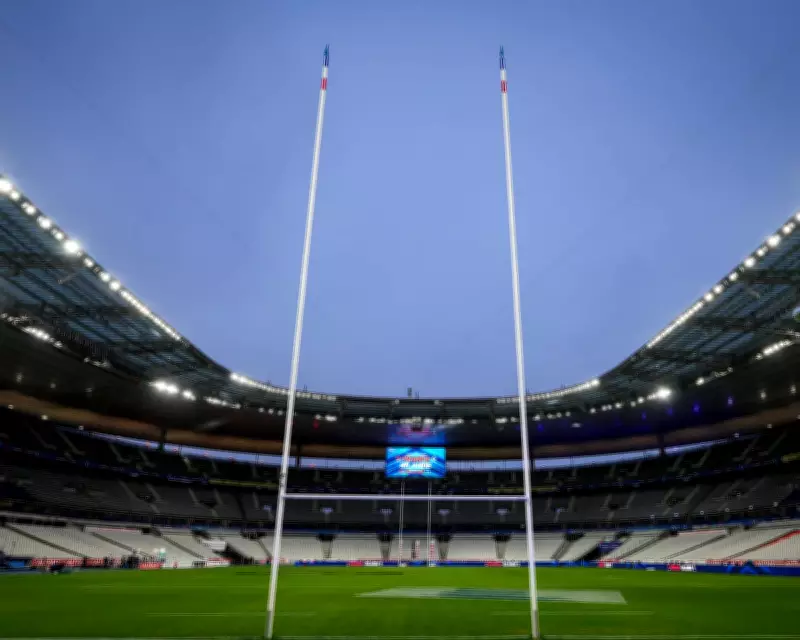
Welcome to a Thursday evening opening match of the Six Nations, a fixture that feels like a glimpse into the future of rugby. With artificial intelligence often providing dubious information and household appliances inexplicably connected to Wi-Fi, the modern era is full of surprises. However, the true focus on this occasion is the long-term future, as this game marks the beginning of the run-in to the Rugby World Cup 2027 in Australia.
Strategic Shifts for Global Ambitions
The Six Nations is undoubtedly a tournament steeped in history and significance, but it would be naive to think that coaches Fabien Galthie of France and Andy Farrell of Ireland are not looking beyond this championship. Both teams are clearly keeping more than half an eye on the upcoming World Cup, using this match as a crucial testing ground for new strategies.
France's Bold Selection Decisions
Fabien Galthie has made some startling changes to his squad, effectively loading his selection dice into a favourite blunderbuss and firing them with force. The languid maestro Damien Penaud has been jettisoned from the wing, while Gregory Alldritt, the steadfast and dynamic Number 8 of recent vintage, has been ushered out. Most surprising of all is the absence of Gael Fickou, widely regarded as the best inside centre in the world for a period and a lynchpin of the French defensive system.

This raises significant questions for Les Bleus, who are the current Six Nations champions. What does this mean for a team that has enjoyed recent success? The answer lies in a broader tactical shift sweeping through international rugby.
Embracing the South African Model
In recent times, the rugby tide has turned, washing up success on the shores of South Africa for Rassie Erasmus to claim. Teams across the globe are taking note and pivoting towards the Springboks' powerful, tight, and kick-to-compete oriented style of play. This approach emphasises a bench full of massive units designed to splinter opposition souls late in the game.
England adopted this model in 2025 with some success, and now Ireland and France appear to be following suit. Consequently, there is no place for the aerially challenged Damien Penaud, and on the Irish side, Andy Farrell has done away with his fourth favourite child, James Lowe. Penaud struggles to catch high balls, while Lowe would take an age to chase them down. In the current tactical climate, such difficult choices have become necessary.
Ireland's Injury Concerns and Scottish Parallels
Adding to the complexity for Ireland, they enter this tournament with a squad hammered by injuries, a situation that has traditionally been the preserve of Scotland. This further complicates their preparations and could impact their ability to execute the new gameplan effectively.
Predicting the Unpredictable
All things considered, this opening match is notoriously hard to predict stylistically. The selections suggest a plethora of new gameplans, but their true effectiveness will only be revealed once the studs hit the turf and the ball is launched into the air. Despite the mystery surrounding both teams' approaches, the odds still favour a France victory, given their championship pedigree and home advantage.
As the Six Nations kicks off, fans are set for a fascinating contest that not only honours the tournament's rich heritage but also serves as a critical stepping stone towards the 2027 Rugby World Cup. The tactical evolution on display here could well shape the future of international rugby.