Six Nations Championship Faces Existential Threat After Celtic Nations' Opening Weekend Woes
The Six Nations championship stands at a critical crossroads following a sobering opening weekend that saw all three Celtic nations suffer comprehensive defeats. Ireland, Scotland and Wales collectively experienced their worst start to the tournament since the year 2000, raising serious questions about the competitive balance of European rugby's premier international competition.
Opening Weekend Results Paint Concerning Picture
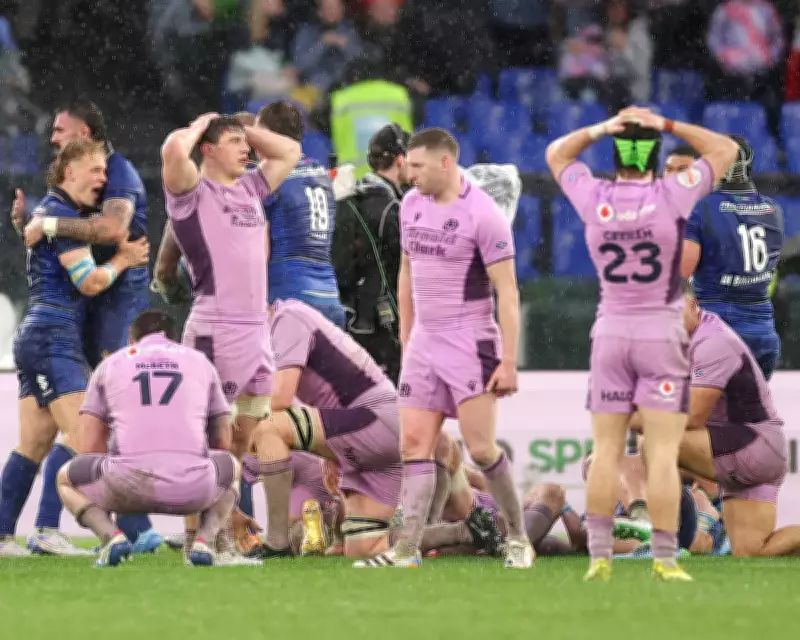
France delivered a masterclass performance against Ireland in Paris, completely outclassing the visitors in every department despite challenging weather conditions. Meanwhile in Rome, Scotland produced a below-par display that saw them comprehensively beaten by an Italian side that capitalised on numerous Scottish errors. The Welsh performance at Twickenham proved equally concerning, with Warren Gatland's team struggling to compete against a dominant English outfit from the opening whistle.
This collective failure represents more than just a disappointing start for the Celtic nations. It highlights a growing disparity between the resources and player development pathways available to different nations within the championship. The weekend's results have sparked genuine fears that the Six Nations could be evolving into a two-tier tournament, with England and France establishing themselves as clear frontrunners while the Celtic nations struggle to keep pace.

Historical Parallels Raise Alarm Bells
The current situation bears worrying similarities to the early 2000s, when England and France dominated the championship for five consecutive seasons. During that period, the professional era was still in its relative infancy, and some nations adapted to the new demands more effectively than others. The opening weekend of the 2000 tournament saw Ireland demolished 50-18 by England at Twickenham, Wales thumped 36-3 by France in Cardiff, and Italy securing a famous 34-20 victory against Scotland in their championship debut.
While there were occasional exceptions to this pattern - most notably Ireland's victory in Paris and Scotland's famous Murrayfield win against England during that period - it took nine long years before Ireland claimed another championship title. Wales did manage to secure Grand Slams in 2005 and 2008, but otherwise England and France claimed nine of the first twelve Six Nations championships.
Structural Challenges Facing Celtic Nations
Several structural factors are contributing to the current imbalance. Ireland, despite being ranked as the world's top nation not long ago, have struggled to maintain their momentum following Johnny Sexton's retirement. Several other key players are approaching the latter stages of their careers, and concerning results at age-grade level suggest potential problems in the talent pipeline.
The situation in Scotland appears equally challenging, with rugby insiders expressing concerns about the depth of talent coming through once the current generation of players retires. Wales face perhaps the most significant challenges, with well-documented financial difficulties and neglected player development pathways contributing to the national side's sharp decline in recent seasons.
England and France Strengthen Their Positions
Meanwhile, England and France continue to strengthen their positions through superior resources and more robust player development systems. The depth of talent available to both nations was evident throughout the opening weekend, with France's young stars like Louis Bielle-Biarrey, Mickaël Guillard and Théo Attissogbe demonstrating the quality emerging from their formidable Top 14 competition.
England's situation appears equally promising, with remarkable depth in several key positions. The back row competition alone sees players of Ben Earl's quality fighting for starting positions against emerging talents like Henry Pollock and established stars like Tom Curry. This depth was further demonstrated by England's A team scoring 52 points against their Irish counterparts, while the under-20 side also impressed against their French opposition.

Immediate Challenges and Longer-Term Concerns
The immediate challenge for the Celtic nations is to respond positively in the second round of fixtures. Scotland face England at Murrayfield this Saturday, while Ireland host Italy in Dublin. Both matches represent crucial opportunities to restore some competitive balance to the championship.
However, the longer-term outlook remains concerning. The international game is increasingly favouring nations with larger player pools and greater financial resources. The physical demands of modern rugby, particularly at the breakdown and in aerial contests, are creating challenges for smaller nations that struggle to compete in these crucial areas.
The fundamental appeal of the Six Nations has always rested on competitive uncertainty, intense historic rivalries, and dramatic final-quarter tension. While there were elements of this in Rome's thrilling contest, the one-sided nature of the matches in Paris and Twickenham threatens to undermine the championship's unique appeal.
Looking Ahead to This Weekend's Crucial Fixtures
This weekend's matches take on added significance following the opening round results. Scotland must demonstrate significant improvement when they face England at Murrayfield, while Ireland will be expected to bounce back strongly against Italy in Dublin. Wales face another challenging assignment as they prepare for their next fixture.
The championship desperately needs competitive responses from all three Celtic nations to maintain the balance that has made the Six Nations such a compelling tournament. Failure to do so could see the competition evolve into a predictable two-horse race between England and France, diminishing the drama and uncertainty that has characterised this historic competition for decades.
While it remains early in the championship, the opening weekend has served as a stark warning. The Six Nations stands at a critical juncture, and the responses from Ireland, Scotland and Wales in the coming weeks will determine whether this season becomes a compelling competition or a procession for the two strongest nations.