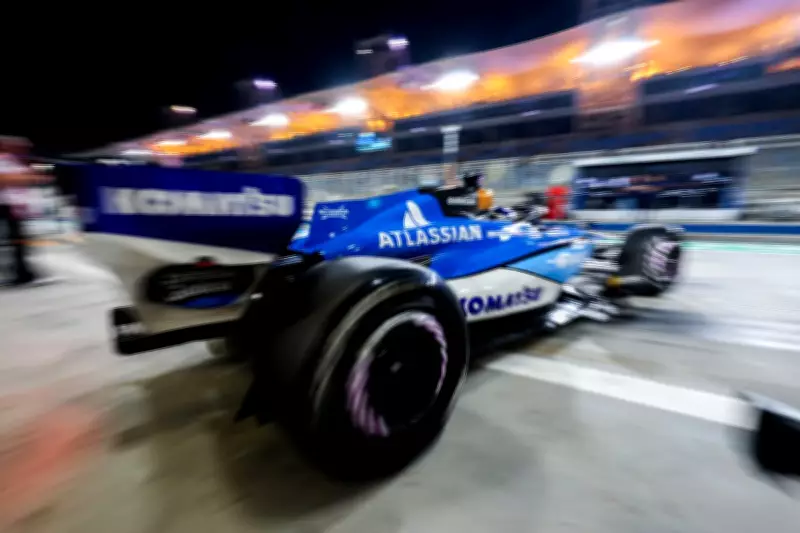
Williams F1 'Competing with Top 50 Teams in Sport', Says Commercial Expert Kenyon
Peter Kenyon, the seasoned sports commercialisation expert now advising the Atlassian Williams F1 Team, has declared that the historic Formula 1 outfit competes not just against its nine or ten grid rivals, but against the elite top fifty teams across all global sports. This bold statement comes as Williams unveils a series of new commercial partnerships for the 2026 season, signaling a significant revival under the ownership of Dorilton Capital.
From Football Powerhouses to Formula 1 Revival
Kenyon, who played pivotal roles in transforming Manchester United and Chelsea into sponsorship powerhouses, is now applying his expertise to Williams. He emphasizes that the team's five-year journey since its 2020 acquisition is built on a long-term plan to return to the front of the grid. "It's an incredible brand with lots of legacy and great values," Kenyon tells City AM, highlighting key milestones like the signing of former Ferrari driver Carlos Sainz and last year's fifth-place finish in the constructors' standings as evidence of progress.
Tech-Driven Strategy Fuels Commercial Rebirth
The Williams revival is fundamentally tech-driven, according to Kenyon. Last year's landmark title partnership with Atlassian has been bolstered by new deals with Barclays, Anthropic, Marks & Spencer, and Wilkinson Sword ahead of the 2026 season opener in Australia. "AI is on everybody's tongues. We already use AI in our aero and wind tunnel," Kenyon explains. "Having tech businesses like Atlassian, Anthropic, and Airia gives us real tech partners that can support our infrastructure and get us there smarter and quicker."
He asserts that Williams' ability to achieve and sustain success will hinge more on technological advancement than pure engineering, making these partnerships integral to growth.
Benchmarking Against Global Sports Giants
While Formula 1 lacks the ticket-sale revenue streams of football, its surging popularity—especially in the US through platforms like Netflix and Apple—has attracted a flood of sponsors and driven team valuations to levels rivaling the NFL and NBA. Kenyon notes, "We compete against the other nine or ten teams in F1, but we also compete against the top 50 teams across sport. Most partners spending this kind of money are evaluating all sports, asking, 'Do we want to be in football? Do we want to be in the NFL?' So we benchmark against those teams, and it's our job to bring them into F1 and then to Williams."
Global Appeal and Cross-Sport Learning
Kenyon acknowledges that "football is still the biggest sport on the planet," but he sees mutual learning opportunities between F1 and other sports. Formula 1's global circus, visiting 24 different markets, creates a unique gathering of top talent from politics, entertainment, sports, and business. "It's like the circus coming to town," he says, contrasting it with football's efforts to take league games overseas, such as the NFL's expansion into Europe.
Reflecting on his time at Manchester United, Kenyon adds, "We knew we had a global fanbase, not just a Manchester or national one. How do you get that product into those fans' hands? That's what F1 has in abundance."
Long-Term Journey to Race-Winning Ambitions
Commercial deals alone aren't enough, as evidenced by Manchester United's recent struggles. Williams' on-track revival is an iterative process, with the 2026 engine and chassis rule overhauls seen as a critical chance to close the gap on rivals. While this week's Australian Grand Prix will test progress, Kenyon keeps the focus long-term. "We're on a journey. That journey is, we believe, to being race-winning in 2028. It's not about one race or one season. It's a genuine rebuild back to the top."
As Williams prepares for the new season, Kenyon's insights underscore a strategic blend of commercial savvy, technological innovation, and global benchmarking, positioning the team not just as an F1 contender, but as a competitor in the wider world of elite sports.