Hans Herrmann: The Enduring Legacy of a German Racing Icon
The world of motorsport mourns the passing of Hans Herrmann, the celebrated German racing driver whose remarkable career was defined by both spectacular crashes and historic victories. Herrmann, who has died at the age of 97, leaves behind a legacy that spans Formula One grands prix and some of the most prestigious endurance races in automotive history.
A Promise Kept: The 1970 Le Mans Victory
Before departing his Stuttgart home for the 1970 24 Hours of Le Mans, Herrmann made a solemn promise to his wife, Magdalena. He vowed that if he emerged victorious in the French sports car classic, he would retire from competitive driving. At 42 years old and on his 14th attempt at the legendary race, few expected him to need to honour this pledge.
Yet triumph he did. Partnered with co-driver Richard Attwood, a former Jaguar apprentice, Herrmann piloted their Porsche 917K to a commanding victory. They held the lead for the final 12 hours of a race run on a rain-soaked track so hazardous that only seven of the 51 starting cars managed to reach the finish line. This monumental win marked the perfect conclusion to a distinguished racing career.
From Formula One to Endurance Excellence
Herrmann's motorsport journey included 19 Formula One grands prix drives for various teams, most notably Mercedes-Benz. His standout performance came at the 1954 Swiss Grand Prix on the challenging Bremgarten circuit in Bern, where he secured a commendable third-place finish.
However, it was in endurance racing that Herrmann truly excelled. Beyond his legendary Le Mans victory, his trophy cabinet included outright wins at the Targa Florio, the 12 Hours of Sebring, and the Daytona 24 Hours. He also achieved two class victories in the demanding Mille Miglia, cementing his reputation as a versatile and formidable competitor across different racing disciplines.
Spectacular Survivals and Near Misses
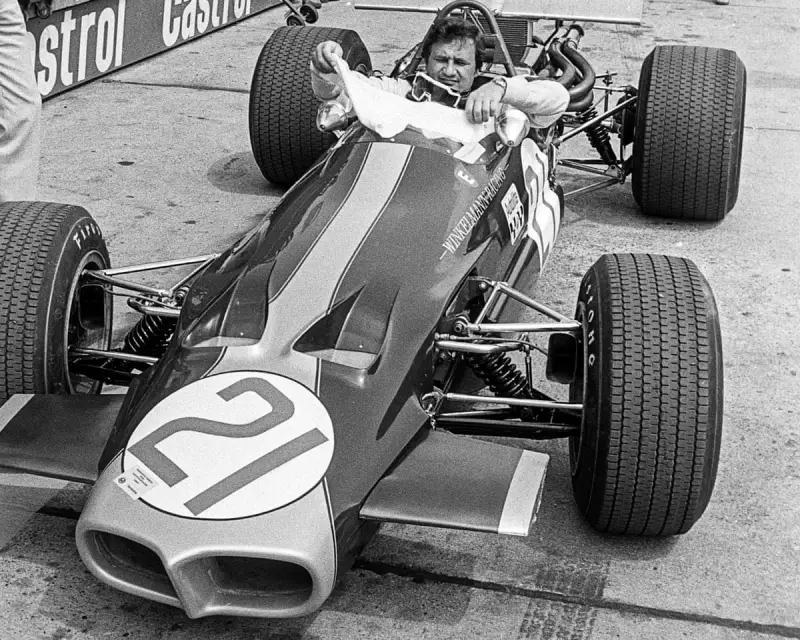
Herrmann became almost as famous for his dramatic accidents as for his racing successes. During the 1959 German Grand Prix at Berlin's high-speed Avus circuit, the brakes failed on his BRM as he approached the end of a three-mile straight at approximately 180mph. The car somersaulted multiple times, completely destroying itself. In an era before safety belts were standard, Herrmann was thrown from the cockpit. Miraculously, he walked away with only minor cuts and bruises, astonishing spectators who had witnessed the terrifying crash.
Another celebrated incident occurred during the 1954 Mille Miglia. While leading his class in an open-cockpit Porsche, Herrmann approached a level crossing just as the barrier was being lowered. With split-second timing, he forced his co-driver to duck before lowering his own head as the car shot beneath the barrier mere seconds before a train arrived.
Early Life and Racing Beginnings
Born in Stuttgart in 1928, Herrmann came from a family that operated a cafe and bar. His wartime experience included being drafted into the Waffen-SS at age 17 during the final weeks of the second world war. He managed to escape during transit to his posting, along with several other teenage conscripts, and returned home to begin an apprenticeship as a baker and pastry cook.
Herrmann acquired his first car, a pre-war BMW, through the black market. His competitive debut came in 1952 at a regional rally, where he drove a new Porsche 356 coupe. His talent quickly became apparent, and he soon began winning his class in events like the Deutschland rally. The official Porsche team took notice, and Herrmann secured class victories in two consecutive Mille Miglia races in 1953 and 1954 driving their 550RS sports cars.
The Mercedes-Benz Era and Beyond
These impressive results caught the attention of Alfred Neubauer, the Mercedes-Benz team manager overseeing the company's postwar return to elite motorsport. Herrmann joined Neubauer's driver roster for 1954, participating in the team's comeback at that year's French Grand Prix. Driving alongside legends like Juan Manuel Fangio and Karl Kling, Herrmann set the fastest lap before retiring with engine issues.
He competed in four more grands prix that season, achieving third place in Bern and fourth at Monza. However, the arrival of Stirling Moss in 1955 pushed Herrmann down the team hierarchy. A serious crash during practice at Monaco left him with cracked vertebrae and broken ribs, further complicating his Formula One aspirations.
Porsche Partnership and Later Career
Following Mercedes' withdrawal from racing at the end of the 1955 season, Herrmann rejoined Porsche. He shared a class win at Sebring with Wolfgang von Trips and delivered strong performances with Ferrari at the Targa Florio, finishing third alongside Olivier Gendebien. With Porsche in 1956, he achieved third place at Le Mans with Jean Behra and fourth at the Nürburgring 1000km with Umberto Maglioli.
While his Formula One career gradually diminished, Herrmann remained highly competitive in sports cars and hill climbs. After rejoining Porsche in 1960 following a stint with the Abarth team, he teamed with Jo Bonnier to win the Targa Florio and with Gendebien to triumph at Sebring. In 1968, he returned to Sebring to win with Jo Siffert in a Porsche 907, and was part of the five-driver team that won the Daytona 24 Hours that same year.
The Le Mans Duel and Final Triumph
Herrmann's 1970 Le Mans victory was preceded by one of the most dramatic finishes in the race's history the previous year. In 1969, he engaged in an epic final-hour duel for the lead against Jacky Ickx's Ford GT40 while driving a Porsche 908. The battle concluded with Ickx winning by a mere 120 metres after nearly 5,000 km of racing – the closest finish in Le Mans history at that time.
A year later, Herrmann claimed his revenge. Driving a 600hp 12-cylinder Porsche 917K entered by Porsche Salzburg and painted in Austrian red and white, he secured what would be Porsche's first of 19 victories at the world's most famous sports car race.
Life After Racing
Following his retirement from competitive driving, Herrmann established a successful car accessories company. He remained a familiar presence at motorsport events, including the Goodwood Festival of Speed and the recreated Mille Miglia, where he demonstrated the Mercedes and Porsches that had made him famous.
In a disturbing incident in 1991, Herrmann and his wife were kidnapped and released after a ransom payment. The kidnappers were never identified.
Herrmann met his wife Magdalena through fellow driver Wolfgang von Trips at the Nürburgring in 1960. She survives him, along with their sons Dino and Kai, and a grandson.
Hans Herrmann, racing driver, born 23 February 1928; died 9 January 2026.