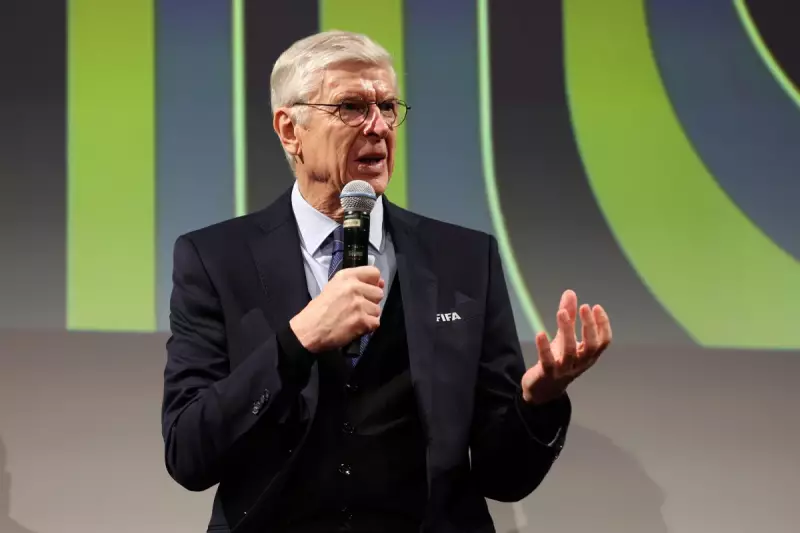
FIFA's Chief of Global Football Development, Arsene Wenger, has robustly defended the decision to expand the men's World Cup to 48 teams for the first time in 2026, stating the governing body has found the "right number".
Evolution and Justification for a Larger Tournament
The former Arsenal manager, a long-time advocate for including more nations, made the comments during a panel discussion in Washington, DC on 4 December 2025. He framed the move as a natural progression for a sport with global ambitions. "We started with 13 teams, after, 16, until in ’82 was the first time with 24 teams. ’98 was the first time with 32 teams," Wenger stated, highlighting the tournament's historical growth.
He argued that with 211 national associations under FIFA's umbrella, a 48-team format means just under a quarter get to participate. "That means one team out of four has a chance to participate… [but] still 75 per cent of the teams are not there," he added, suggesting the expansion remains exclusive while rewarding more nations.
Quality Gap is Narrowing, Says Wenger
Addressing critics who fear a diluted competition and an overly long schedule, Wenger pointed to the recent FIFA Under-17 World Cup, also held with 48 countries, as evidence that the gap between nations is closing. "I was a bit scared before because I thought maybe the difference between the teams would be too big. In fact, we realised that the difference, quality-wise, between the different countries has been reduced," he explained.
He credited improved football education and infrastructure in smaller nations for this shift. Newcomers to the 2026 finals like Cape Verde, Curacao, Jordan, and Uzbekistan were highlighted as beneficiaries of this global development work.
Youth Investment: The Key to Future Success
Wenger emphasised that success on the world stage is no longer solely dependent on a nation's population size, citing Croatia's repeated runs to the latter stages as a prime example. He insisted a direct link exists between youth programmes and senior team performance.
"We have made a world study, and we have realised that it’s a 100 per cent correlation with the quality of the youth work and the success in the top team," Wenger claimed. He praised the "fantastic" youth work in Uzbekistan and Jordan's surprising performances, stating their progress is "no coincidence."
While acknowledging traditional powerhouses, Wenger also noted that larger countries like China and India have yet to reach their full footballing potential on the global stage.