
USL's Ambitious Growth Plans Meet Harsh Financial Realities
The United Soccer League (USL), which governs much of lower-league soccer in the United States, has positioned itself as a catalyst for growth ahead of the 2026 World Cup. However, this expansion drive is increasingly at odds with the financial fragility of its member clubs, raising questions about the league's long-term sustainability.
Expansion Fees and Revenue Sharing: A Divergent Model
Unlike Major League Soccer (MLS) and other American sports leagues, the USL does not implement a revenue-sharing system with its teams. This means clubs are largely dependent on matchday earnings, merchandise sales, and player transfers to stay afloat. Recent transfers for starting players have typically yielded returns in the five-figure to low-six-figure range, which is insufficient to cover operational costs.
Despite this, the USL has aggressively expanded, launching numerous teams in the second-division USL Championship and third-division USL League One over the past decade. Expansion fees, approximately $20 million for the Championship and over $5 million for League One, flow directly to the league's headquarters. According to publicly available financial statements, 61% of the USL's $56 million in revenue came from these fees.
The league's plans include introducing a new top-division competition, USL Premier, alongside MLS, with promotion and relegation potentially starting by 2028. This move could generate a nine-figure windfall from expansion fees, but it does little to address the financial struggles of existing clubs.
Club Instability and Operational Costs
The financial pressures on USL clubs are stark. Since 2015, 20 teams in the Championship or League One have ceased operations. Most recently, South Georgia Tormenta FC went on hiatus just weeks before the 2026 season began, despite having sold season tickets and opened a new $30 million stadium in 2022. The club's attendance had plummeted by 36% in 2025, averaging only 719 fans per game.
Operating costs remain prohibitively high. Estimates suggest that a first-year Championship club spends $24-29.5 million annually, while returning teams incur $3.7-8.4 million. In League One, debuting sides face costs of $7.6-11.5 million, and existing teams spend $2.4-5.4 million. Additional expenses include annual league dues exceeding $300,000, travel costs, and media expenditures, such as the over $300,000 spent by Orange County SC on TV and radio in 2024.
Dan Egner, former technical director of Real Salt Lake's affiliate Real Monarchs, highlighted the financial challenges, noting that winning the USL Championship in 2019 actually cost the team money due to travel expenses outweighing home game revenue. "It literally cost us money to win the championship," Egner said.
Labor Disputes and Player Protests
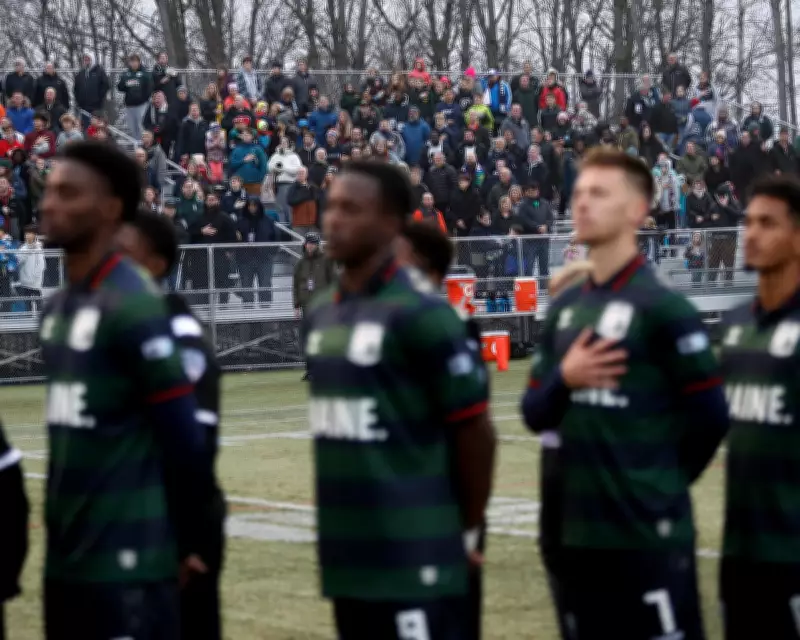
The financial instability extends to labor relations. The USL Players Association (USLPA) and the league are locked in contentious negotiations over a new collective bargaining agreement (CBA). In February 2026, the USLPA voted to authorize a strike, with 90% of players rejecting the league's latest offer. The opening weekend of the Championship season saw silent protests, with players standing motionless for the first minute of matches.
The league's response included emailing players guidance on crossing picket lines and resigning union membership, further escalating tensions. Egner, now an agent, emphasized the human cost of club closures, noting that some players have been affected by up to five team foldings in their careers.
Ownership Vetting and Future Prospects
The responsibility for vetting prospective club owners falls to the USL office, led by CEO Alec Papadakis and his son, Justin Papadakis, the deputy CEO. However, the high rate of club failures raises concerns about this process. Egner expressed skepticism about promotion and relegation discussions, stating, "I don't see how we can talk about pro/rel when you have clubs fold every year."
Despite these challenges, the USL continues to attract investment, with two private equity firms recently announcing significant funding. Yet, this has not translated into greater stability for clubs. The league's focus on expansion and top-division ambitions adds an element of experimentation, leaving existing teams to navigate financial uncertainties while hoping to benefit from future growth.
As the 2026 World Cup approaches, the USL's model faces a critical test. Balancing ambitious expansion with the financial health of its clubs will be essential to realizing its vision for American soccer.