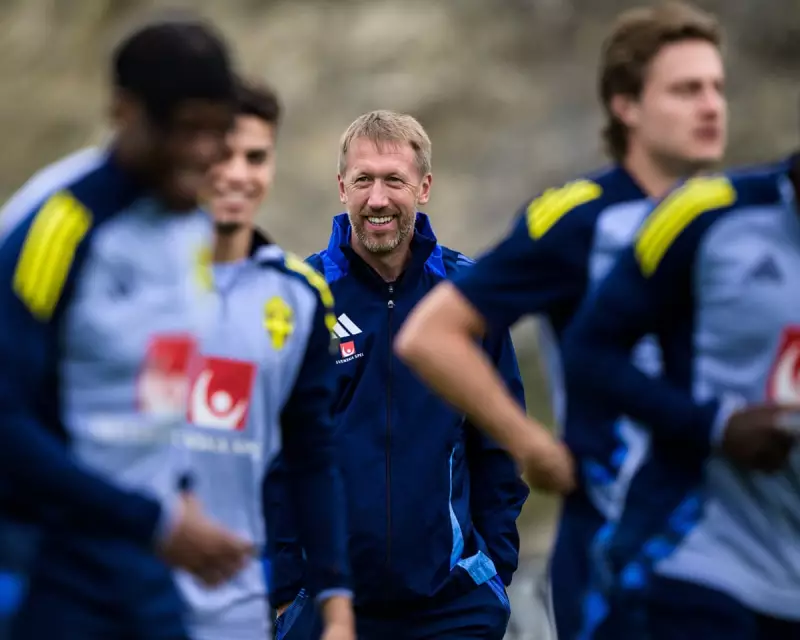
Graham Potter has immediately returned to management with the Sweden national team, insisting he required no break after his recent departure from West Ham. The 50-year-old English manager was swiftly appointed following Jon Dahl Tomasson's departure, taking charge of a squad brimming with talent but struggling in their World Cup qualifying campaign.
A Swift Return to Familiar Territory
Potter's move to Sweden represents something of a homecoming for the coach, who first made his name in Scandinavian football during a transformative seven-year spell with Östersund. The timing proved perfect for both parties, with the Swedish Football Association acting quickly to secure their preferred candidate just over a fortnight after his West Ham dismissal.
"I wasn't ready to stop," Potter stated emphatically upon arriving in Geneva for his first match against Switzerland. "I didn't need a break. I didn't need anything. I wanted to carry on working." This immediate return contrasts sharply with his nearly two-year absence from the game after leaving Chelsea, suggesting this opportunity felt particularly right for the measured coach.
The Challenge: Reviving Sweden's World Cup Hopes
Potter inherits a team in a curious predicament. Sweden sit bottom of their qualifying group with just a single point from their campaign so far, having lost their last three matches under Tomasson. Their most recent defeat against Kosovo in Gothenburg saw the team appear disorganised and lacking direction.
Despite their dismal position, Sweden retain hope of reaching the 2026 World Cup through a playoff spot secured via their Nations League performance last year. The immediate task involves salvaging their Group B campaign, requiring victory against Switzerland and favourable results elsewhere to keep automatic qualification hopes alive.
Implementing His Philosophy
During a training camp in Marbella, Potter wasted no time stamping his authority on the squad, announcing they would play a variation of the traditional 4-4-2 formation. This tactical shift towards a more familiar system has been welcomed by Swedish supporters who watched their team become increasingly disconnected in recent months.
Beyond tactics, Potter has focused on rebuilding squad cohesion through innovative methods. He divided players into small groups and asked them to share stories about individuals who significantly impacted their careers. Players reported this created unprecedented levels of openness and honesty within the camp.
Potter has also made efforts to connect culturally, conducting his pre-match press conference in Swedish - a language he learned during his previous stint in the country. This contrasts with his predecessor Tomasson, a Dane who preferred to speak English and was perceived as somewhat distant from Swedish football culture.
Navigating Injury Concerns
Potter's first match against Switzerland presents immediate challenges, with several key players unavailable through injury. Dejan Kulusevski, Viktor Gyökeres, and Lucas Bergvall all miss the crucial qualifier, while captain Victor Lindelöf won't be risked after picking up a minor knock in training.
Most concerning is the fitness of talismanic striker Alexander Isak, who continues to struggle with groin problems following his British record move to Liverpool. "He's not ready to start on Saturday," Potter confirmed. "We have to be smart and use him in a good way. I think it's best for Alex that he can help us from the bench."
Despite these absences, Potter possesses an enviable collection of attacking talent including Anthony Elanga, Roony Bardghji, and Yasin Ayari. The new manager's primary task involves finding the right balance that eluded Tomasson, whose teams often appeared loose and overly adventurous.
For both Potter and Sweden, this appointment represents a chance at redemption. The manager seeks to rebuild his reputation after challenging spells in English football, while the national team aims to restore its identity as organised, difficult opponents who consistently punch above their weight. With World Cup qualification still achievable, despite their poor start, Potter's return to Swedish football could prove perfectly timed for all involved.