
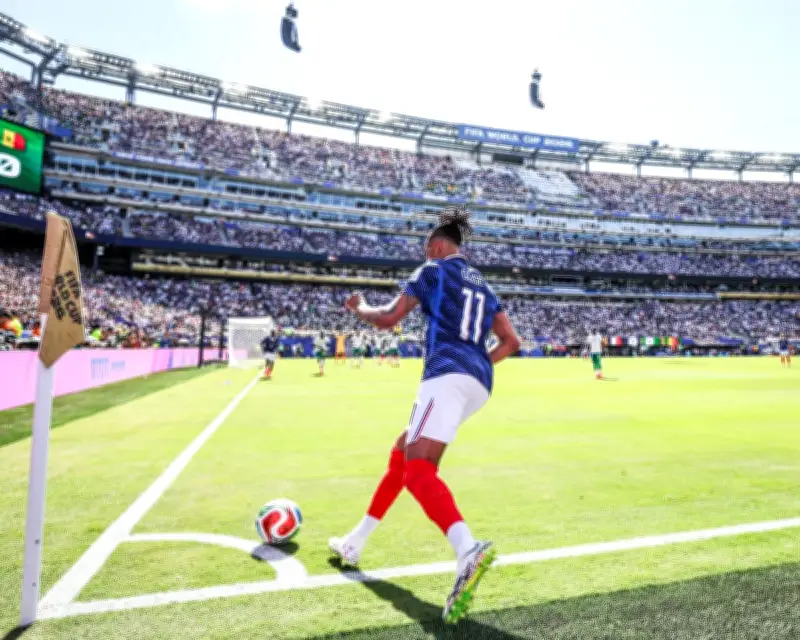
Michael Olise, born in White City, west London, and a chess enthusiast who grew up loving cricket, was the key man in a star-studded France midfield against Senegal. He represents a key faultline in French football history, playing with a sense of freedom and joy that has not yet submitted fully to Didier Deschamps' tactical yoke.
Olise's Rise and Impact
Olise, probably the best creative player in the world, racked up 26 assists for Bayern Munich last season. His shift into a more central role transformed France's game against Senegal from a drab slog to an impressive victory. The confidence he always had at Crystal Palace has evolved at Bayern into graceful fluency.
The Magic Square Legacy
At the 1982 World Cup, France were renowned for their carré magique—Michel Platini, Jean Tigana, Alain Giresse, and Bernard Genghini. That team played with panache, embodying French football's ideal of la gloire. Two years later, they won the Euros with a more defensive but still stylish Luis Fernández.
France now have a potential foursome of Ousmane Dembélé, Kylian Mbappé, Désiré Doué, and Olise—three great products of the French academy system and a player who started at Hayes & Yeading and got his big break at Reading. Yet France are not all-conquering. They drew 2-2 with Iceland in qualifying and did not score a single goal from open play at the last Euros despite reaching the semi-finals.
Historical Tension Between Flair and Results
The France side of 1958, with Just Fontaine, Raymond Kopa, and Roger Piantoni, were built on attacking flair. But after failing to qualify for the 1962 and 1970 World Cups and going out in the group stage in 1966, a reaction set in. Georges Boulogne spoke of 'football labeur' and said the game had to stop being 'une activité ludique,' but he proved no more successful.
Michel Hidalgo brought back the style, winning the 1984 European Championship, but France became glorious losers, losing to West Germany in the 1982 and 1986 semi-finals. As philosopher Raymond Aron was quoted in the documentary series Le siècle des intellectuels, France 'was less interested in winning than in doing things well.'
The Deschamps Era and Its Critics
Gérard Houllier overhauled the academy system in 1988, paving the way for future success despite failing to reach the 1994 World Cup. Aimé Jacquet replaced him, playing cautious, safety-first football that led to the 1998 World Cup win. The French found they enjoyed boring winning more than heroic defeat.
Deschamps, Jacquet's captain, learned the lesson. For 12 years, he has engaged in an apparent absurdist prank of making the greatest squad of attacking players as boring as possible. It brought a World Cup, but after a glum 1-0 win against Belgium in the 2018 semi-final, Eden Hazard observed that he would rather lose than win playing like that. A string of forgettable tournament appearances has led to a growing feeling in France that Deschamps has been holding them back.
Since the European Championship, Dembélé has owned the Ballon d'Or, Doué won man of the match in the Champions League final, and Mbappé was top scorer in La Liga. Yet the player causing excitement, charged with restoring la gloire, is Olise.