
Liverpool's Attacking Flair Stifled in Disappointing Title Defense
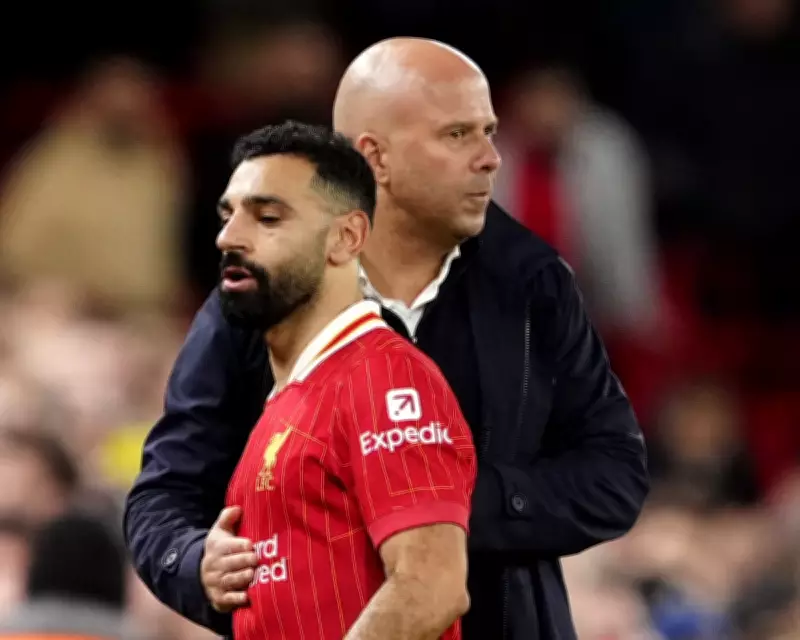
Arne Slot, Liverpool's manager, has identified the winger position as "the hardest position to play" in modern football, and his team's current struggles vividly illustrate this point. The Premier League champions have looked alarmingly slow and lacking in tempo this season, with much of the spotlight falling on their underperforming wide players. Liverpool return to Molineux on Friday for an FA Cup fifth-round fixture against Wolverhampton Wanderers, just three days after suffering a stoppage-time league defeat to the same opponents. This match presents a critical opportunity for Slot to test his array of wingers and determine whether they can rediscover their cutting edge.
Mohamed Salah's Dramatic Statistical Decline
The most glaring issue has been the dramatic drop in form of Mohamed Salah, who has gone from being Liverpool's talismanic leader to a player fighting for his place in the starting lineup. Last season, the Egyptian forward was directly involved in an impressive 47 goals, often making the decisive difference in tightly contested matches. This campaign, however, he has managed only 11 goal involvements, a stark contrast that underscores Liverpool's broader attacking woes. Salah has scored just five times from an expected goals (xG) figure of 6.53, and his recent strike against Wolves marked his first league goal in 11 appearances, highlighting a prolonged period of ineffectiveness.
Liverpool's overall goal output has plummeted, with the team scoring only 48 goals in 29 league matches this season. This averages out to a meager 1.66 goals per game, a significant decline from the 2.26 goals per game they managed during last season's triumphant title-winning campaign. The champions now find themselves a staggering 19 points behind Premier League leaders Arsenal, a gap that reflects their inability to break down stubborn defenses.
Tactical Challenges and Predictable Play
Slot's Liverpool frequently encounter low defensive blocks from opponents, requiring ingenuity and speed to circumvent. However, the team has often looked ponderous and predictable in possession. Captain Virgil van Dijk openly admitted this week that the side has been "too slow and predictable in possession," a candid assessment that echoes growing concerns among fans and pundits alike. Slot emphasizes that his philosophy is inherently attacking, stating, "My teams have always been attacking. I always make a sort of attacking substitution. I find it indeed hard to hear that people think I like slow play."
Yet, the manager acknowledges the immense difficulty of imposing tempo when opponents deliberately slow the game. "It's so hard to create tempo in a game if the other team doesn't want to have tempo," Slot explains. "It's so hard to create so many chances in the current Premier League where everybody is so physical and has a certain playing style. Everybody is struggling with that and we are struggling with that as well."
Wide Players Failing to Deliver
On the left flank, Salah's tendency to cut inside onto his stronger foot has become predictable, while on the opposite side, Cody Gakpo has been largely ineffective. Gakpo has scored only once in his past nine league games and creates a chance on average every 48 minutes, offering little dynamic threat for his teammates to exploit. The sale of Luis Díaz to Bayern Munich in the summer has been keenly felt; Díaz provided direct running, trickery, and a different profile on the left wing that Liverpool currently lack. Similarly, the impact of Diogo Jota, who often changed games from the bench, has been difficult to replicate.
The midfield area is often too congested for Liverpool to play through centrally, forcing them to seek alternatives. The absence of Florian Wirtz, who had found his rhythm as the creative No. 10 before his recent injury, has further compounded these issues. Without a player like Barcelona's Lamine Yamal to call upon, Slot finds himself at the heart of a tactical conundrum, searching for solutions in a highly competitive environment.
Injuries and Emerging Talents
Recognizing the importance of attacking full-backs, Liverpool acquired Jeremie Frimpong and Milos Kerkez last summer. Frimpong, in particular, has been utilized in a more advanced role due to his exceptional speed, which poses a significant threat to disciplined defenses. However, injuries have limited him to just 13 league appearances, preventing Liverpool from fully benefiting from his capabilities. On the other flank, teenager Rio Ngumoha has shown promise in limited minutes, creating nine chances at a rate of one every 14 minutes—a far superior output to Salah's one chance every 42 minutes. While the 17-year-old is still developing, his ability and speed to beat opponents offer a glimpse of potential that current starters often lack.
European Respite and Future Prospects
Liverpool now enter a busy period, with a Champions League last-16 tie against Galatasaray in Istanbul next week. European competition has provided a welcome respite from domestic struggles, with the team scoring at a rate of more than two goals per game during the league phase and finishing third in their group. The more open style often seen in continental matches better suits Liverpool's speed and physicality. However, the pressing concern remains their Premier League form, which could jeopardize Champions League qualification for next season—a scenario that would make attracting top talent even more challenging.
It is evident why Liverpool targeted Antoine Semenyo before he joined Manchester City, and it seems inevitable that wingers will be a priority in the summer transfer window. For now, Slot must rely on endeavor and cunning on the training ground to extract the best from his available resources. Without a swift improvement, Liverpool's season risks fizzling out, leaving them to contemplate a summer of significant rebuilding.