
Kosovo's Football Journey: From War-Torn Nation to World Cup Hopefuls
The remarkable transformation of Kosovo's national football team represents one of international sports' most inspiring stories. From a makeshift squad playing their first official match in 2014 to standing on the brink of World Cup qualification, this Balkan nation has defied expectations at every turn.
Humble Beginnings and Early Struggles
Samir Ujkani vividly recalls the challenging early days when Kosovo's national team first assembled. "We didn't even know each other," says the former goalkeeper, remembering March 2014 when a makeshift squad gathered to face Haiti in the country's inaugural official match. Ujkani was a rarity at the time—a player with Serie A experience at Palermo who had previously earned 20 caps for Albania.
"I can say without doubt that I didn't know 50% of the guys' names at first," Ujkani admits. "It was really difficult but, in our hearts, we always pushed to get better and believe in each other."
The team faced extraordinary challenges beyond mere unfamiliarity. Kosovo would often train on the rutted pitch at the crumbling Kek stadium outside Pristina, directly beneath the belching Obiliq power plants that rank among Europe's most polluting facilities. On other occasions, players endured three-hour round trips to Mitrovica for single training sessions.
The Diplomatic Battle for Recognition
Kosovo's football journey cannot be separated from its political history. The nation declared independence in 2008 but faced years of struggle for international recognition in sports. Public matches had been banned by Serbian authorities during the 1990s following Yugoslavia's breakup, and a brutal war at decade's end made football seem like the most luxurious of afterthoughts.
Eroll Salihu, former general secretary of the Football Federation of Kosovo, remembers the immense pressure surrounding that first match against Haiti. "If anything went wrong against Haiti I was afraid somebody would misuse it and say Kosovo wasn't able to organise a proper match," he reveals.
Salihu and then-FFK president Fadil Vokrri formed an extraordinary diplomatic partnership that eventually secured Kosovo's place in international football. Their breakthrough came in May 2016 when UEFA and FIFA finally accepted Kosovo as members.
"Fadil had goosebumps," Salihu recalls of the moment they realized UEFA's executive committee had the required votes. "He said to me: 'Eroll, it's happening.' And then he began to cry. I'd never seen him cry, but then I started too."
The Transformation Under Franco Foda
Since gaining official recognition, Kosovo's football fortunes have undergone a dramatic transformation. The appointment of German manager Franco Foda in 2024 proved particularly pivotal.
"He gave us this push," explains Ujkani, who now serves on the FFK executive committee. "He's a real commander and put us on the correct, straight way with good tactics. The team became connected. We always had talent but for a long time we could not progress under the regime."
Kosovo's current squad represents the culmination of years of development. Led by captain Vedat Muriqi (standing in for the injured Amir Rrahmani) and featuring talents like Juventus's Edon Zhegrova and Hoffenheim forward Fisnik Asllani, the team has become a formidable force.
Their recent achievements speak volumes:
- Finishing runners-up in a challenging Group B during World Cup qualifying
- Recording impressive victories against Sweden (twice) and Slovenia
- Securing a crucial draw against Switzerland at home
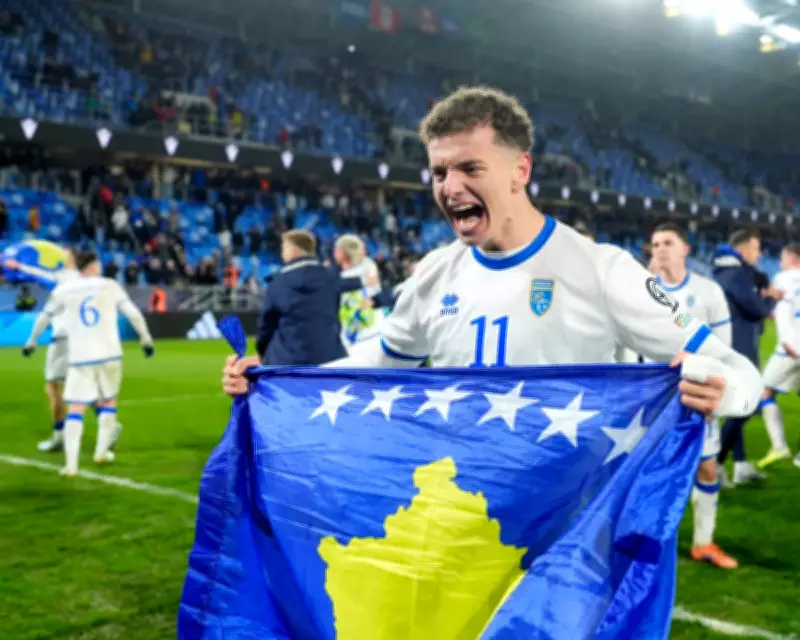
- Winning a thrilling 4-3 playoff semi-final against Slovakia in Bratislava
A Nation United Behind Its Team
On Tuesday evening, Kosovo will face Turkey in what could become the most significant match in the nation's football history. Victory would secure their first-ever World Cup finals appearance—an achievement that seemed utterly impossible just twelve years ago.
The match will take place at the renovated stadium named after Fadil Vokrri, who passed away in 2018 but whose legacy continues to inspire. Nearly 14,000 fans will pack the bowl-like arena, creating an atmosphere charged with national pride.
There's particular significance in facing Turkey, who were among the first established nations to play Kosovo after that initial Haiti match. Though Turkey won that 2014 encounter 6-1, their willingness to participate during Kosovo's early days remains appreciated.
"We don't forget it," Salihu says of Turkey's early support. "Terim said that, even if there were no hotel rooms, they would stay in people's houses if it meant playing the match."
Ujkani echoes this sentiment while emphasizing the team's current determination: "We'll always be grateful to them. But this isn't only for the players, the coaches or the federation. It's for everyone from Kosovo, and everyone who fought for us to be in the place we are now. It's like a dream come true."
From training beneath polluting power plants to competing on the world stage, Kosovo's football journey embodies resilience, determination, and the unifying power of sport. As they prepare for their most important match yet, this nation of 1.6 million people stands ready to show the world what they can achieve when given the opportunity to compete.