
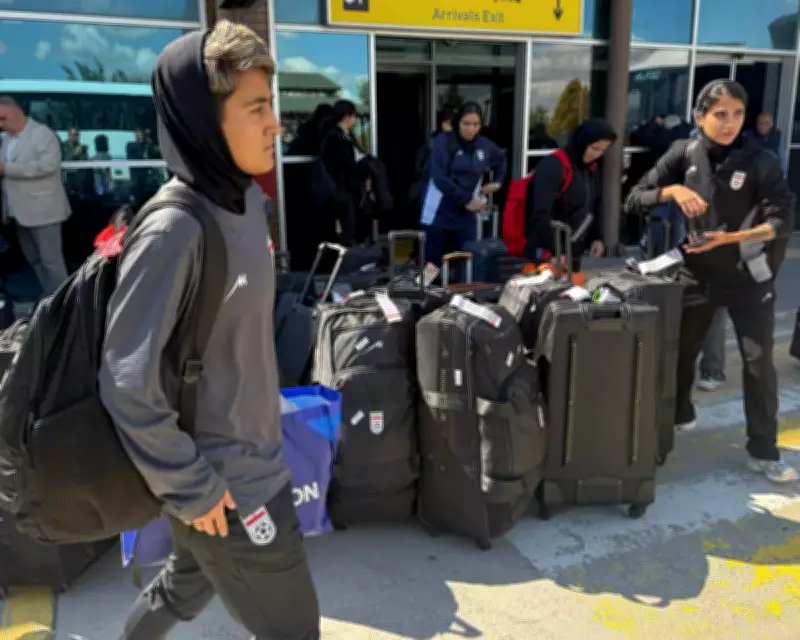
Iran Women's Football Team Returns Home Amid Asylum Drama and Political Tensions
The Iranian women's football team has arrived back in their home country after a protracted journey that included a stop in Turkey, marking the end of a high-profile asylum drama that unfolded during the Women's Asian Cup in Australia. All but two members of the delegation completed the long trip back to Iran, where authorities have planned a welcome ceremony in Tehran, referring to them as children of the homeland.
Asylum Bid and Political Fallout
Seven members of the team initially sought asylum in Australia last week after they chose not to sing the national anthem before their opening game at the Women's Asian Cup. This act of defiance, interpreted as a protest against Iran's leadership, sparked significant political controversy. Five of these players, including captain Zahra Ghanbari, later reversed their decision to seek asylum, while two others—a player and a support staffer—remained in Australia after being granted protection.
Activists have accused Iranian authorities of pressuring the women's families, including summoning parents for interrogations, to compel their return. In response, Tehran has alleged that Australia attempted to force the athletes to defect, with Iranian parliament speaker Mohammad Bagher Ghalibaf stating that by returning, the team disappointed the enemies [of Iran] and did not surrender to deception and intimidation by anti-Iran elements.
Journey Back and Symbolic Welcome
The returning team members traveled via Malaysia, Oman, and then to Istanbul, crossing the Gurbulak-Bazargan border into Iran. Upon arrival, a small welcome party greeted them with flags on the Iranian side, as reported by the Mehr news agency, which published images of the team seated on a stage with a red carpet. Mehdi Taj, president of Iran's Football Federation, praised the players, saying, Although they are women, they showed manly courage and strength.
In a sign of their symbolic importance to the Iranian government, a larger welcoming ceremony has been organized in Valiasr Square, a site known for pro-government rallies in recent weeks. This move underscores how the team's plight has become embroiled in broader Middle East conflicts and domestic political narratives.
Broader Implications for Athletes and Human Rights
Rights groups have long accused Tehran of systematically pressuring athletes abroad by threatening relatives with property seizure if they defect or speak out against the Islamic republic. The Iranian women's silence during the anthem at the Asian Cup match in Australia, though they sang it in later games, was seen as a significant act of defiance. An Iranian state TV presenter even branded the players wartime traitors, raising fears of persecution upon their return.
Australian Home Affairs Minister Tony Burke revealed that the government engaged in secret talks with the players, who were moved to a safe house after leaving their hotel on the Gold Coast. This incident highlights the ongoing tensions between Iran and Western nations over human rights and political dissent, with the women's football team caught in the crossfire of international diplomacy and domestic repression.