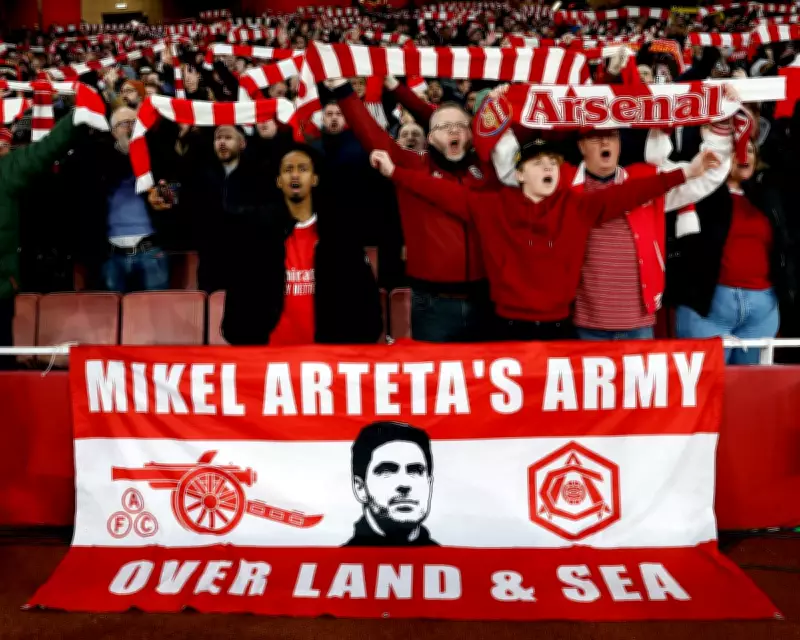
Mikel Arteta is now lustily supported by Arsenal fans, but there were boos when the 2021-22 season started shambolically. The manager's early seasons were far from plain sailing, but insiders credit the club's owners for staying the course.
The Beginning: A Gamble on a Rookie
It didn't start well for Arteta and Arsenal. On a crisp December night in 2019, Vinai Venkatesham, the Arsenal managing director, stepped out of Arteta's home in a Manchester suburb after a meeting. Arteta had outlined a hugely impressive five-year plan to rebuild a club reeling from Arsène Wenger's departure and Unai Emery's failed succession. The club was about to take a huge gamble, but one with which they were increasingly comfortable. For many Arsenal executives, Arteta had won the interview round in 2018 when Wenger left, but it seemed too much to ask a 36-year-old rookie to manage a seismic transition. Emery had pedigree and experience; Arteta had charisma and a strong playing record.
Venkatesham was pushing Arteta as the principal candidate to replace Emery. It was important not to antagonise Manchester City, where Arteta was Pep Guardiola's assistant. Discretion was essential, which is why Venkatesham was puzzled to be woken early that morning by a phone call from Arsenal's media chief telling him to look at the Sun. The first he knew he had been photographed leaving Arteta's house was when the images were published online. It was an embarrassment. There was displeasure from City, with noises made at boardroom level.
Arteta, announced as head coach a week later after fraught negotiations, could have joined Arsenal's staff when he quit as a player in 2016. But even some at the club told him that joining Guardiola at City would be the equivalent of a master's degree in coaching.
Early Struggles and the Perfect Storm
The prognosis for the new Arsenal manager did not look promising when he stepped out at Bournemouth on Boxing Day for his first game. His five-year plan outlined how the club had fallen behind. He and sporting director Edu wanted to rebuild a squad of 22 high-quality, tactically flexible players. For that they needed money, which is where Arteta fits Napoleon's maxim of requiring lucky generals.
It was much better to be the manager that followed the manager who succeeded Wenger, said one source. Even more fortuitously, his arrival came two transfer windows after the Kroenke family had finally bought out the 30% stake of the now-sanctioned Russian-Uzbek oligarch Alisher Usmanov. The Kroenkes had always said they would invest when they had full control; most assumed that was deflection, yet it turned out to be true. Mikel had money Unai and even Arsène didn't really have, said a former employee.
It was the perfect storm: a really driven young manager, bright, well-schooled, ambitious, and enthusiastic, combined with money and a board that gave him time. He told them it would take five years.
All senior Arsenal sources spoken to for this article praised the Kroenke family, pointing to the more active involvement of Josh Kroenke, the 46-year-old son of patriarch Stan, as a key player. One said they had the impression he persuaded the board to pull the emergency cord on funding.
Overcoming Crises
FA Cup and Community Shield wins in Arteta's first eight months were overshadowed by Covid restrictions, before a terrible 2020-21 season meant Arteta looked doomed to outsiders. There were never internal discussions about that, said a source familiar with board meetings. However, in December 2020, Arsenal lost 2-1 at Everton, a run of seven Premier League games without a win, five of which were defeats. They then lost a Carabao Cup tie 4-1 at home to Manchester City before Chelsea came to the Emirates. Arteta's intensity is extreme even in good times; this looked like terminal pressure.
One executive said they looked poor at Everton, and while his future wasn't being discussed, they feared for him. The board did not waver. Arsenal beat Chelsea 3-1 on Boxing Day to relieve immediate pressure, and although Arteta struggled and finished eighth that season, he remained backed to the hilt, evident by the departure of Mesut Özil in January 2021. That was totemic, said one source. It cost the club a lot of money to pay up his contract, but they backed Mikel's judgment.
Arteta had made clear there were certain characters he would not tolerate; Özil's friend Shkodran Mustafi left in the same window. A line had been drawn, and when Pierre-Emerick Aubameyang attempted to cross it a year later, he too was sold, even though Arsenal were in a race for Champions League places and desperate for his goals.
A key scene in the Amazon Prime documentary that chronicled the 2021-22 season showed Rob Holding and Mohamed Elneny discussing Aubameyang's departure. Boss had balls, said Elneny. Yeah, boss had balls, agreed Holding. The message had landed.
That said, the 2021-22 season started shambolically: Arsenal lost at promoted Brentford, to Chelsea at home to jeers and boos, then 5-0 at City, with Granit Xhaka sent off and indiscipline a clear problem. Insiders say Arteta did not waver. Mikel is not the type of person to get overwhelmed about anything, said one senior member of the football staff. He's very driven and very solid in his mind. There were difficult times, and obviously Arsenal had invested massively. But the Kroenkes deserve credit.
Building a Title-Winning Side
Arteta has left his own distinctive stamp on the club – he is most definitely the manager, not head coach, a development Arsenal initially wanted to avoid in the post-Wenger era to avoid the personality-cult syndrome – but was also bequeathed building blocks of a first-class side. William Saliba had been signed by a scouting team subsequently dismantled by Edu, and Arteta almost lost him, sending him away on loan, unimpressed, until he was persuaded to take him back; a deal for Gabriel Magalhães had been put in place by the same scouts and he arrived in September 2020; and he had Bukayo Saka coming through from the academy.
No one at Arsenal doubts the significance of the summer of 2023 in making the step from good to great: the £200m spent to bring in Declan Rice, Kai Havertz, Jurriën Timber, and David Raya indicated not only an intent to take on nation-state funded teams. It also showed Arteta's charisma was a key part of a recruitment success story, with Rice rejecting Chelsea, Manchester United, and City. The project seemed more exciting and I believe we're on to big things here, said Rice.
Over the past couple of seasons, Rice might have privately questioned that. Now his words look uncannily prescient.