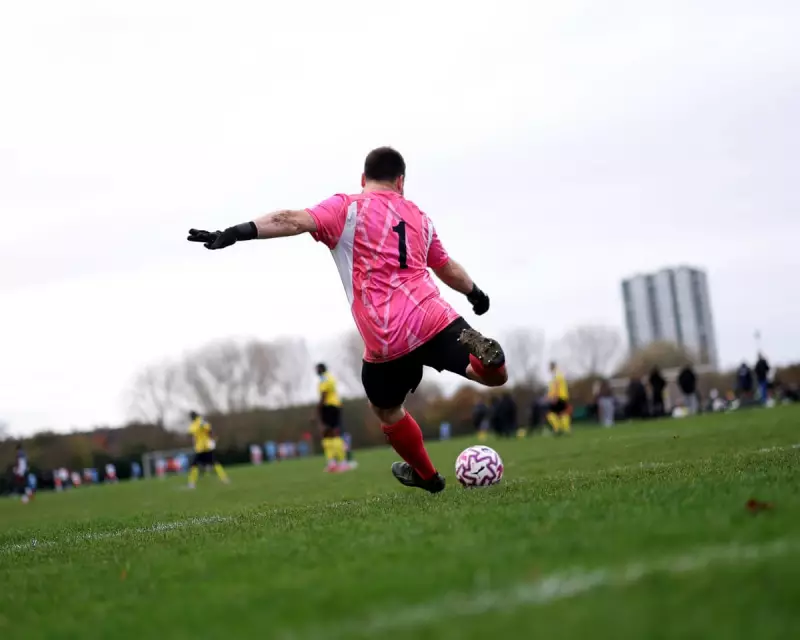
The Football Association (FA) has announced it will provide free counselling and mental health support to individuals who experience hate and discrimination within English grassroots football.
Rising Abuse in the Game
This initiative comes as the governing body confronts a worrying surge in discriminatory abuse. Surveys conducted by the FA reveal that 70% of participants, including players, referees, and spectators, believe that poor behaviour has a major negative impact on the game.
The latest available statistics from the 2023-24 season paint a stark picture, showing a 17% increase in charges for discrimination and a 13% rise in charges for serious misconduct across both men's and women's grassroots football.
Support Through Sporting Chance
The FA is funding this vital support through Sporting Chance, a charity founded by former England and Arsenal defender Tony Adams. Victims of abuse who access the service will be offered up to six counselling sessions with a qualified therapist, available either in person or online.
In exceptional circumstances, additional support can be provided. The programme also focuses on teaching individuals effective self-care methods to help them cope with the psychological impact of abuse.
A Multi-Pronged Crackdown on Misconduct
The counselling service is part of a broader FA campaign to improve behaviour across the grassroots game. The association is implementing tougher sanctions for offences and is actively encouraging participants to report incidents.
However, the FA acknowledges that the reported incidents likely do not capture the full scale of the problem. A significant 70% of grassroots participants stated they are not convinced that reporting an incident will lead to a charge, though the FA asserts that 63% of reports do result in charges.
To strengthen its response, the FA has begun issuing stronger punishments. In the 2023-24 season, where 71% of charges were proven, the average ban for discriminatory offences was seven matches. A record 5,500 match bans were issued, and offenders were sent on 1,300 hours of educational courses.
Several new measures are also being trialled or continued this season:
- Captains-only protocol: Only team captains are permitted to approach the match official to discuss a decision.
- Cooling-off periods: Referees can send teams to their respective penalty areas if a match becomes heated.
- Body cameras: Successful trials have led to referees in some leagues wearing body cameras as a deterrent.
The FA's behaviour improvement programme, which monitors clubs through disciplinary records and 'respect score' data from opponents, has been extended into the new season.
With approximately 15 million people currently playing grassroots football in England, these measures are crucial for the FA's wider goal to increase participation by 200,000 by 2028.