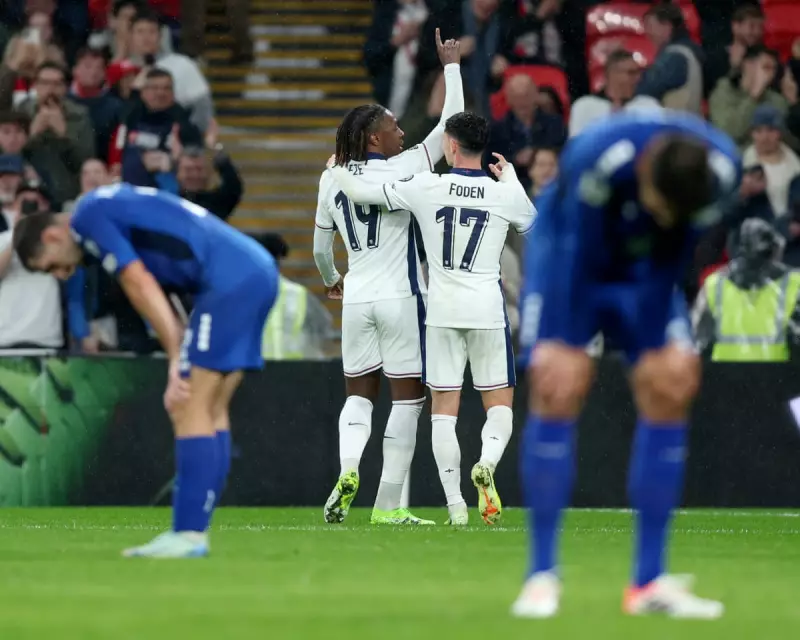
As England's Eberechi Eze and Phil Foden celebrated at Wembley, Serbia's crestfallen players provided the perfect backdrop for a new era of Three Lions football. The image captured more than just a moment of victory - it symbolised the emerging identity of Thomas Tuchel's England squad.
The Premier League Physical Advantage
English football's physical dominance has reached unprecedented levels, creating what some observers describe as an almost unfair advantage. Recent European performances have demonstrated this power gap in startling fashion. When Micky van de Ven surged through virtually the entire FC Copenhagen team in the Champions League, the display of raw power combined with technical composure felt like Gulliver arriving in the Lilliput Premier League.
The pattern continued as Liverpool bullied Real Madrid through set-piece dominance, while Newcastle simply overwhelmed Athletic Bilbao through sheer physical presence. For the opening goal against the Spanish side, defenders appeared to look at Dan Burn and decide marking him was pointless.
This physical supremacy isn't new to English football, but its current manifestation coincides with a global tactical shift towards more direct styles and set-piece focus - areas where English football feels culturally at home.
Tuchel's Tactical Evolution
When Thomas Tuchel initially took the England job, he spoke of implementing high-tempo, high-octane football. However, as his assistant Anthony Barry revealed recently, the approach has evolved into something more sophisticated - a "heat-proof game model" that doesn't mean playing slower, but playing smarter.
"We want a style that allows them to move and run like they do every week, that resonates with them and allows them to take the handbrake off," Barry explained. "They must be stuck less in thinking and more in doing."
This represents a significant departure from previous England regimes that attempted patient possession games alien to most Premier League players. Instead, Tuchel's staff aims to harness the "athleticism, versatility, physicality and honesty" that defines English football week in, week out.
Why Previous Attempts Failed
The obvious question remains: if leveraging Premier League strengths makes sense, why hasn't it worked before? There are three compelling explanations.
Firstly, Premier League referees are perceived as more tolerant of physicality, causing players to subconsciously restrain themselves in international matches. Secondly, the exhausting nature of English football's relentless schedule often leaves players drained by tournament time.
Most intriguingly, the past 15 years of possession-focused football in England, combined with advances in youth development through the elite player performance plan and England DNA project, have produced the most tactically sophisticated generation of English players ever seen.
This cohort possesses the technical ability to control possession while maintaining the historical capacity to attack with what one observer called "fire and fury." Blending these qualities in the North American summer could prove devastatingly effective.
The Set-Piece Precedent
England have previous success in leveraging specific strengths for tournament impact. Before the 2018 World Cup, Gareth Southgate identified dead-ball situations as offering maximum return on training investment. The result was an England team that terrified opponents from set-pieces and unexpectedly reached the semi-finals.
Now, with Declan Rice and Bukayo Saka - two of the best dead-ball specialists from the league's most effective set-piece team - England possess a potent weapon. If deliveries take 90 seconds each, that simply means more recovery time in tournament conditions.
As other nations like Portugal (with set-piece guru Austin MacPhee) recognise the importance of dead balls, England's natural advantage in this area could prove decisive. The traditional English strength that often became a tournament weakness might finally become a genuine asset again.
With a maturing Phil Foden finding his role and the squad blending technical sophistication with raw physical power, Tuchel's England appear poised to challenge football's established order. The question isn't whether they can play with fire and fury, but whether they can sustain it when the North American heat intensifies.