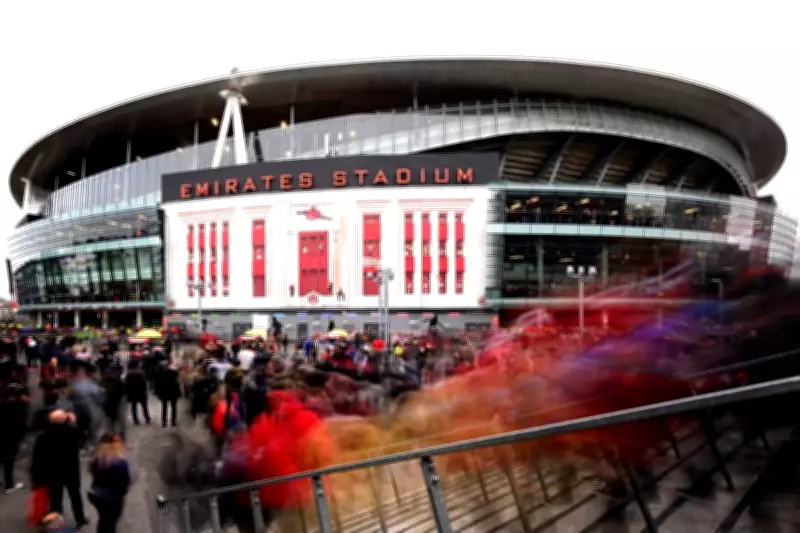
Arsenal are in talks with Populous, the architects behind the original Emirates Stadium design, as they consider how to expand their 60,000-seat home. Sources familiar with the process insist that all options remain on the table, from major works that would likely require a temporary move away from the Emirates to smaller hospitality upgrades aimed at increasing revenue.
No Pressure for Immediate Decision
Club executives are leaving no stone unturned and feel under no pressure to make a final decision given how well the team are performing on the pitch. They are favourites to win the Premier League for the first time in 22 years and will face Paris Saint-Germain in the Champions League final on 30 May.
Stadium Capacity Context
It feels like only yesterday that fans filled the Emirates for the first time, but in the 20 years since, Tottenham Hotspur’s stadium opened in 2019 and is now the second biggest in the Premier League, behind Old Trafford, with a capacity of 62,850. West Ham moved into the 62,500-seater London Stadium, while upgrades to Liverpool’s Anfield edged it ahead of the Emirates. World-leading architects Populous, the firm behind Wembley and Tottenham’s stadium, designed the hugely ambitious and complex Emirates project, fitting a vast arena into a small area of north London. In the process, they created a sleek, modern stadium and a blueprint many have followed since.
Board Expertise
In a board reshuffle at Arsenal last September, real estate specialist Otto Maly joined as non-executive director. Maly, President and Director of Special Projects at Arsenal owner Kroenke Sports and Entertainment, was a key figure behind the construction of the 70,240-seater SoFi Stadium, the home of the LA Rams and LA Chargers. Populous declined to comment.
Coffee Culture Propels Premier League in US
The Premier League is proving more popular than LaLiga in the United States, in part due to a “weekend morning coffee and soccer” culture. New research from global media analysts Nielsen, ahead of the World Cup, has explored viewing and listening habits among Americans and ranks the Premier League above Spain’s top flight in popularity.
“The Premier League benefits massively from its scheduling,” Nielsen managing director Jon Stainer tells City AM. “Most Premier League matches air on Saturday and Sunday mornings in the US, typically between 7am and 12.30pm. This perfectly aligned schedule allowed the Premier League to create a ‘weekend morning coffee and soccer’ culture in the US. LaLiga matches, while often played on weekends, frequently stretch later into the European evening. This pushes the US broadcast into the afternoon, directly overlapping with massive American sporting events.” Other factors include a “turning point” deal with NBC Sports in 2013. The broadcaster replicated the high-budget production values of the NFL and made games available on easily accessible channels such as NBC and USA Network. Meanwhile, most LaLiga matches have been stuck behind a paywall on ESPN+.
The Premier League also heavily markets the Big Six and the competitiveness of the teams below them, whereas LaLiga has long been defined predominantly by Real Madrid and Barcelona. In the last 12 years, Atletico Madrid are the only other side to win the Spanish title.
Tennis Should Embrace Padel
Padel is often a controversial topic in and around tennis clubs. Local residents with houses backing onto clubs that have adopted one of the world’s fastest-growing sports have complained about the noise, one even likening the ball hitting the enclosure panels to a gunshot, and the swearing from a wider audience of players, as was the case outside an upmarket Winchester venue. Meanwhile, tennis traditionalists are unhappy about padel’s encroachment on their game. But the sport has been gaining traction in popular culture, with stars including Stormzy, Cristiano Ronaldo and Jason Manford investing. Powerleague, which operates 44 centres welcoming a five-a-side football community of 8.5 million players per year, has branched out into padel after securing £22.5 million in refinancing from Barclays.
“From a business standpoint, padel fits naturally alongside existing community sports infrastructure,” Powerleague chief executive John Gillespie tells City AM. “At Powerleague, we have spent nearly four decades building community venues centred around small-sided football. Adding padel courts deepens that proposition rather than cannibalising it, and the same should apply to community tennis centres. The two sports can thrive side by side. We have already seen significant crossover from existing football players taking up padel, with a recent survey showing that 56 per cent of our football players have also played padel at Powerleague.”
Sunderland’s Black Dog
A curious sight greeted Sunderland fans arriving at the Stadium of Light last weekend for the visit of Manchester United. The black cat on the side of Black Cat House, the club shop adjacent to the stadium, had been replaced by a black dog, as had the emblem on the matchday programme. The North East has the highest suicide rate in the country and the club wanted a novel way to raise awareness ahead of Mental Health Awareness Week. The black dog is a widely recognised metaphor for depression.
Sunderland officially became known as The Black Cats in 2000, but the nickname is rooted in a mixture of historical folklore and superstition dating back centuries. “This campaign is about more than just a visual change,” said Sunderland’s chief commercial officer Scott McCubbin. “It’s about encouraging conversations, raising awareness, and reminding our fans that they are never alone. Working with LiveScore, we’ve created something that we hope will resonate deeply across our fanbase and beyond.”
How to Win a World Cup Bid
World Cup bidding processes have become synonymous with political games, bribery and corruption. Now, a new book aims to shed light on the complex steps required to win and host one. James Johnson, a former senior vice-president at City Football Group, was chief executive at Football Australia when the country won the bid to host the 2023 Women’s World Cup alongside New Zealand. His book on the topic, Hosting the World, will be published by Fair Play and is due for release in November. Johnson, born in Crewe to Australian parents, is currently the CEO of Canadian Soccer Media & Entertainment, the commercial vehicle powering Canadian football.