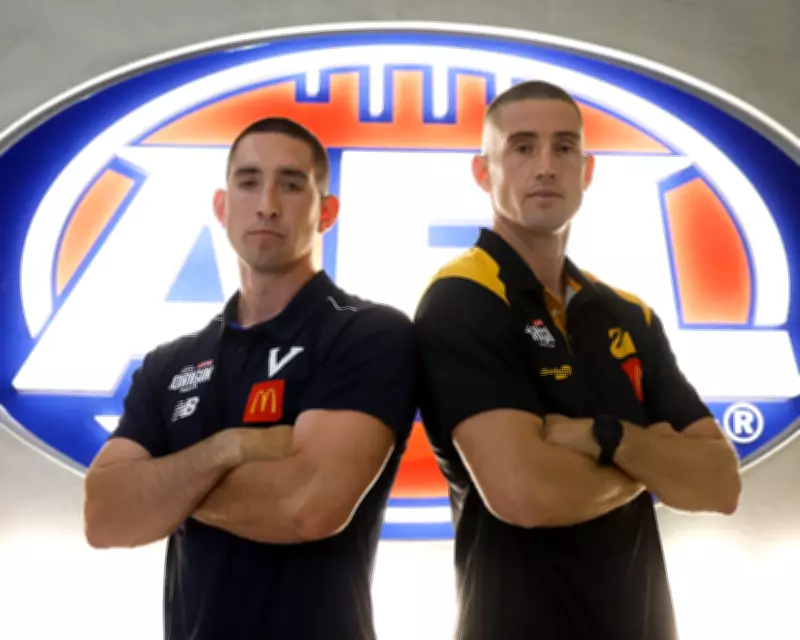
The AFL has launched a marketing blitz for the 2026 state of origin game, featuring stars like Victoria's Jacob Weitering and Western Australia's Darcy Cameron, but this revival raises deeper questions about its place in today's sporting landscape. With a lobster charter off Rottnest Island and champions touting its merits, the event aims to capitalise on a February void, yet memories of its glory days are vague and fading.
The February Sporting Gap and AFL's Commercial Drive
February typically offers a dearth of major sporting events in Australia. The T20 World Cup, held every few years, often feels bloated and politically charged, failing to capture widespread attention. While winter sports like skiing have a niche appeal, they don't resonate with the core Australian sporting culture. In footy, this month is traditionally reserved for puff pieces and membership drives, making a state game seem like a perfect filler—at least in theory.
Staging the origin match in February is seen as the only credible option. Playing it mid-season or midweek, as in the 1980s, would likely result in dysfunctional teams due to club commitments, while an end-of-season slot could turn it into a disorganised affair. However, each time the AFL introduces or recycles such ideas—be it wildcard fixtures, extra rounds, or analysis shows—it prompts the question: who actually demanded this? The underlying motive often appears to be a commercial imperative to monetise every available timeslot and dead spot in the calendar.
NRL Influence and Nostalgia for a Bygone Era
Beyond commerce, other factors are at play. The AFL administration is increasingly conscious of the NRL, with figures like Peter V'Landys and Andrew Dillon representing contrasting personalities and operational styles. Rugby league and Australian rules football are cultural, demographic, and geographical opposites, yet the AFL seems to eye the NRL's successful Origin games with a mix of envy and acknowledgment that direct competition is futile.
There's also a palpable sense of nostalgia, an attempt to restore a concept that has long since lost its relevance. The AFL season has become more predictable and formulaic, with the same clubs frequently contending for titles. This revival might be an effort to recapture an era of suburban tribalism and fierce state rivalries, a time when football felt more authentic and less corporate.
Today, there's a growing perception that players are less tied to their clubs and more part of a broader program. Instances like Charlie Curnow leaving his club for lifestyle reasons highlight this shift. In contrast, a state jumper harks back to a simpler, more honest period in football history.
The Glory Days and Subsequent Decline
In the 1980s and early 1990s, state football held significant meaning, rich with drama and showcasing diverse playing styles across leagues. Victorians often relied on brute force on muddier grounds, South Australians excelled with a skilled running game, and Western Australians, abundant in Aboriginal talent, would outpace their opponents. Memorable moments, such as the 1989 MCG clash featuring Tony Lockett, Jason Dunstall, and Dermott Brereton, or the 1994 South Australia versus Victoria game, are etched in history.
However, the entry of teams like Adelaide and Fremantle into the competition diluted the concept's appeal. While some former players romanticise that era, others, like Dermott Brereton, recall "cheating" tactics, and Peter Daicos expressed contempt in his biography. Stars like Lockett, Gary Ablett, and Wayne Carey had standout performances but were known to withdraw from games casually.
The 2026 Game: Meaning or Mere Exhibition?
What can we expect from the 2026 match? It may involve WhatsApp banter among players and anxious watching from fans and high-performance managers hoping to avoid injuries. The stadium might be full and scores high, but without genuine stakes, it risks becoming an exhibition game—a football version of a Nick Kyrgios doubles match. While this could suffice for February 2026, doubts persist about its sustainability in subsequent years.
Financial Context and Historical Reflections
Recent AFL data reveals that 25 players now earn $1 million or more annually, with the average men's salary surpassing $505,961 for the first time. This financial backdrop contrasts with the simpler times of state origin. Reflecting on history, the 1989 game drew over 90,000 fans to the MCG, where a forward line including Lockett and Brereton dominated South Australia in the mud. Yet, incidents like Tony Hall's season-ending knee injury from a tackle with teammate Andy Collins underscore why modern resurrections are scheduled pre-season to mitigate risks.
Internal Dynamics and Media Buzz
Amidst the revival, there have been rumours of discontent at AFL House following a restructuring that split the football department between Laura Kane and Greg Swann. Swann dismissed these as "reheating old soup," emphasising a need for the footy season to start so discussions can focus on the game itself. Meanwhile, media projects like Prime Video's documentary Final Siren: Inside the AFL, featuring insights from Nat Fyfe, add to the buzz, suggesting a continued interest in the sport's narratives beyond the field.
As the AFL pushes forward with this initiative, it balances commercial gains with a longing for past glories, leaving fans to ponder whether state origin can ever reclaim its former significance or if it will remain a fleeting February fixture.