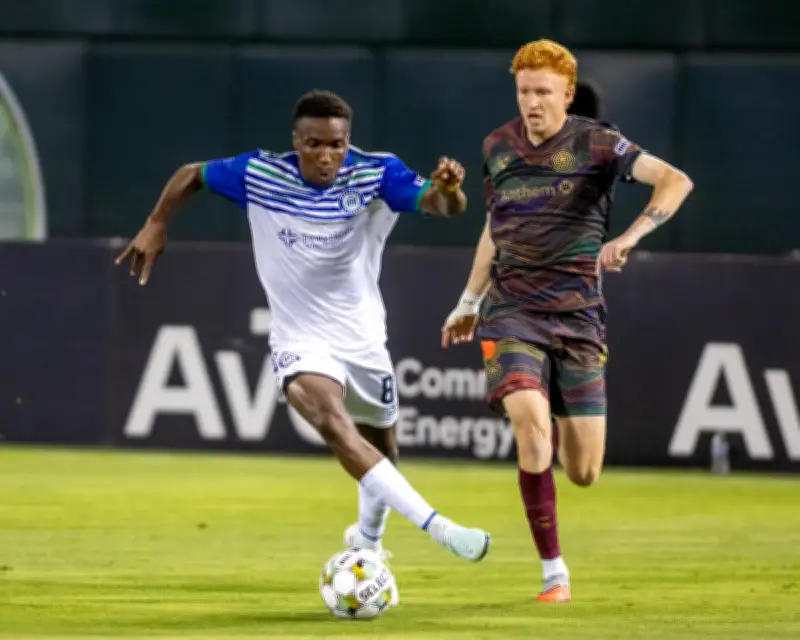
The United Soccer League (USL) and the USL Players Association (USLPA) announced on Friday the ratification of new collective bargaining agreements (CBAs) covering two levels of the organization’s pyramid. The new pacts, effective immediately and running through the 2030 season, include a second CBA for the second-division USL Championship and the first-ever CBA for the upcoming USL Premier, a first-division sanctioned league scheduled to kick off in 2028.
Key changes in the new agreements
Among the headline items is the introduction of 12-month contracts for players, a first in the US lower divisions. The initial USL CBAs had standardized 10-month contracts; before that, clubs varied in their commitment to players. Championship players will now earn a base compensation of $42,000 in 2026 – up from $31,000 – with that floor increasing annually over the term of the agreement. The USL Premier will launch with 12-month contracts and a compensation floor of $67,500 in 2028, with annual increases built into the CBA.
“This collective bargaining agreement is a significant step forward for the USL and our players and reflects the shared commitment on both sides to continue growing the game and advancing professional standards,” USL president and CEO Paul McDonough said in a statement. “It provides long-term stability for our players, clubs and leagues, and greater confidence to invest in the future of the USL.”

Additional provisions and context
The CBAs also include refined elements on how group licensing and commercial rights are distributed to players, improved medical and professional standards, expanded healthcare requirements for all players, and the introduction of competitive prize money into the USL ecosystem. This is the second CBA for the Championship, with the first ratified in 2021.
“This was a challenging negotiation, but it was also a measure of how far the sport and its players have come since 2018,” USLPA executive director Connor Tobin said. “When the USLPA was formed that year, we wanted to create an organization in which each player had a voice. … The remarkable progress we have seen for USL players and in American soccer over the last eight years does not happen without the players themselves.”
League structure and future plans
The USL has almost solely organized the professional lower divisions of American soccer since 2018, a year after the NASL’s second iteration ceased operations. There are 25 teams in the Championship and 17 in third-division League One, whose own CBA is set to expire after 2026 but is actively being discussed. The USL also runs a first-division women’s league, the USL Super League, with its own CBA and eight active clubs. In 2021, League One’s CBA was ratified in the weeks immediately following the Championship’s, using a similar framework but scaled for the level.
“A tremendous amount of time and energy went into the bargaining process to reach an agreement that establishes stronger standards for player safety, stability, and the long-term future of the game,” said USLPA president Duke Lacroix, a Colorado Springs Switchbacks defender who represented Haiti at the 2026 World Cup. “Players are the collective voice of this sport, and ratifying this agreement demonstrates the value of having that voice represented at the bargaining table.”
Announced in 2025, the USL Premier will be the second first-division sanctioned league in American men’s soccer, alongside Major League Soccer. Former Premier League and Stoke City executive Tony Scholes will serve as CEO of the new league. The league’s launch will coincide with the introduction of a promotion and relegation model between the USL’s three professional tiers. There has been no substantive detail from the league about how its system will operate and which active teams (likely in the Championship) will be elevated to USL Premier for its first season.