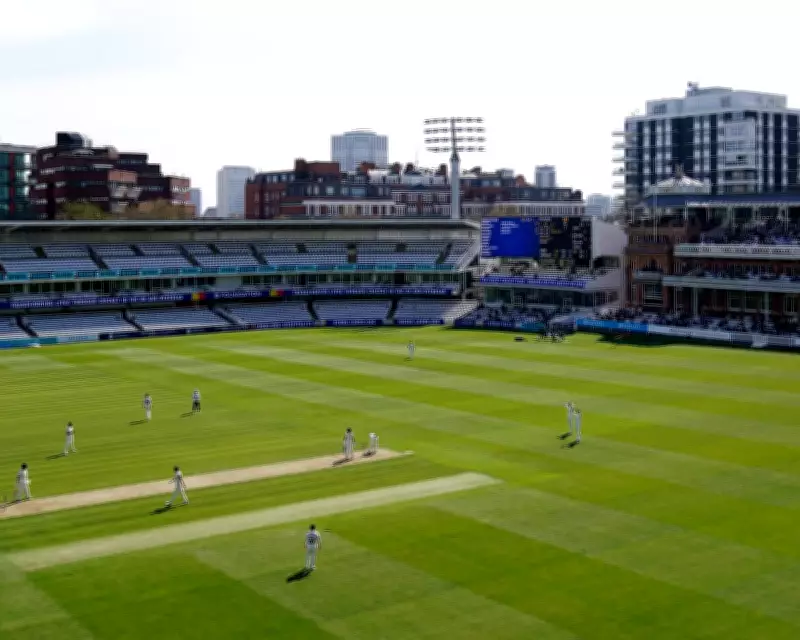
MCC Declines to Rescue Middlesex Amid Mounting Crisis
The Marylebone Cricket Club (MCC) has definitively ruled out any plans to purchase or invest in Middlesex Cricket Club, their long-standing tenants at Lord's Cricket Ground, as the county begins another season mired in profound financial and governance turmoil. This decision comes despite Middlesex having played at the iconic Lord's venue since 1877, with the club now facing what former players describe as a drift toward irrelevance.
Gatting Leads Revolt Against Club Leadership
A group of distinguished former Middlesex players, spearheaded by ex-England captain Mike Gatting, has issued a damning open letter calling for the immediate resignation of club chair Richard Sykes. The letter cites consistently poor on-field performances coupled with deep-seated financial mismanagement and governance failures as primary reasons for the demand. Gatting and his colleagues assert that the club is "drifting towards irrelevance" and requires urgent leadership change to survive.
No Business Case for MCC Intervention
While the MCC, with annual revenues of approximately £70 million, has long been considered a potential white knight for Middlesex, the club's leadership has concluded there is no viable business case for direct financial intervention or increased operational involvement. The MCC remains committed to extending Middlesex's lease at Lord's and will offer support where feasible, but a full-scale rescue is off the table. This stance persists even though MCC membership secretary Mahdi Choudhury was seconded to Middlesex as interim chief operating officer earlier this year; he is scheduled to return to the MCC this month.

Compounding Financial and Governance Issues
Middlesex's predicament is exacerbated by multiple overlapping crises. Chief executive Andrew Cornish is currently on leave pending a Cricket Regulator investigation into allegations of misconduct, which he denies. Furthermore, the club faces a potential vote of no confidence against Sykes at its annual general meeting on 15 April.
Financially, the situation is dire. Middlesex cannot access the £24 million it is theoretically owed from the England and Wales Cricket Board's (ECB) partial sale of the eight Hundred franchises. ECB rules stipulate that such funds can only be used for debt clearance or major infrastructure projects. Middlesex, despite posting losses, carries no debt, and £24 million is insufficient to build a proposed second home away from Lord's. A previous joint venture with American investors was blocked by the ECB for violating the County Partnership Agreement, which prohibits external influence.
Exploring Private Ownership as a Last Resort
With traditional avenues closed, Middlesex is now exploring a move to private ownership through demutualisation. However, this process requires a 75% majority vote from a turnout of at least 50% of the club's membership. Sykes has previously acknowledged that achieving this is "a challenge, both logistically and emotionally."
The club's on-field struggles mirror its off-field chaos. Middlesex begins the season against Gloucestershire in Division Two of the County Championship—marking the third consecutive year and the eighth out of the past nine seasons spent in the second tier.
MCC's Broader Responsibilities
The MCC leadership emphasizes that its primary duty is to its 24,000 members and to providing broader leadership for cricket globally. This commitment is demonstrated through initiatives like the new global advisory board and various charitable programs. Additionally, the MCC holds a 51% ownership stake in the London Spirit Hundred franchise, with the remaining 49% owned by a consortium of Tech Titans who paid £145 million for their share.
As the season commences, Middlesex finds itself at a critical crossroads, with the MCC's refusal to intervene signaling that the club must navigate its profound crises alone or face an uncertain future.