A Potential Strike and a Season at Risk: Why the WNBA's Labor Battle Is Nearing Its 11th Hour
The WNBA and its players are embroiled in a tense 17-month standoff over a new collective bargaining agreement, with a critical deadline of March 10 looming. If an agreement is not reached, the 2026 season risks not starting on time as scheduled on May 8. This labor dispute has escalated into a high-stakes confrontation, reminiscent of an old-time western standoff, with both sides holding firm on their visions for the league's future.
How Did We Get Here?
In October 2024, the Women's National Basketball Players Association opted out of the 2020 CBA, moving the expiration date to October 31, 2025, instead of 2027. This decision came on the heels of a historic 2024 season, driven by a superstar draft class including Caitlin Clark and Angel Reese, which saw attendance surge by 48%, viewership skyrocket 170%, and merchandise sales increase 600%. The league's growth has been steady, with ratings rising since 2021, a record $75 million in capital funding secured in 2022, and 36 million unique viewers in 2023, the highest since 2008.
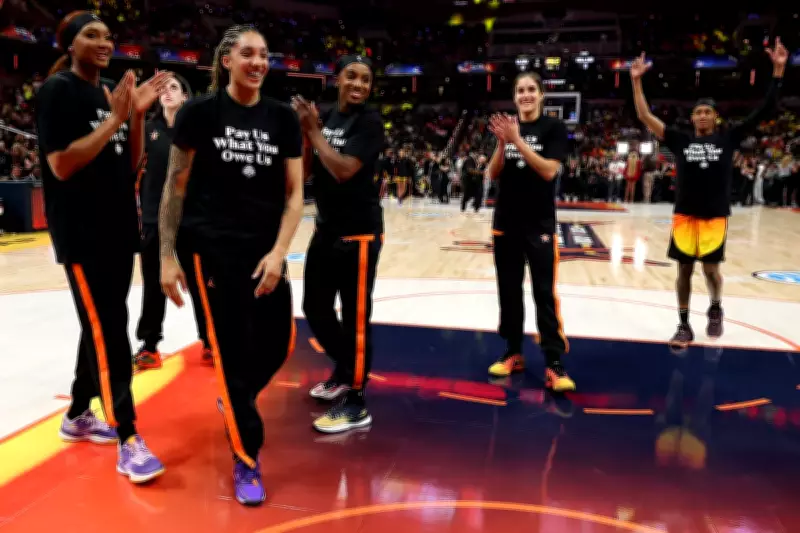
Expansion has been a key factor, with Toronto and Portland joining as the 14th and 15th teams in 2024, followed by Cleveland, Detroit, and Philadelphia set to join by 2030, each paying a record $250 million expansion fee. The WNBA also signed a monumental 11-year media rights deal with Disney, Amazon, and NBCUniversal, totaling $2.2 billion, or $200 million annually. Frustrated by slow negotiations, players took a public stance last summer, wearing "Pay Us What You Owe Us" shirts at the All-Star Game and holding signs with the same message. Union vice-president Napheesa Collier criticized commissioner Cathy Engelbert, calling out what she termed the "worst leadership in the world."
What Are the Players Asking For in the New CBA?
Players are demanding a larger share of the league's revenue, arguing that their performance drives the record-breaking statistics. The WNBPA is pushing for:
- Higher salaries, with the previous supermax at $249,000 and top rookie contracts around $78,000.
- A higher salary cap, approximately $9.5 million in Year 1.
- Team-provided housing, a provision since the first CBA in 1999.
- Other items like pensions, pregnancy trade protections, and standardized practice facilities.
The key issue is revenue sharing. Under the recent CBA, players received less than 10% of league revenue, far below the NBA's roughly 51% split. In its latest proposal, the union asked for 25% of gross revenue in the first year, increasing to an average of 26% over the agreement, down from an initial ask of 31%.
What's the League's Response?
The WNBA, including Engelbert, league staff, and team owners, has offered over 70% of net revenue for players, equating to less than 15% of gross revenue. The league's proposal includes a 2026 salary cap of $5.75 million, up from $1.5 million in 2025, with maximum salaries projected to reach $2 million by 2031. Average player salaries would rise from $120,000 in 2025 to $540,000 in 2026 and $780,000 by 2031. The league has labeled the union's proposal as "unrealistic" and warned it could cause "hundreds of millions of dollars in losses."
However, the union reported that the 2025 season generated enough revenue for players to receive a share for the first time, resulting in about $8 million divided among players. The WNBA has not provided full financial transparency, leaving players skeptical.
Is the WNBA Really at Risk of Not Having a 2026 Season?
Yes, if no agreement is reached, players could strike or owners could initiate a lockout. With the March 10 deadline approaching, critical pre-season events are at risk, including expansion drafts for Portland and Toronto, free agency negotiations for over 80% of players, and the college draft scheduled for April 13. Training camps are set to open on April 19, but without a CBA, the offseason timeline is compressed, threatening to disrupt the season's start.
What Does This Mean Going Forward?
Players are prepared to strike if necessary, with 98% of respondents authorizing the union's executive committee to call a strike in a December survey. A heated union meeting in late February saw most player leadership favoring a potential strike, though some, like vice-president Breanna Stewart, have expressed concerns about the financial impact on both sides. The growth of the WNBA, with team valuations soaring—the New York Liberty worth $450 million and the Golden State Valkyries at $500 million—underscores the stakes. Additionally, players have alternatives like the Unrivaled league, which offers higher pay and equity, highlighting their leverage.
What Happens Next?
The WNBA sent a new proposal recently, including updates to rookie contracts but maintaining its revenue share stance. Both sides are racing against the clock to meet the March 10 deadline and ratify a deal, which could take weeks. Until then, teams have released schedules without certainty on player rosters or even if the season will proceed. This CBA negotiation is pivotal for the future of women's sports, as players assert their worth amid unprecedented growth.