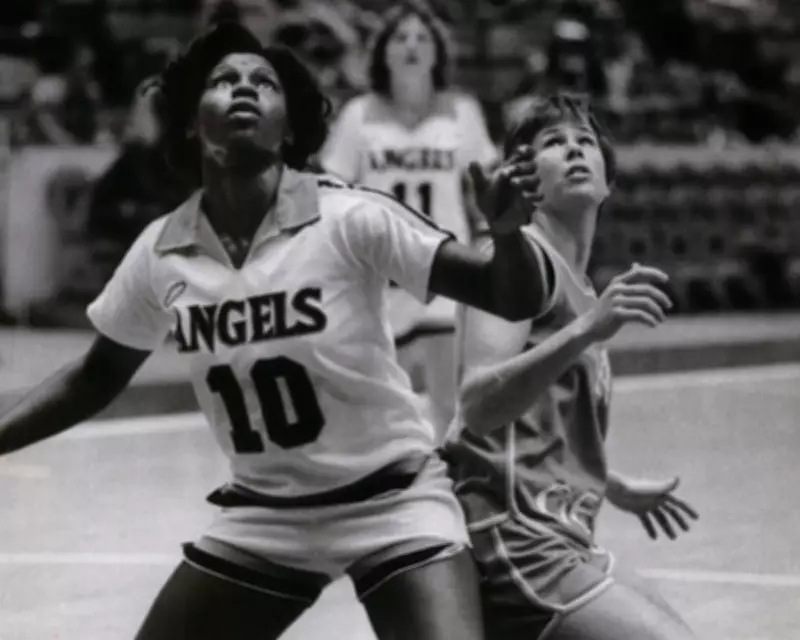
In a historic moment captured by the Houston Chronicle, New Jersey Gems' Ann Meyers and the Houston Angels' Paula Mayo fiercely battled for a rebound during a Women's Professional Basketball League game. This image symbolizes the grit and determination of a league that, though short-lived, laid the groundwork for modern women's basketball.
The Draft Night Drama That Shaped a League
On the eve of the 1980 WBL draft in New York City, the Dallas Diamonds faced a pivotal decision with the No. 1 pick. Coach Greg Williams favored Inge Nissen, a towering Danish star, while General Manager Nancy Nichols championed Nancy Lieberman, the American point guard dubbed "Lady Magic." Nichols recalls intense debates, culminating in a creative last-minute plea: she dangled a paper with Lieberman's name from her hotel window to Williams's room using coat hangers, calling him to "see if there are any signs from above!"
The next morning, team owner Mike Staver, reportedly after a night of revelry, made the selection, announcing Lieberman to the draft. That season, Lieberman, fresh from two college championships at Old Dominion, won Rookie of the Year, validating Nichols's persistence.
A League of Firsts and Challenges
The WBL, founded by Bill Byrne in 1978, lasted only three seasons, with its final game played on April 20, 1981. As the first professional women's basketball league in the United States, it boasted 17 future Hall of Famers and nine Olympians, including Lieberman and Meyers. However, being a pioneer came with hurdles. Nichols notes that attendance in Dallas ranged from 700 on good nights to 3,500 by the third season, reflecting growing but inconsistent interest.
Similar to the ABA a decade earlier, the WBL saw teams come and go, with expansion struggles contributing to its demise. Despite this, it created a vital platform for women athletes. Molly (Bolin) Kazmer, the first player signed by the league on June 30, 1978, for the Iowa Cornets, emphasizes the significance: "I can't describe what it's like to be a pro without a league." Kazmer, a scoring phenom from Moravia, Iowa, averaged 32.8 points per game in her second season, earning co-MVP honors with Meyers.
Memorable Moments and Trailblazing Support
The WBL's seasons spanned November to April, with teams traveling extensively. Kazmer recalls a bus built by Cornets owner George Nissen, equipped with plush seats and TVs, and harrowing experiences like an emergency water landing in New York City and a "biblical flood" in Houston before a finals game. "We were wading waist-deep in water," she says, "but it was such a fun time. We knew we were pioneers."
Camaraderie and high-profile support bolstered the league. For the Diamonds' first home game, Nichols enlisted tennis star Martina Navratilova for the ceremonial jump ball, with Dallas Cowboys players attending courtside. Navratilova reflects, "The Diamonds were brave women. The Cowboys players were certainly ahead of their time." Billie Jean King also participated, tossing a jump ball for the Chicago Hustle in 1979. King praises the WBL's trailblazers, stating, "Without the WBL, there may not have been a WNBA."
Legacy and Renewed Recognition
After the WBL folded, other leagues like the WABA and ABL emerged, leading to the WNBA's launch in 1997. Today, women's basketball thrives with stars like Caitlin Clark and Angel Reese, but the WBL's contributions risk being forgotten. Nichols laments this oversight, though efforts like the Legends of the Ball organization and a potential documentary aim to preserve its history. Kazmer, now engaging with WNBA and Unrivaled events, sees doors opening: "How do you know how far you came if you don't know where it started?"
The WBL's rough-and-tumble journey, marked by floods, draft dramas, and iconic supporters, set an indelible stage for the WNBA, proving that even short-lived pioneers can spark lasting change in sports.