UConn Huskies' Unbeaten Season Ignites Debate on Women's Basketball Parity
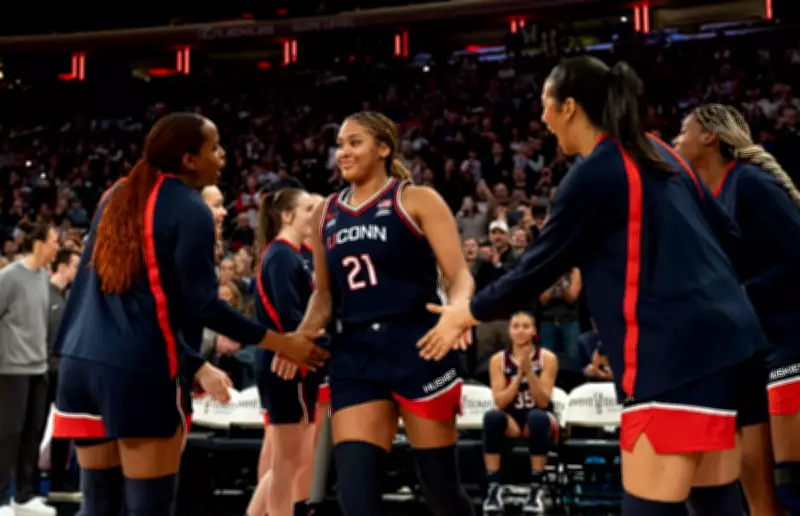
The UConn Huskies, led by standout player Sarah Strong, are currently pursuing an unbeaten season in women's college basketball, a feat that has become increasingly common for the team. This dominance, however, has sparked a broader conversation about whether such superteams are detrimental to the sport's competitiveness and fan engagement.
The Underdog Narrative vs. Predictable Dominance
Fans often relish the thrill of an underdog victory, a timeless story reminiscent of David versus Goliath. Yet, in reality, underdogs are frequently overpowered by favorites, leading to predictable outcomes. This dynamic raises a critical question: who, aside from die-hard supporters, cheers for perennial champions? It's akin to rooting for the powerhouse team in classic sports films like Hoosiers or Rocky IV, where the underdog's struggle is central to the drama.
Historical Context of Unbeaten Teams in Women's Basketball
Since 2009, 12 Division I women's basketball teams have completed the regular season and conference tournaments undefeated, with six going on to win the national championship. Notably, in 2014, two unbeaten teams—Connecticut and Notre Dame—faced off in the final. In Division III, 10 of the last 11 tournament winners have been undefeated, and NYU holds a remarkable 91-game winning streak, second only to UConn's historic 111-game streak from 2014 to 2017. This season, Division III featured three unbeaten teams entering the tournament, though Washington and Lee fell in the Elite Eight, leaving NYU and Scranton to compete in the Final Four.
Contrast with Men's Basketball and UConn's Current Dominance
In contrast, men's basketball has seen far fewer dominant teams. No Division I team has entered the NCAA Tournament unbeaten since Gonzaga in the 2020-21 season, and the last full-season unbeaten team was Kentucky in 2014-15, which lost in the Final Four. The last team to achieve a perfect season, including tournaments, was Indiana 50 years ago.
This year, UConn stands as the familiar unbeaten force in women's basketball. The Huskies have entered the NCAA Tournament unbeaten nine times, winning the national championship on six of those occasions. Their average margin of victory this season exceeds 38 points per game, highlighting their overwhelming strength. However, there is a glimmer of hope for opponents: the last two times UConn reached this point unbeaten, they failed to secure the national title. Coach Geno Auriemma, in his 41st season, has expressed concerns about the lack of challenging games, as key opponents like Tennessee, USC, and Notre Dame underperformed this year.
Parity Issues and Broader Sports Comparisons
Women's basketball exhibits significantly less parity compared to men's basketball. Over the last 28 seasons, women's Division I champions have consistently had better records than their men's counterparts. Since 2000, UConn has won 11 national championships, while only eight other teams have claimed titles in that span. In men's basketball, 13 different teams have won championships since 2000, with eight different champions in the past 10 tournaments alone.
This concentration of talent raises questions about the sport's health. In professional leagues, the NFL employs mechanisms to ensure parity, resulting in 20 different Super Bowl winners over 60 years. The NBA, despite dynasties, has seen 14 different champions since 1994. Generally, a sport's vitality is linked to its competitiveness; for instance, women's soccer has grown more exciting as multiple teams now contend for World Cup titles.
Future Implications and Challenges
Women's basketball is at a crossroads. The transfer portal offers some hope for parity by allowing players to move schools for better opportunities. However, name, image, and likeness (NIL) deals may reinforce dominance, as players at marquee programs like UConn are more likely to secure lucrative agreements due to greater exposure.
Oddsmakers currently favor UConn to win this year's tournament, and they are likely to remain favorites in future seasons. While no one can demand UConn to lessen its dominance, the sport's overall health depends on other programs enhancing their resources and competitiveness to level the playing field.