The Unlikely Journey of Larry Bird: From Tragedy to Basketball Icon
In the annals of American sports, few stories are as compelling as the rise of Larry Bird. A new book, Heartland: A Forgotten Place, An Impossible Dream, and the Miracle of Larry Bird by Keith O'Brien, delves deep into the obstacles Bird faced before becoming a Hall of Famer. Bird's path was far from certain, marked by personal tragedy and humble beginnings in rural Indiana.
A Family Tragedy and a Stalled Start
Bird's journey almost ended before it began. At 18, he lost his father to suicide, a trauma that left him to shoulder grief alone. After a brief stint at the University of Indiana under coach Bobby Knight, Bird left without playing a game, returning to French Lick, Indiana. He worked menial jobs, including hauling garbage, his basketball dreams seemingly fading.
The Turning Point: Bill Hodges and Indiana State
Enter Bill Hodges, an assistant coach at Indiana State. Hodges, described as an unsung hero, saw potential in Bird and persistently recruited him despite resistance. Their connection, rooted in shared experiences of poverty in Indiana, coaxed Bird to reenroll in college. At Indiana State, Bird found a home-like environment under head coach Bob King, contrasting with the larger, more prestigious Indiana Hoosiers program.
Building a Team and National Attention
Indiana State, a small-town school with sparse crowds, risked dropping to Division II. Yet, King and his staff assembled a strong team around Bird. Progress was uneven, with early exits from tournaments and Bird's reticence with the media. However, by his senior year, the Sycamores developed exceptional team chemistry. Key contributions came from across the roster, including roommate Bob Heaton, whose memorable shots were pivotal.
As the Sycamores remained undefeated, interest in Bird surged. Sports Illustrated featured him on the cover in November 1977, dubbing him College Basketball's Secret Weapon. The national media began to take notice, setting the stage for a historic season.
The 1979 NCAA Tournament and the Magic Johnson Rivalry
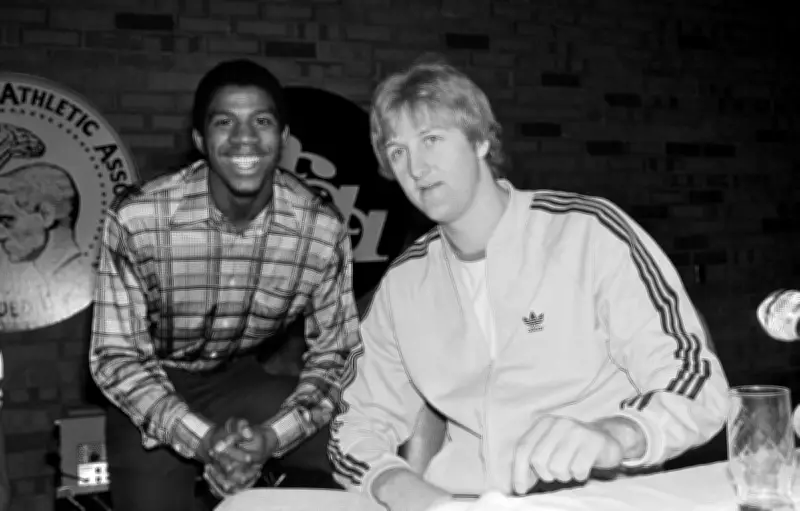
Bird's senior year culminated in an epic showdown against Magic Johnson and Michigan State in the NCAA championship game. Though Bird scored 19 points, Indiana State lost 75-64. Despite the loss, the game had wider repercussions. It sparked interest in the NCAA Tournament and laid the groundwork for Bird and Magic's rivalry, which would revitalize the NBA. Bird joined the Boston Celtics, and Magic the Los Angeles Lakers, defining the next decade of pro basketball.
Racial Dimensions and NBA Revival
O'Brien explores the complex racial dynamics of Bird's appeal. In the late 1970s, the NBA struggled with abysmal TV ratings. Executives saw Bird, a white player, as a quick fix to attract a broader audience. His success helped save the league from obscurity, making him a pivotal figure in basketball history.
A Defining Moment: The New Mexico State Game
One critical moment could have altered everything. In a regular-season game against New Mexico State, Indiana State trailed by two with three seconds left. New Mexico State's Greg Webb missed a free throw that would have ended the Sycamores' win streak. Brad Miley grabbed the rebound, feeding Bob Heaton for a halfcourt shot to tie the game. Indiana State won in overtime, keeping their perfect season alive. Webb later reflected that his miss might have inadvertently started March Madness, highlighting the fine line between success and failure.
Legacy and Impact
Bird's rise from tragedy to triumph is a testament to resilience. His story, detailed in O'Brien's book, underscores how unlikely his journey was. From family grief to NBA stardom, Bird's path reshaped basketball, inspiring fans and players alike. The rivalry with Magic Johnson not only saved the NBA but also cemented Bird's place among the greatest players in history.