The Tragic Rise and Fall of Lamar Odom: A Story of Survival Against All Odds
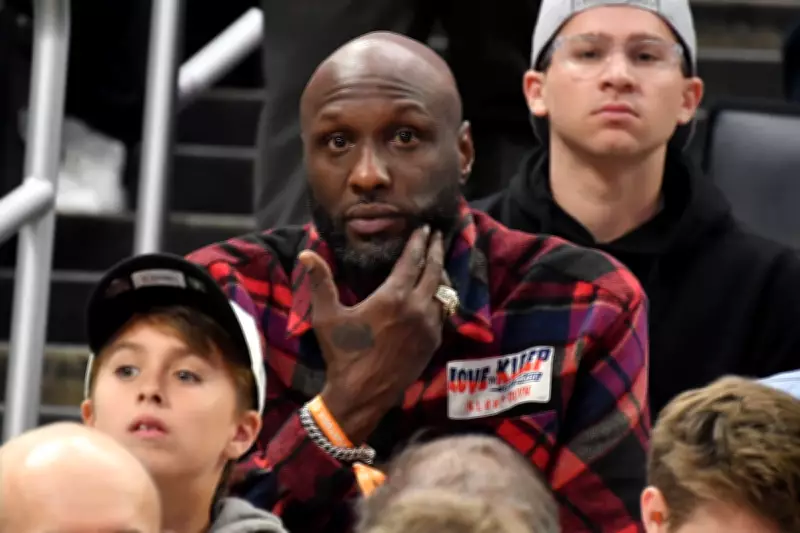
Lamar Odom achieved fame through a combination of his NBA accomplishments and his high-profile celebrity lifestyle, but his story nearly ended in a Nevada brothel with a fatal drug overdose. A new Netflix documentary, The Death & Life of Lamar Odom, part of the Untold sports series, chronicles the devastating events that led to that moment and the aftermath that followed.
A Brush with Death and Public Spectacle
There exists a version of Lamar Odom's narrative that concludes in that Nevada brothel, complete with TMZ bulletins announcing his death from a drug overdose. The aftermath would have featured emotional tributes to what was lost: a remarkable basketball talent from New York, a two-time NBA champion with the Kobe Bryant Lakers, and a career that spanned coasts and eras before succumbing to addiction. The epilogue would have solidified a cautionary tale about the dangers of fame, with Odom's celebrity wife Khloé Kardashian portrayed as a man-eater overshadowing her more infamous older sister.
However, by surviving to recount his experiences, Odom has become another fallen star demonstrating a fundamental truth of Western storytelling: heroes who avoid dying young often live long enough to become the villains in their own stories.
"There is a way of understanding Lamar where everything in his life is kind of in reaction to death hunting him since he was a kid," explains Ryan Duffy, executive producer of Netflix's Untold series. "Then it catches him, he somehow wiggles out of it and is still here. Shit, I'd be pretty sideways if that was the case for me, too."
The 2015 Brothel Incident and Medical Crisis
For this latest Untold installment, director Ryan Duffy returns to examine the 2015 incident when Lamar Odom was discovered unresponsive at a Nevada brothel. This breaking news moment represented one of the most spectacular sports downfalls since Tiger Woods crashed into a fire hydrant. That year, Odom topped Google Trends for living people, illustrating how completely his saga captivated the public.
Reportedly on a cocaine binge in the days preceding the brothel incident, Odom suffered kidney failure, multiple heart attacks, and twelve strokes. Medical professionals placed him in a medically induced coma for several days, initially giving him minimal chances of survival without significant and permanent brain damage. Throughout this period, tabloid media framed his collapse as the culmination of a worsening substance abuse problem.
Odom had nearly completed a three-year probation sentence following a 2013 DUI arrest, and Kardashian was awaiting a judge's approval of her divorce request. This delay proved extraordinarily fortunate for Odom, as it kept her legally recognized as his next of kin during the medical emergency.
Unflinching Honesty and Personal Tragedies
Throughout the documentary's ninety minutes, Odom guides conversations with both charm and vulnerability. Unlike many athlete-produced documentaries that carefully shape legacies, Odom maintains unflinching honesty, allowing uncomfortable truths to stand without positive spin. He acknowledges being a poor father and an even worse partner.
"I know cocaine isn't the way to go," he reflects about his past drug use, "but it's a high that feels so good, you wish you could capture it and put it in a bottle so you can have it the next day."
As his daughter Destiny observes in the documentary, Odom prefers moving forward with his life rather than dwelling extensively on his misfortunes and mistakes before charting a new course. This approach appears less as a defense mechanism and more as the survival instinct of a man who couldn't afford to linger on losses.
His father, a heroin addict, has remained largely absent from Odom's life, and his mother died of colon cancer when he was just ten years old. His relationship with high school sweetheart Liza Morales, another significant voice in the documentary, disintegrated when their six-month-old son died of sudden infant death syndrome in 2006 while Odom was partying with friends.
NBA Career and Missed Potential
Now forty-six, Odom processes these tragedies with deadpan candor, resembling Rick James reflecting on his rock'n'roll past in classic Chappelle Show sketches—unbowed and unrepentant. He offers no excuses for squandering what could have been an all-time great NBA career, one that likely would have earned him greater recognition for helping pioneer the current era of positionless basketball.
This absence of pretense is a quality dedicated fans have always respected about Odom, who agreed to come off the bench after the Los Angeles Lakers acquired him in a blockbuster trade and subsequently became the NBA's top reserve player.
In the documentary, Phil Jackson fondly recalls Odom as a selfless player who viewed his teams as family, then grimaces at his former player's attraction to fame—despite Jackson himself dating team owner Jeanie Buss during Odom's whirlwind romance with Kardashian.
Khloé Kardashian's Crucial Perspective
The Kardashian interview distinguishes Untold's Odom treatment from other documentaries he has participated in over the years. She reveals details about their paparazzi-fueled romance—how she met Odom while working a $5,000 hosting gig for a party celebrating Ron Artest's 2009 Lakers signing, how they married just one month later, and how he immediately showed interest in her family's burgeoning reality TV empire, advocating for a spin-off featuring only the two of them.
She remembers Odom's drug use and serial infidelity rapidly escalating into a monstrous situation that had her searching for him in alleys, paying hotel maids to suppress stories from the press, and even frantically pumping his stomach when he overdosed.
"I felt such a responsibility to cover this up, hold it together and protect him," she admits, viewing herself in hindsight as more of an enabler of Odom's addiction.
When a 2013 intervention proved ineffective, she filed for divorce, with both parties signing documents in July 2015. Three months later, Odom was found unconscious at the Love Ranch—a legal brothel approximately equidistant between Las Vegas and the Mexican border.
The Depths of Descent and Medical Intervention
"The drive itself was illuminating," Duffy remarks, recalling how initial reports placed Odom's medical emergency in Las Vegas. "It was all double-wide trailers and fucking meth labs. Like, you are in dire straits if you find yourself out here. It gave me a better appreciation for the depths he had fallen to."
Kardashian claims Odom's estranged father would have terminated life support if she hadn't intervened at the hospital—which still recognized her as his next of kin due to their unfinalized divorce—and essentially bought him off Odom Sr with $100, a pair of Nike shoes, and a night's hotel accommodation. She also suggests their marriage might have endured if Odom hadn't continued using drugs secretly—the final breaking point occurring when she caught him smoking crack months after his hospital discharge.
The Unresolved Search for Meaning
Odom neither disputes Kardashian's account nor expresses substantial gratitude for her considerable efforts to save his life and reputation, creating a narrative twist. She transforms from reality-TV antagonist to hero, while he shifts from sympathetic protagonist to clear villain—at least before considering addiction's powerful grip and its role in this story.
Odom jokes about partying in Vegas and "marrying somebody" as the documentary concludes. Earlier this year, he voluntarily entered a thirty-day rehabilitation program for marijuana use after pleading not guilty to a DUI charge, with his case scheduled for a July trial. Odom still appears to think like a user, though this doesn't necessarily indicate he's beyond redemption.
Untold shows him attempting to mend relationships with his adult children. His son Lamar Jr shares a heartbreaking story about Odom abandoning them for the Lakers' 2009 championship parade, while Destiny recalls a post-emergency tour that took Odom everywhere—most notably to Kobe Bryant's farewell game—but never to therapy. Odom frequently references a recurring dream where he encounters Bryant again and is told "the afterlife is not what people make it out to be." Alarmingly, Odom seems curious enough to test his late teammate's "message" once more. "He just acted like the coma thing never really happened," Destiny observes.
Authenticity Over Tidy Resolution
In an alternate telling, Odom's survival story would represent a profile in courage and clarity. The version he presents through Untold—raw, rough, and bracingly authentic—delivers a far more genuine lesson.
"When you make these docs, especially with athletes who are pretty well media trained and have been in the spotlight, they understand documentaries," Duffy explains. "We've been in this sports documentary boom for the better part of a decade now, so they understand them and usually work really hard—whether it's true or not—to tie things in a tidy bow: 'Yeah, look, I did have these struggles, but they're gone. I overcame them. Here I am, the fully realized version of me that you always wanted.' Lamar, to his credit, didn't do that. As much as I'm sure that is a tax on the people around him, I appreciated the sheer honesty and vulnerability of that."
"The guy's perspective is: 'I survived this night in Nevada—where, by all accounts, I should be dead. There was divine intervention involved in my survival. And that means I need to do something. I need to find some meaning.' But he doesn't know what the fuck that is. Where he is now is in a place of just searching. And he's comfortable with that uncertainty."