Discovering Unexpected Healing on the Basketball Court
Australian author Olivia De Zilva found herself searching for salvation throughout 2024, trying various approaches from religious practices to reformer pilates classes without success. Having recently returned to Adelaide after two years studying in Brisbane, she confronted a profound identity crisis that initially seemed like a quarter-life dilemma but was diagnosed by a psychiatrist as complex post-traumatic stress disorder (CPTSD).
The Prescription That Didn't Work
The medical recommendations included yoga, journaling, and group therapy sessions, but none resonated with De Zilva's specific needs. "I am preposterously uncoordinated for yoga," she explains, "and devilishly self-censored when it comes to journaling." What she ultimately required was something entirely different: adrenaline, strangers working toward a common beautiful goal, and the collective energy of a sporting team.
First Quarter: An Unlikely Beginning
De Zilva describes herself as fundamentally inarticulate regarding sports terminology, a woman with expensive running shoes rarely used and minimal knowledge about football team distinctions. Despite having basketball players like Tristan Thompson and Lamar Odom occupying space in her reality television awareness, she maintained complete indifference toward the sport itself.
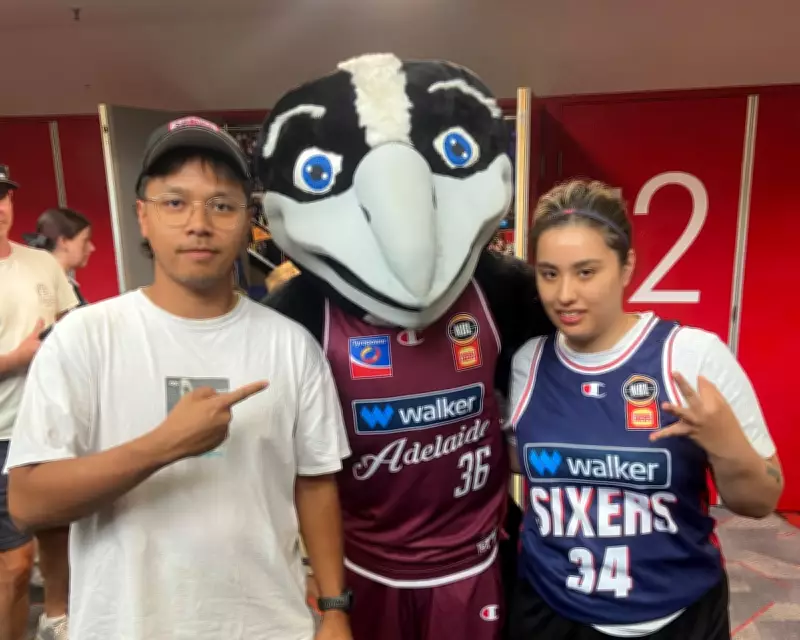
Her partner suggested attending an Adelaide 36ers National Basketball League game as they approached thirty years old, having exhausted weekend artistic event options. Initially sitting in the nosebleed sections surrounded by families in team jerseys consuming expensive burgers and attempting to appear on the Jumbotron, De Zilva didn't anticipate this becoming a long-term engagement. "It felt distinctly un-me," she recalls, "but what did that even mean anymore?"
The Unexpected Joy Discovery
Her psychiatrist had suggested that joy often appears in unexpected places, and for De Zilva, this materialized during the first quarter of basketball games. She found therapeutic value in the building heat on court, the distinctive sound of sneakers responding to movement, the feathery swoosh of nets as balls passed through them, and the shared purpose uniting everyone in the arena.
"For the first time in a considerable period," De Zilva notes, "I felt capable of letting myself go without fearing someone would take advantage." The collective grimaces when defenders failed to block goals and the shared joy when referees signaled possession created a safe communal space.
Second Quarter: Learning Basketball Time
Before returning to Adelaide, De Zilva had promised herself this wouldn't be a permanent relocation. Coming back felt reminiscent of moving into parental homes after job losses or relationship endings. Because of her psychological state, life moved with excruciating slowness.
Watching basketball courts, she observed how ten minutes could feel like ten years when her team was losing. She monitored clocks obsessively until remembering her doctor's advice about unexpected beauty. When a point guard reached the rim, transforming her misery into joyful swelling, she understood basketball time's unique quality: anything could happen, and anticipating next moves proved pointless.
The Time-Out Realization
Meeting a friend for coffee several months after the NBL season commenced, De Zilva confessed that without weekly basketball anticipation, she likely would have collapsed into an even greater psychological heap. When questioned about basketball's specific appeal, she struggled to articulate the experience: heat from lights warming her skin, tears thawing throat lumps, sitting beside strangers while feeling intimately connected.
"I dunno," became her inadequate response to inquiries about the sport's therapeutic properties, despite recognizing its profound impact on her mental state.
Third Quarter: Basketball as Group Therapy
De Zilva describes how the Sixers finding their footing followed by players getting knocked down and stadiums erupting in screams created an experience superior to traditional group therapy: "expensive and loud, but better." The third quarter's difficulties—players stumbling, stray balls, turnovers, and apparent readiness to surrender—mirrored her 2024 emotional experience.
The tidal waves of her year felt like third quarters: buildup, disappointment, uncertainty, and apprehension. Childhood fears prevented taking necessary shots, exemplified by running offstage during ballet recitals when unable to complete final leaps. Her psychiatrist explained CPTSD's insidious nature: "it can get you at any moment," prompting constant vigilance for signs and shadows.
Fourth Quarter: Collective Strength and Healing
The final period represents what De Zilva calls "the pointy end"—where fans contract into collective strength she had never previously experienced. Team scoring becomes personal scoring; their fumbles become shared falls. This dynamic revealed possibilities for existing with others unselfishly and without specific intent, regardless of desires for love or visibility.
In the last thirty seconds, life and the preceding year blur together because nothing matters more than the ball hitting the backboard. When successful shots occur, breathing finally becomes possible again.
The Ultimate Realization
De Zilva went hunting for stability and community in what felt like a profoundly lonely world. She never anticipated basketball would demonstrate that home doesn't necessarily represent a physical place but rather a feeling—one discovered unexpectedly through the rhythm, community, and shared purpose of watching the Adelaide 36ers compete. The sport provided therapeutic structure her traditional treatments couldn't offer, creating healing through collective experience rather than individual struggle.