
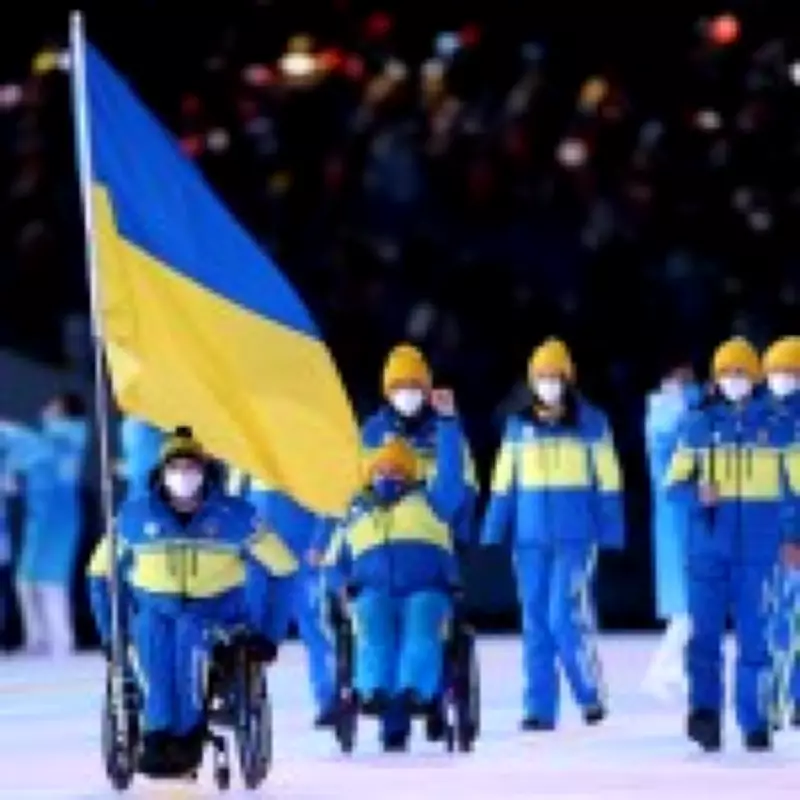
Ukrainian Paralympians Forced to Scrap Uniforms Featuring 1991 Borders
The Ukrainian Paralympic team has been barred from wearing ceremonial uniforms that display a map of Ukraine's 1991 borders, with the International Paralympic Committee (IPC) citing political reasons for the prohibition. According to Valerii Sushkevych, President of the National Paralympic Committee of Ukraine, the team was informed that "no one" would permit them to appear in the uniforms, which were designed by Viktor Anisimov.
Symbolic Design Deemed Inappropriate
The uniform design depicts Ukraine as it existed in 1991, following the collapse of the Soviet Union. These historical borders include the Crimean Peninsula and the Donbas Regions, territories currently under illegal Russian occupation. Sushkevych expressed disappointment, stating that the uniform was "very beautiful, very symbolic, and very emphatically 'shouted' that Ukraine exists in the world, in Europe, with all its territories without occupation by Russia."
He argued that certain Paralympic officials are preventing Ukraine from presenting itself as a sovereign nation free from occupation. The IPC's regulations prohibit items related to national identity, including maps, national anthem lyrics, motivational words, and political messages. Craig Spence, IPC Chief Brand and Communications Officer, confirmed that a country's map falls within this restricted category, leading to the uniform's rejection several months prior to the Milano Cortina 2026 Games.
Last-Minute Uniform Scramble
With the Paralympics set to commence on March 6, the Ukrainian team faced a frantic rush to secure alternative uniforms. Sushkevych revealed, "We barely managed to produce the new uniforms, barely. We urgently transported them by bus to Italy, where our entire team is already staying." He added that the team could have used the original uniforms, which were already prepared, but were explicitly banned from doing so.
Broader Context of Political Disqualifications
This incident follows a pattern of controversies involving Ukrainian athletes and political expressions. During the Milan Olympic Games in February, Ukrainian skeleton racer Vladyslav Heraskevych was disqualified for wearing a "helmet of memory" honoring those killed by Russian forces in Ukraine. Heraskevych, who plans to appeal to the Court of Arbitration for Sport, described the decision as leaving him with a sense of emptiness.
In 2024, breakdancer Manizha Talash, a member of the refugee Olympic team, was disqualified from the Paris Games for displaying "Free Afghan Women" on her cape. These cases highlight ongoing tensions between athletic participation and political statements in international sports.
The Ukrainian Paralympic team's experience underscores the challenges faced by athletes from conflict-affected regions in navigating the apolitical stance enforced by global sporting bodies. As the games approach, the focus shifts to their performance under these constrained circumstances.