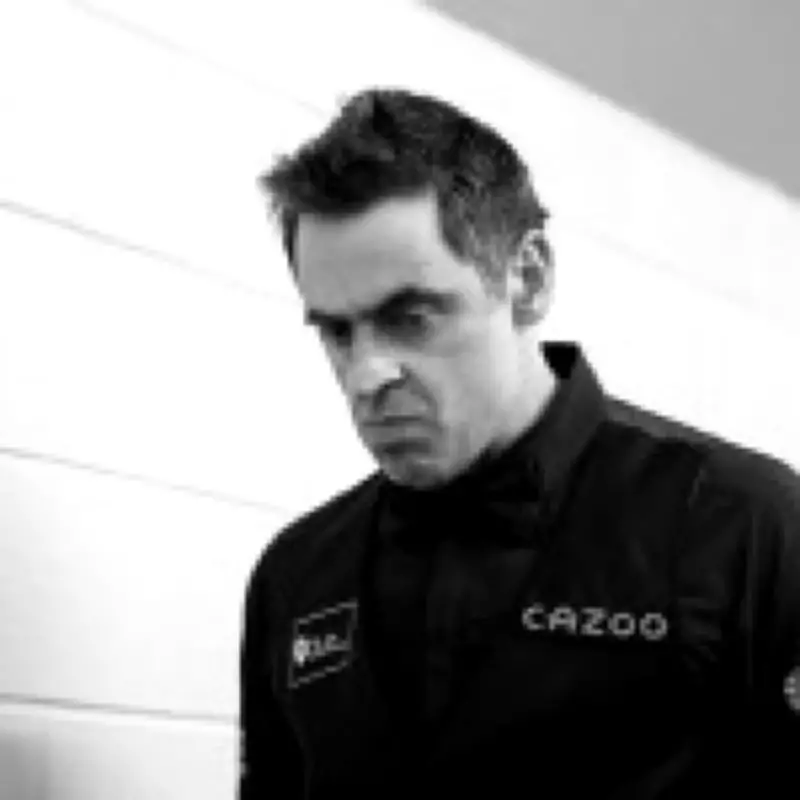
The Crucible Corridor: Where Snooker Legends Confront Their Nerves
The World Snooker Championship at Sheffield's Crucible Theatre presents a sporting phenomenon unlike any other, where elite competitors face not only their opponents across the baize but also their own emotions in a cramped backstage corridor. This unique waiting area has become an integral part of the championship experience, creating moments of intense vulnerability before players step into the arena.
A Theater of Tension Behind the Scenes
The Crucible's distinctive layout features a labyrinthine backstage area where players, officials, media representatives, and tournament staff converge. Television audiences catch brief glimpses of this space as competitors await their introductions, revealing an unexpectedly unglamorous setting for the world's finest snooker professionals. They congregate in a narrow passageway adjacent to the tournament office, where administrative work continues uninterrupted.
Some players engage in conversation while others stare at the floor or examine whatever reading material happens to adorn the walls. This peculiar interlude represents their final moments before potentially career-defining matches, creating a paradoxical experience of simultaneous isolation and exposure as cameras capture every nuance of their preparation.
Champion Perspectives on the Crucible Wait
Seven-time world champion Stephen Hendry, despite his legendary composure, acknowledges the corridor's psychological impact. "I basically just looked at my feet and tried to keep in my own space," Hendry reveals. "The Worlds is different. You get those nerves, you almost feel nauseous in the dressing room, but it's excited nerves."
Hendry distinguishes between various types of championship anxiety, noting that early-career nerves differ substantially from those experienced later: "Near the end of the career, there's nerves like, 'oh, I'm going to get beat.' But when you're competitive, there's nerves, expectation and excitement."
Two-time semi-finalist Dave Gilbert describes his 2007 debut against Hendry as particularly daunting: "I weren't any good then and Hendry was like God to me. So that was pretty weird. You either sink or swim, there's no in between." Gilbert prefers active preparation during the wait, explaining, "I like to get out there and have a bit of a stretch off. I can't sit still so I have to keep moving about."
The Vulnerability of Visibility
2005 champion Shaun Murphy emphasizes how the corridor setting amplifies players' natural anxieties. "They are your last few precious moments and you feel very on show," Murphy observes. "It's a very vulnerable few minutes. If you're feeling pensive or anxious, that's coming down the barrel of a camera to millions of people around the world."
Murphy notes the corridor's complete lack of pretension, situated as it is beside functional tournament spaces: "There's no glamour about it. You'll be stood there and two women will come past with a tray of used mugs, saying, 'Y'alright Shaun?' You're just trying to get ready for your game!"
The Magician also highlights how television scrutiny affects player interactions: "It would be natural for me and a Mark Selby or Barry Hawkins or Matt Selt to chat. We've been friends for years. But you know if you do it and certain pundits catch you then they'll slaughter you."
From Debut Jitters to Veteran Reflections
Zak Surety, who made his solitary Crucible appearance against Ding Junhui last year, recalls the surreal quality of his corridor experience. "It feels like you're there for about four days!" Surety exclaims. Describing a particularly memorable moment, he adds, "My second session was Ronnie's comeback session. I'm standing there watching it live in me suit, ready to go out, and I'm like, 'oh, what am I doing here?' It was like I'm playing PlayStation."
Eight-time Crucible competitor Michael Holt emphasizes how the venue equalizes competitors regardless of experience: "The World Championship at the Crucible, even your past winners, I think it's a bit of a leveller because no matter who you are – John Higgins, Ronnie O'Sullivan – they're all twitching before they go out there."
Holt recalls his debut against Paul Hunter, noting the sensory overload: "You hear the hum of people in the auditorium, which is really good, because obviously it's a theatre so it creates that noise. All the while you're trying to focus on having to pot some balls and when you're knees are going to stop shaking."
The Psychological Crucible
Murphy perfectly captures the corridor's dual nature: "Those last few minutes between the dressing room and walking out in the corridor are simultaneously the best and worst moments of a snooker player's life. If you asked some players to spell their own name at that time, they couldn't do it."
This unique sporting environment transforms routine administrative spaces into theaters of psychological drama, where champions and challengers alike confront their anxieties mere moments before competing for snooker's ultimate prize. The Crucible corridor has become as much a part of championship lore as the matches themselves, creating shared experiences that bond competitors across generations.