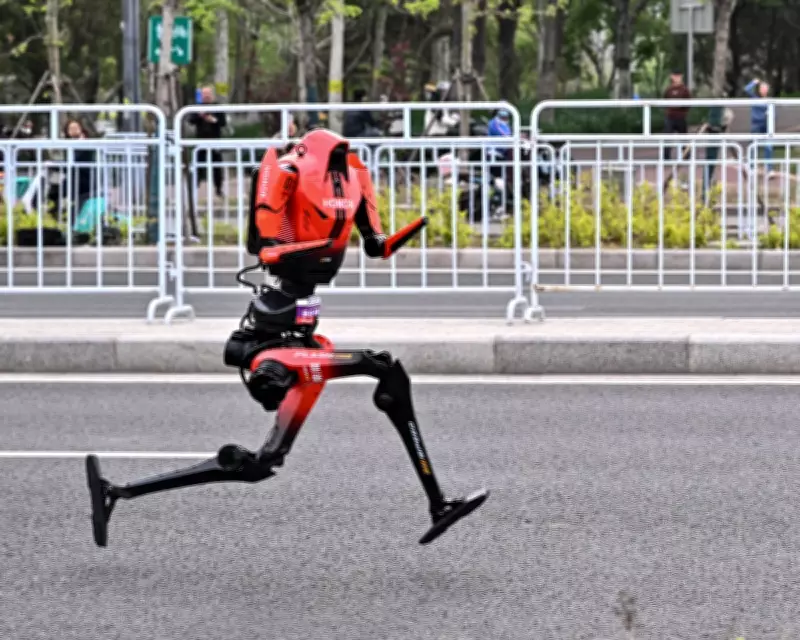
Humanoid Robots Surpass Human Athletes in Beijing Half-Marathon Event
In a striking demonstration of technological progress, dozens of Chinese-made humanoid robots raced past human runners during a half-marathon event in Beijing on Sunday. The competition highlighted rapid advancements in robotics, with robots showing significantly improved athletic capabilities compared to just one year earlier.
From Struggling Starters to Record-Breaking Performers
The inaugural edition of this robotic marathon last year was marked by numerous technical difficulties. Many robots failed to even leave the starting line, and most were unable to complete the course. This year presented a completely different picture, with more than 100 robots participating compared to just 20 previously.
The champion robot developed by Honor, a prominent Chinese smartphone manufacturer, completed the 13.1-mile course in an impressive 50 minutes and 26 seconds. This time actually surpasses the current world record set by human athlete Jacob Kiplimo in Lisbon last month, though the robot required assistance after colliding with a railing just meters from the finish line.
Parallel Tracks and Performance Improvements
Organizers implemented parallel running tracks to prevent collisions between robots and human participants. Several robots competing for podium positions demonstrated speeds exceeding those of professional human athletes in the conventional race.
This represents a dramatic improvement from last year's winning robot time of 2 hours and 40 minutes, which was more than double the human winner's time. The technological leap forward in just twelve months underscores the accelerated development pace in humanoid robotics.
China's Strategic Push in Robotics Technology
The marathon event serves as a public showcase for China's ambitious goals in humanoid robotics. While economically viable applications remain in trial phases, these demonstrations highlight the potential for robots to transform various sectors including hazardous occupations and military operations.
China has implemented comprehensive policies to cultivate domestic robotics firms, ranging from financial subsidies to infrastructure development projects. The country's most-watched television program, the annual CCTV Spring Festival gala, featured an extensive martial arts demonstration earlier this year where over a dozen Unitree humanoids performed complex fight sequences alongside child performers.
Broader Implications for Robotics Development
The Beijing half-marathon provides tangible evidence of how quickly humanoid robotics technology is evolving. What began as a novelty event plagued with technical issues has transformed into a legitimate competition where machines can outperform elite human athletes in specific physical challenges.
As these technologies continue to advance, they promise to reshape numerous aspects of society and industry. The Beijing event offers a glimpse into a future where humanoid robots might routinely participate alongside humans in athletic competitions while simultaneously developing capabilities for practical applications in workplaces and beyond.