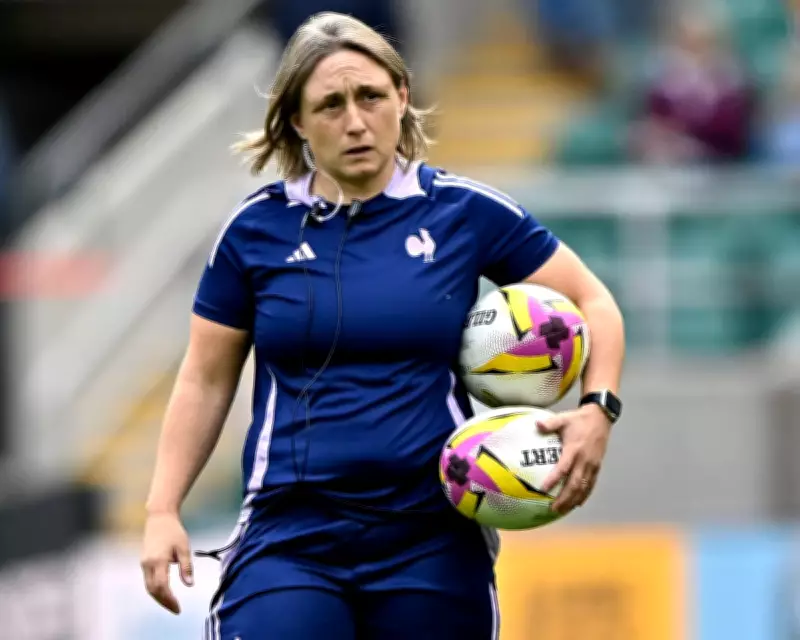
Gaëlle Mignot was a rare female coach of an international side, but she stood down from her role as co-head coach of France after the 2025 World Cup. Her departure highlights a glaring lack of diversity among top coaches in elite women's rugby union.
The 10-Point Plan to Boost Female Coaching
Premiership Women's Rugby (PWR) will introduce a 10-point plan next season aimed at increasing the number of female coaches at international level. Currently, only one top-10 nation—New Zealand, led by Whitney Hansen—has a female head coach. Jo Yapp and Gaëlle Mignot stepped down after the 2025 Rugby World Cup, leaving the Wallaroos and France without female leadership.
At the groundbreaking 2025 tournament, three female head coaches were present, but there are none in the 2026 Women's Six Nations. In PWR clubs, all head coaches are men, and of the 22 women coaching in the league, only six hold senior roles.
Interventions Needed at Every Level
Genevieve Shore, PWR chair, emphasized the scale of the challenge: “There is a huge amount of work to do to change everything from perception, experience and pipeline of female coaches. Every single piece from ‘I have done my coaching qualification’ to ‘I have got my job’ needs intervention.”
The plan may include enforcing a minimum operating standard for female coaches at each club, along with financial investment to bring women into coaching and provide training and development. The league commissioned research with the Rugby Football Union, producing a 100-page report on diversifying coaching in the women's game.
Voices from the Game
Susie Appleby, former Exeter Women’s head coach, described the isolation: “The support you need is immense. It is quite solitary at times. You end up doing everything yourself because that is what you have always done rather than reaching out for support.”
Shore hopes that more female coaches at league level will translate to the international stage. While some female coaches exist in Six Nations setups—like Sarah Hunter and Emily Scarratt with England—male coaches remain the overwhelming majority.
Getting a Foot in the Door
Rachel Taylor, Loughborough Lightning’s assistant coach, praised World Rugby’s internship programmes but stressed the role of home unions: “You have to get the right coach for the right job. Just because you are an ex-Welsh player doesn’t mean you should go on and coach with Wales, but it is a really good avenue to get in.” She cited Lou Meadows, who gained experience with the Red Roses and now coaches the USA.
Siwan Lillicrap, Wales under-18s head coach, noted the lack of visible role models: “You have to see it to want to be it. We have been there in a playing sense, but there are not enough women coaches out there for people to aspire or think there is a path.”
Changing Perceptions
Anna Caplice, former Ireland player who coached Laos, highlighted societal biases: “If you said ‘that is the new coach’ and you turned around and it was a man with his hands in his pockets there would be absolutely no question about his ability. Whereas if you turned around and saw a woman who had everything ready and knows her stuff, immediately there are questions.”
Addressing the Development Gap
The initial development of female coaches is lacking. Caplice wants more player-coach roles; Elinor Snowsill, Wales development coach, suggests paid guest coaching periods in international camps; Taylor proposes mandating female coaches at all levels.
Snowsill attributes the shortage to the slower professionalisation of women’s rugby: “If you look 10 years ago the game was still amateur. There were no full-time players so they all had full-time jobs. For them to retire and go into coaching was a lot less likely. That is why we have a generation of missing coaches.”
Shore added that male players often gain coaching hours through academies, while 95% of women have other jobs alongside playing. “They do not have another 20 hours a week to coach,” she said.
Unique Contributions of Female Coaches
Female coaches can bring empathetic communication and deeper understanding of female biology, such as the menstrual cycle’s impact on athletes. Snowsill explained: “We are massively motivated to make sure the next generation has those other skills. Whereas would [our male equivalents] ever think that is needed? Because they may never have felt like that in an environment.”