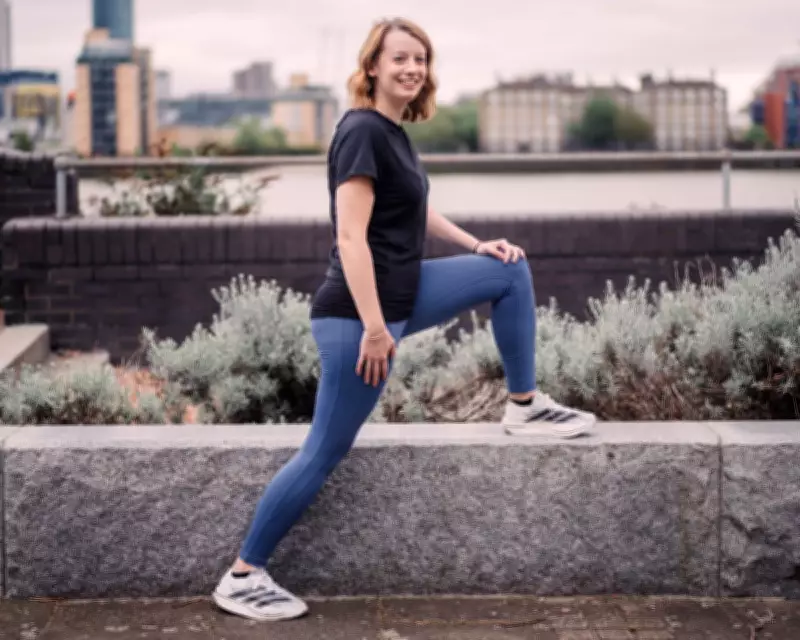
Could the Adidas Adizero Adios Pro Evo 3 reignite a lapsed runner's passion?
Billed as "humanity's fastest shoe," the Adidas Adizero Adios Pro Evo 3 represents the cutting edge of trainer technology, lighter and bouncier than anything before. Sabastian Sawe wore them when he became the first person to run an official marathon in less than two hours in London on Sunday, and Tigst Assefa also wore them when she beat the women-only marathon record the same day.
But could these super shoes help me, a lapsed runner of questionable skill, get my running mojo back? I was sceptical. My trusty New Balance trainers had seen me through many long-distance runs, and among the many reasons I increasingly found running a slog, footwear didn't feature highly.
I have run three half-marathons, including the Great North Run, in my 20s and 30s, though my finish time worsened on my last attempt. After hauling myself across the line in September last year, I decided to give running a rest and ran nowhere further than the few yards to catch the last train all winter.
When my flatmate dragged me to our local parkrun as part of his London marathon training a few weeks ago, things were worse than I thought. I came 305th out of 345 runners and could barely walk for two days.
But if anything could help me turn things around, it was the much-hyped Adidas "super shoe," designed to help runners "break through your limits" and "chase records." If they helped Sawe make history and push the limits of humanity's physical achievements, surely the pair I borrowed from Adidas could help me beat my 35-minute 5km time I've been unable to improve in recent weeks.
Revolutionary Design and Weight
Adidas says this shoe is the result of three years of intensive research in collaboration with world-class athletes. It is 30% lighter than the previous version and the first sub-100g marathon super shoe, weighing just 99g, lighter than a banana or a bar of soap. They are so light that the receptionist of my building almost refused to accept the parcel, believing whatever was inside must have been stolen.
After assuring him there were definitely trainers inside that probably weighed less than the shoebox itself, I took them home to try on. These shoes, like other super shoes before them, have attracted some criticism and accusations that they give athletes an unfair mechanical advantage in races where seconds can make a huge difference.
Nike's Vaporfly Elite shoes, with their controversial carbon-fibre-plated soles, caused a stir when they first appeared. Some argue these shoes create an unequal playing field, with the extreme propulsion they provide closer to cheating than athleticism. So I was surprised when the shoes I took out of the Adidas box felt as if they were made of paper and polystyrene and might dissolve in the rain.
The "weightless" upper material, a blend of textile and synthetic inspired by kitesurfing sails, has a translucent quality. The "super foam" base is 50% lighter than previous versions and almost feels as if it could blow away in the wind.
These shoes, when a limited release goes live to the public at 9am on Thursday, will set you back a whopping £450, and it is difficult to see them having the most longevity. Previous super trainers have been criticised for essentially being "one-marathon" shoes that lose their bounce quickly.
On the Road
I put them on and dashed out the door to give them a whirl. There was no denying they were comfier than any shoe I have worn before. The cushioned base felt like walking on air, but air that gives your foot a little push up with each step.
The base was chunkier than I am used to, and the forefoot rocker really propels you forward, so it took a while to feel comfortable that I was not going to twist my ankle as I ran. But I soon got into the rhythm and felt much more buoyant than any time I have run before.
Of course, no shoe was going to stop my muscles from aching, as they quickly did, or my lungs from struggling. I was soon out of breath and realising that even humanity's fastest shoe was no match for months of no exercise and indulgent eating.
I completed my 5km in 34 minutes, one minute faster than my recent best attempt. Sawe managed to run more than a quarter of the marathon, almost 12km, in the same time on Sunday.
I will take the improvement, whether it was down to the shoes or not, but I do not think I will be rushing to scrawl it on the side of my trainers in black pen, as Sawe and Assefa each did with their record-breaking times.
The image of Sawe holding the trainer with "1:59.30 WR SUB 2" was a huge marketing coup for Adidas, whose share price rose on Monday.
Before heading home, I decided to see if I could run at Sawe's average marathon pace of 16.9 seconds per 100 metres. With the shoes helping to propel me, I was able to hit that pace very briefly but could not sustain it for more than a few seconds.
But with a bit more training and the best shoes in the world on my side, who knows what pace I will be able to hit in a few months.