Inside Hackney's Bizarre Planning Decision on Shoreditch Works
In the wake of unprecedented scenes at Hackney Council's planning committee, the future of one of London's most promising urban regeneration schemes hangs in the balance. The Shoreditch Works development, which has enjoyed overwhelming public support and could generate thousands of jobs, has been thrust into a parallel planning universe where contradictory objections have created administrative chaos.
A Development with Dream Levels of Approval
Shoreditch Works represents exactly the kind of urban regeneration London desperately needs. The scheme would support approximately 6,000 jobs while generating £150 million in social value. Financially, it would provide Hackney Council with £10 million in business rates and £20 million through the community infrastructure levy.
What makes this planning saga particularly perplexing is the extraordinary level of public approval the development has received. Create Streets conducted three separate Visual Preference Surveys comparing current streets with the proposed future development. The results were remarkable: 76 to 78 percent of respondents preferred Shoreditch Works, with this support cutting across all demographics including income levels, political affiliations, age groups, ethnic backgrounds, and genders.

Labour voters and younger residents showed the strongest support, making this development politically popular across the spectrum. Local charities and ward councillors have backed the scheme, and independent assessments confirm it would enhance the area aesthetically while delivering substantial economic benefits.
Down the Planning Rabbit Hole
Despite this overwhelming evidence of public and professional support, Hackney's planning officials have mounted a series of contradictory objections that defy common sense. The 130-page planners' report reads like a work of fiction, containing mutually exclusive complaints that would challenge even Lewis Carroll's imagination.
Officials complained that the application was rushed, despite it having been in pre-application discussions for four years with councillor pre-meetings occurring two years ago. They simultaneously argued the proposal was vague, even though it comprised 450 detailed plans and 9,084 pages of documentation - over seven times the length of Tolstoy's War and Peace.
The contradictions reached absurd levels when officials claimed the scheme's largest building was both too prominent and too hidden. They suggested it should serve as an "intentional landmark" like other towers in the conservation area while simultaneously being less prominent - a logical impossibility that belongs in Wonderland rather than professional planning.
Misunderstanding Planning Policy
The planning chair compounded the confusion by misunderstanding fundamental aspects of English planning law. She incorrectly treated Hackney's affordable workspace policy as an inflexible "rule" rather than a guideline that allows for balanced consideration. Under proper planning principles, a scheme can fail to meet an individual policy while still being compliant overall if it delivers sufficient benefits elsewhere.
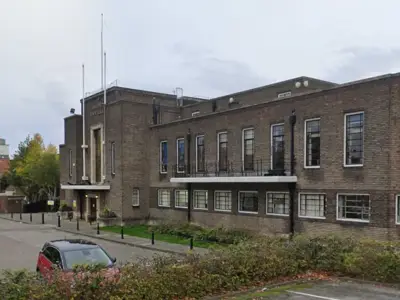
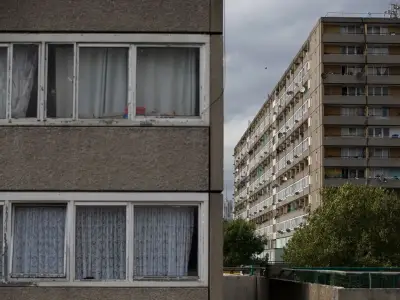
This technical misunderstanding has been used to justify rejecting a world-beating regeneration scheme over what amounts to a trivial objection. Meanwhile, officials raised concerns about the development "changing" the neighbourhood - the very purpose of regeneration - while conceding that none of the post-war buildings scheduled for demolition merit preservation.
Political Games and Delayed Decisions
After four years of preparation, millions of pounds in investment, and thousands of pages of documentation, Hackney's councillors finally voted in favour of the scheme. However, in a bizarre twist, the chair immediately ruled they couldn't actually accept it and must defer the decision instead.
This creates a dangerous situation with pre-election purdah approaching and potential administrative changes following any election. The delay threatens to kill a development that would bring substantial benefits to London's economy and Hackney's community.

The Greater London Authority now faces increasing pressure to intervene and "call in" the scheme for proper consideration. London cannot afford to lose such promising regeneration projects to bureaucratic confusion and contradictory planning objections. Hackney has been offered a pearl of urban development, and planning officials appear determined to reject it based on the colour of the jewel case rather than the quality of what's inside.